
If you are searching for a Data Science Course in Port Harcourt, you are probably interested in learning how data can be used to solve problems, make predictions, understand business performance and support better decisions.
A Data Science Course in Port Harcourt can provide a structured path for students, graduates, professionals and technology enthusiasts who want to develop practical skills in programming, statistics, data analysis, machine learning and artificial intelligence.
Data science is a multidisciplinary field that combines areas such as statistics, computing, algorithms, data analysis and scientific methods to extract knowledge and insights from data.
However, learning data science is not simply about learning Python or memorising machine learning algorithms. A useful Data Science Course in Port Harcourt should help learners understand how to approach real problems, work with datasets, communicate findings and build projects that demonstrate practical competence.
For learners in Port Harcourt and other parts of Nigeria, this makes choosing the right learning approach especially important.
What Is a Data Science Course in Port Harcourt?
A Data Science Course in Port Harcourt is a structured programme designed to teach learners how to work with data using statistical, computational and analytical techniques.
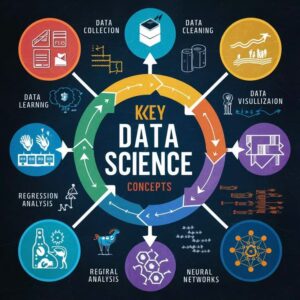
Depending on the programme, a Data Science Course in Port Harcourt may cover:
- Data science fundamentals
- Statistics
- Mathematics for data science
- Python programming
- SQL
- Excel
- Data cleaning
- Exploratory data analysis
- Data visualisation
- Machine learning
- Artificial intelligence
- Model evaluation
- Data storytelling
- Real-world projects
- Portfolio development
The depth of each topic depends on whether the course is designed for beginners, intermediate learners or experienced professionals.
For beginners, the most important thing is to have a logical progression from basic concepts to practical applications.
Why Consider a Data Science Course in Port Harcourt?
Port Harcourt is an important commercial and professional centre in Nigeria. Businesses and organisations in the city operate across sectors such as energy, finance, healthcare, education, logistics, retail, hospitality and professional services.
These organisations generate data through everyday activities.
For example, a Port Harcourt business could collect data about:
- Customer purchases
- Product inventory
- Employee performance
- Marketing campaigns
- Expenses
- Website traffic
- Customer enquiries
- Sales
- Operational activities
A person who learns data science can develop the skills needed to examine this information and identify useful patterns.
This is one reason a Data Science Course in Port Harcourt can be relevant to people who want to connect technology skills with real business and organisational problems.
What Will You Learn in a Data Science Course in Port Harcourt?
The curriculum should depend on the level of the learner, but several core areas are particularly important.
1. Data Science Fundamentals
Before learning advanced techniques, students need to understand what data science is and how data moves through a typical workflow.
A basic workflow might look like:
Problem → Data Collection → Data Cleaning → Exploration → Analysis → Modelling → Evaluation → Communication
Understanding this process helps learners see how individual tools fit together.
2. Statistics
Statistics is an important part of data science.
A Data Science Course in Port Harcourt may introduce concepts such as:
- Mean
- Median
- Mode
- Variance
- Standard deviation
- Probability
- Correlation
- Distributions
- Sampling
- Hypothesis testing
- Regression
Statistics helps learners interpret data rather than simply manipulate numbers.
3. Python Programming
Python is widely used in the data science ecosystem.
A beginner Data Science Course in Port Harcourt should ideally introduce programming gradually.
Learners may study:
- Variables
- Data types
- Operators
- Conditional statements
- Loops
- Functions
- Lists
- Dictionaries
- File handling
- Basic programming logic
After learning Python fundamentals, learners can move into libraries used specifically for data work.
4. Pandas and NumPy
Pandas is useful for working with tabular data, while NumPy provides tools for numerical computing.
With these tools, learners can practise tasks such as:
- Loading datasets
- Filtering information
- Removing duplicates
- Handling missing values
- Creating calculated fields
- Grouping data
- Combining datasets
- Performing numerical calculations
5. SQL
SQL is another valuable skill for data professionals.
Many organisations store information in databases, so understanding how to retrieve and manipulate data is important.
A Data Science Course in Port Harcourt may teach:
- SELECT statements
- Filtering
- Sorting
- Aggregation
- GROUP BY
- JOIN
- CASE statements
- Subqueries
- Common table expressions
For example, a learner could use SQL to answer:
“Which products generated the highest revenue during the last six months?”
That is more meaningful than simply learning SQL syntax without applying it.
6. Data Cleaning
Real-world data often contains errors.
A dataset may include:
- Missing information
- Duplicate records
- Incorrect spellings
- Invalid values
- Different date formats
- Inconsistent categories
Data cleaning is therefore an important part of a practical Data Science Course in Port Harcourt.
Students should learn not only how to clean data but also how to identify why a problem exists.
7. Data Visualisation
Data visualisation allows findings to be communicated more clearly.
Learners may work with:
- Bar charts
- Line charts
- Scatter plots
- Histograms
- Box plots
- Heatmaps
- Interactive dashboards
The goal is not to create attractive charts for their own sake. A good visualisation should help the audience understand an important finding.
Data Science Tools Beginners Should Learn
A good Data Science Course in Port Harcourt does not need to teach every technology available.
Instead, beginners should develop strong foundations in a manageable set of tools.
Python
Used for programming, data analysis, automation and machine learning.
SQL
Used for interacting with relational databases.
Pandas
Used for data manipulation and analysis.
NumPy
Used for numerical operations.
Jupyter Notebook
Useful for combining code, analysis, explanations and visualisations in one environment.
Power BI
Power BI is primarily a business intelligence and data visualisation platform, but it can complement data science skills by helping learners communicate analytical findings.
Git and GitHub
These tools can help learners organise projects and demonstrate their work to others.
Data Science Course in Port Harcourt: Practical Learning Matters
One of the most important factors to consider when selecting a Data Science Course in Port Harcourt is how much practical work is included.
There is a major difference between:
Learning what a machine learning algorithm is
and
Using a dataset to build, evaluate and explain a machine learning model.
Practical learning helps bridge that gap.
A learner should have opportunities to:
- Receive a problem
- Find or receive relevant data
- Clean the data
- Explore the dataset
- Analyse patterns
- Build a model where appropriate
- Evaluate results
- Explain findings
- Present recommendations
This type of practice makes the learning process more realistic.
Real-World Data Science Projects in Port Harcourt
A strong Data Science Course in Port Harcourt can use projects that reflect realistic Nigerian scenarios.
1. Retail Sales Analysis
Imagine a retail company operating in Port Harcourt.
Students could analyse:
- Monthly sales
- Product categories
- Customer purchases
- Revenue
- Inventory
- Seasonal patterns
The final result could be a report explaining which products perform well and where improvements may be needed.
2. Customer Churn Prediction
A telecommunications or subscription business could be interested in identifying customers who may stop using its service.
Students could explore:
- Customer tenure
- Usage
- Service plans
- Customer complaints
- Payment behaviour
They could then develop a basic predictive model and evaluate its performance.
3. Demand Forecasting
A business could use historical sales data to estimate future demand.
This can introduce learners to:
- Time-series data
- Trends
- Seasonality
- Forecasting concepts
- Model evaluation
4. Nigerian Business Dashboard
Learners could combine SQL, Python or spreadsheet data with a dashboarding tool to create a business performance report.
The project could display:
- Revenue
- Expenses
- Sales
- Customers
- Product performance
- Monthly trends
These projects make a Data Science Course in Port Harcourt more connected to practical problem-solving.
Data Science Course in Port Harcourt and Portfolio Building
A portfolio is one of the most useful outcomes of practical technology training.
Instead of telling an employer:
“I have learned Python.”
A learner can demonstrate:
“Here is a Python project where I cleaned a dataset, analysed customer behaviour and communicated the results.”
A good beginner portfolio could contain:
- Python data analysis project
- SQL project
- Data visualisation project
- Machine learning project
- Business case study
- Capstone project
Each project should explain:
The problem → The data → The process → The findings → The conclusion
This makes the portfolio easier for someone else to understand.
Data Science vs Data Analytics
People searching for a Data Science Course in Port Harcourt often also encounter data analytics courses.
Although the fields overlap, they are not exactly the same.
Data analytics commonly focuses on examining data to understand performance, trends and business questions.
Data science generally covers a broader collection of methods involving programming, statistics, data analysis, machine learning and predictive modelling.
For example:
Data analytics question:
“What were our highest-selling products last month?”
Data science question:
“Can historical customer and product data help us predict future purchasing behaviour?”
Both approaches are valuable, and data analytics can provide a useful foundation for people who later want to progress into data science.
Career Opportunities After Data Science Training
Completing a Data Science Course in Port Harcourt does not automatically guarantee employment. However, developing relevant technical skills can prepare learners to explore different roles within the wider data and technology ecosystem.
Possible career directions include:
Data Analyst
Data analysts examine data and communicate insights that support organisational decisions.
Junior Data Scientist
Junior data scientists may assist with data preparation, analysis, experimentation and modelling.
Machine Learning Engineer
Machine learning engineers focus on developing and deploying machine learning systems.
Business Intelligence Analyst
BI analysts work with business data, reporting systems and dashboards.
Data Engineer
Data engineers help build systems and infrastructure for collecting, transforming and providing access to data.
Research and Quantitative Roles
Learners with strong mathematical and statistical foundations may also explore research-oriented data roles.
Data Science Career Opportunities in Nigeria
Data science can be applied across many Nigerian industries.
Examples include:
- Banking
- Fintech
- Telecommunications
- Healthcare
- Energy
- Insurance
- Logistics
- Retail
- Education
- E-commerce
- Technology companies
- Professional services
For learners in Port Harcourt, this creates opportunities to think beyond a single industry.
A person could develop data skills and later apply them to business, finance, technology, energy or another field where data is important.
How AI Fits Into Data Science
Artificial intelligence is increasingly connected with modern data workflows.
AI tools can assist with activities such as:
- Code development
- Data exploration
- Documentation
- Text analysis
- Automation
- Pattern identification
- Predictive modelling
However, AI does not eliminate the need for fundamental knowledge.
Someone taking a Data Science Course in Port Harcourt should still understand statistics, data quality, programming logic and model evaluation.
AI should be treated as a tool that supports good technical work rather than a replacement for understanding.
How to Choose a Data Science Course in Port Harcourt
Before enrolling in a Data Science Course in Port Harcourt, ask several practical questions.
Does the Course Include Practical Exercises?
Find out how much time is spent actually working with data.
Does the Curriculum Include Python and SQL?
These are important foundations for many data-related roles.
Are Real-World Projects Included?
Projects help turn theoretical knowledge into practical experience.
Will You Build a Portfolio?
Ask whether learners complete projects that they can organise and present professionally.
Is Mentorship Available?
Beginners often need help understanding errors and difficult concepts.
Does the Programme Include Career Preparation?
Consider whether the training covers topics such as project presentation, professional communication, interview preparation and workplace expectations.
Does the Programme Address AI?
Modern data professionals should understand how AI is changing data-related workflows.
How Potenmunia Tech School Approaches Data Science
For learners considering a Data Science Course in Port Harcourt, Potenmunia Tech School approaches technology education with an emphasis on practical application and career preparation.
The learning approach focuses strongly on hands-on practice rather than relying only on classroom theory. Students can work through exercises and practical projects designed to help them understand how technology skills apply to real problems.
Real-world projects and capstone experiences are particularly important because data science requires more than knowing definitions. Learners need opportunities to work through complete problems from data preparation to analysis and communication.
Portfolio building is another important part of the approach. Students can use completed projects as evidence of their developing technical abilities.
Mentorship provides learners with guidance as they encounter challenges, while career and job-readiness support can help them understand how to present their skills and projects professionally.
Potenmunia also incorporates AI and future-focused skills, helping learners understand how emerging technologies can complement traditional data science techniques.
The school additionally encourages innovation and entrepreneurship, giving learners an opportunity to think about how technology and data can be used to create solutions, products or services.
For someone comparing options for a Data Science Course in Port Harcourt, these practical considerations can be more useful than choosing a programme based only on its title.
A Beginner’s Data Science Learning Roadmap
If you are completely new to data science, you can follow a gradual learning path.
1. Learn Computer and Data Fundamentals
Understand files, folders, spreadsheets, databases and basic data concepts.
2. Learn Excel
Practise formulas, sorting, filtering, tables, PivotTables and basic charts.
3. Learn Statistics
Build an understanding of descriptive statistics, probability and relationships between variables.
4. Learn SQL
Practise retrieving and summarising data from databases.
5. Learn Python
Start with programming fundamentals before moving into data science libraries.
6. Learn Pandas and NumPy
Practise manipulating and analysing datasets.
7. Learn Data Visualisation
Learn how to communicate findings using appropriate charts and dashboards.
8. Learn Machine Learning
Start with basic supervised and unsupervised learning concepts.
9. Build Projects
Apply your knowledge to realistic datasets and business problems.
10. Build Your Portfolio
Document your projects and organise them so that other people can understand your work.
How Long Does a Data Science Course in Port Harcourt Take?
There is no single answer because course duration varies between programmes and learners.
Someone studying full-time may progress faster than someone learning part-time.
More importantly, learners should measure progress by competence rather than simply counting weeks.
For example, ask:
- Can I clean a dataset?
- Can I write useful SQL queries?
- Can I analyse data using Python?
- Can I create meaningful visualisations?
- Can I explain my findings?
- Can I build and evaluate a basic model?
- Can I document a project?
Being able to answer these questions provides a better indication of progress.
Is Data Science Suitable for Beginners?
Yes.
A beginner does not need to know advanced programming before starting a Data Science Course in Port Harcourt.
However, learners should expect to encounter mathematics, statistics and programming.
The learning process becomes easier when students progress gradually.
Instead of attempting to learn Python, SQL, statistics, machine learning and artificial intelligence simultaneously, beginners can build one foundation before moving to the next.
Common Mistakes to Avoid When Learning Data Science
Focusing Only on Certificates
A certificate can document completion, but practical skills and projects help demonstrate competence.
Learning Too Many Tools
It is better to understand a small number of relevant tools deeply than to know the names of dozens of technologies.
Copying Portfolio Projects
Learners should understand the projects they present rather than simply copying tutorials.
Ignoring Statistics
Statistics is an important foundation for interpreting data and understanding machine learning.
Avoiding Practice
Data science is a practical field. Regular practice is essential.
Expecting Instant Results
Becoming comfortable with data science takes time. Consistent practice is more useful than rushing through topics.
Who Should Take a Data Science Course in Port Harcourt?
A Data Science Course in Port Harcourt may be suitable for:
- University students
- Recent graduates
- Working professionals
- Data analysts
- Technology enthusiasts
- Business professionals
- Entrepreneurs
- People changing careers
- Learners interested in artificial intelligence
The ideal starting point depends on your current skills and career goals.
Someone with a statistics background may progress differently from someone who is completely new to technology.
Frequently Asked Questions About Data Science Course in Port Harcourt
What is a Data Science Course in Port Harcourt?
A Data Science Course in Port Harcourt is a structured programme that teaches learners how to work with data using programming, statistics, data analysis, visualisation and machine learning techniques.
Can beginners take a Data Science Course in Port Harcourt?
Yes. Beginners can start with fundamental computer, programming, mathematics and statistics concepts before progressing into more advanced areas.
What programming language should I learn for data science?
Python is an important language to consider because it has a large ecosystem of libraries for data analysis, visualisation and machine learning.
Is SQL important for a Data Science Course in Port Harcourt?
Yes. SQL is useful for accessing and analysing information stored in relational databases.
Do I need mathematics to study data science?
You do not need to be an advanced mathematician to start, but mathematics and statistics become increasingly important as you progress into advanced data science and machine learning.
Can I learn data science without a computer science degree?
Yes. People enter data-related careers from different academic and professional backgrounds. Practical skills, projects and continued learning are important.
What should I look for in a Data Science Course in Port Harcourt?
Look for a programme with a clear curriculum, practical exercises, real-world projects, portfolio development, mentorship and appropriate career preparation.
Can a Data Science Course help me build a portfolio?
A practical programme can provide projects that become part of a portfolio. Learners should document those projects clearly and understand the work they present.
Is data science the same as data analytics?
No. They overlap, but data science generally encompasses a broader range of programming, statistics, machine learning and predictive modelling techniques.
Can data science skills be used in Nigeria?
Yes. Data-related skills can be applied across sectors including finance, telecommunications, healthcare, energy, logistics, retail, education and technology.
Learn More About Data Science
For an additional general reference, readers can explore Wikipedia’s overview of Data Science, which provides background on the field, its interdisciplinary nature and related concepts.
Conclusion
Choosing a Data Science Course in Port Harcourt is an important first step, but the course itself is only part of the learning journey.
The most valuable approach is to combine foundational knowledge with continuous practice.
A strong learning path should help you develop skills in:
- Statistics
- Python
- SQL
- Data cleaning
- Data analysis
- Data visualisation
- Machine learning
- Artificial intelligence
- Problem-solving
- Communication
Most importantly, you should have opportunities to apply these skills to realistic projects.
For learners in Port Harcourt, a practical Data Science Course in Port Harcourt can provide a structured environment for developing these capabilities while building a portfolio and preparing for future opportunities.
Potenmunia Tech School provides a practical, career-focused technology learning environment in Port Harcourt, with an emphasis on hands-on training, projects, portfolio development, mentorship, AI integration and career preparation.
If you are considering learning data science, take time to compare the curriculum, practical experience, project opportunities and support available before choosing a programme. The right course should help you move beyond simply learning about data science toward actually using data science skills to solve problems.