



AI Career in Nigeria: Skills, Jobs, Salaries and Opportunities
If you live in Port Harcourt and you keep hearing about artificial intelligence creating new jobs, you may be wondering if an AI career in Nigeria is realistic for you. Many young professionals search for AI career in Nigeria because they want to know what skills are needed, what jobs are available, how much they can earn, and how to start without a computer science degree.
This guide explains the AI job landscape in Nigeria in simple English, with real examples from Port Harcourt, Lagos, and remote opportunities, so you can understand the path and take practical steps.
What Does an AI Career in Nigeria Really Mean
An AI career in Nigeria means using artificial intelligence tools and skills to solve real business problems. It does not always mean building complex robots from scratch. For many businesses in Port Harcourt, it means using AI to automate customer support, analyze sales data, generate content, or build simple prediction models.
For example, a fashion brand in GRA might hire someone who can set up an automated WhatsApp reply system that understands different ways customers ask for price. A logistics company in Trans Amadi might need someone who can analyze delivery data to predict late deliveries. A fintech startup in Lagos might need someone who can build a simple fraud detection model from transaction data.
So an AI career in Nigeria is about applying AI skills to help businesses save time, reduce costs, and increase sales. You can start with practical automation skills and grow into more advanced roles.
Essential Skills You Need for an AI Career in Nigeria
Technical skills employers look for
To build an AI career in Nigeria, employers look for a mix of practical skills, not just certificates.
Python is the most common language for AI because it is simple and has many libraries for data and automation. You should learn how to clean data with Pandas, visualize data with Matplotlib, and build simple models with Scikit Learn.
For beginners, skills like prompt engineering for tools like ChatGPT, automation with Zapier and ManyChat, and building simple chatbots are highly valuable because many small businesses in Port Harcourt need these immediately.
For more advanced roles, skills in machine learning, natural language processing for understanding customer messages, and computer vision for image related tasks become important.
You do not need advanced mathematics to start. Basic understanding of averages, percentages, and graphs is enough for entry level work. Advanced concepts are learned gradually.
Soft skills and business understanding
Beyond technical skills, employers in Nigeria value people who understand business problems. Can you explain how an AI solution will help a business in Mile One save money or increase sales? Can you document your work clearly on GitHub? Can you communicate results to a non technical business owner in simple English?
These soft skills often determine whether you get hired or get freelance clients, especially in Port Harcourt where many business owners are not technical but need practical solutions.

Types of AI Jobs Available in Nigeria in 2026
There are several types of AI related jobs available for people pursuing an AI career in Nigeria.
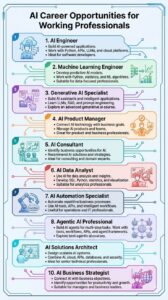
Entry level roles for beginners
AI Support Assistant helps businesses set up chatbots and automation for WhatsApp and Instagram. Content Automation Specialist helps businesses generate product descriptions and social media captions using AI tools. Data Assistant helps clean and organize sales data for analysis. These roles typically require four to eight weeks of practical training and can pay from ₦150,000 to ₦350,000 monthly in Port Harcourt and Lagos, or $200 to $500 for freelance projects.
Mid level and freelance opportunities
Machine Learning Assistant builds simple prediction models, such as sales forecasting for a retail shop in Peter Odili or customer churn prediction for a telecom reseller. NLP Assistant builds systems that can sort customer messages and detect sentiment. Computer Vision Assistant helps with image tagging for fashion businesses or number plate reading for logistics.
These mid level roles often pay from ₦400,000 to ₦800,000 monthly for full time roles in Lagos, and $800 to $2,000 monthly for remote freelance work when you have a portfolio of three to five projects. Many professionals in Port Harcourt work remotely for companies in Lagos, UK, and US.
There are also opportunities to work as an AI consultant for small businesses, helping them automate operations. For example, setting up an AI customer support system for five businesses in GRA can generate consistent monthly retainer income.
How Much Do AI Professionals Earn in Nigeria
Salaries for an AI career in Nigeria vary based on skills, portfolio, and location.
Entry level automation and AI support roles in Port Harcourt typically earn between ₦150,000 and ₦350,000 monthly. With six months of experience and a small portfolio, this can rise to ₦350,000 to ₦600,000.
Mid level roles with machine learning and real projects often earn ₦500,000 to ₦900,000 monthly in Lagos, and some remote roles pay $1,000 to $2,500 monthly.
Freelance income depends on your portfolio and ability to solve business problems. A beginner who can build a WhatsApp chatbot that sorts 200 daily inquiries for a business in Garrison can charge ₦80,000 to ₦150,000 per setup, plus monthly maintenance. As you build more projects, you can increase your rates.
It is important to note that what determines your salary is not just the certificate, but the problems you can solve and the portfolio you can show.
Where AI Jobs Are Found: Port Harcourt, Lagos, and Remote
For an AI career in Nigeria, jobs are found in three main places.
First, businesses in Port Harcourt. Many retail, logistics, fashion, and service businesses in GRA, Trans Amadi, and Peter Odili need practical AI help but do not have large tech teams. They often hire freelancers or part time support.
Second, tech companies and startups in Lagos. Companies in Yaba and Lekki regularly hire junior AI assistants and data assistants, especially those who can show real projects.
Third, remote opportunities. Many Nigerian professionals work remotely for companies abroad by building a strong GitHub portfolio and applying on platforms like Upwork, LinkedIn, and Wellfound. Remote work is increasingly common for those with practical skills in automation, chatbots, and data analysis.
A Practical 7 Step Roadmap to Start Your AI Career in Nigeria
If you want to start an AI career in Nigeria in 2026, here is a practical seven step roadmap you can follow.
Step one, learn Python basics and data handling for two to three weeks. Focus on cleaning data and creating simple visualizations.
Step two, learn AI automation and prompt engineering for two weeks. Learn how to automate WhatsApp replies and generate content for businesses.
Step three, learn machine learning fundamentals. Build simple prediction models with Scikit Learn, such as predicting sales for a shop in Mile One.
Step four, specialize in one area based on your interest. Choose natural language processing if you like working with text and chatbots, or computer vision if you like working with images, or focus on automation and become an AI consultant for small businesses.
Step five, build three to five real world projects with Nigerian data. For example, build a sentiment analysis tool for customer reviews for a restaurant in GRA, or a sales prediction model for a supermarket in Peter Odili.
Step six, build a portfolio on GitHub and LinkedIn. Document each project with what problem you solved, what tools you used, and what results you achieved. For example, “Built a customer message classifier for a fashion brand in GRA that sorts 200 daily messages with 92 percent accuracy.”
Step seven, start applying and freelancing. Apply for internships in Port Harcourt and Lagos, reach out to businesses in Garrison and Trans Amadi offering a small free audit, and apply for remote freelance projects with your portfolio.
How Potenmunia Tech School Prepares You for an AI Career
Potenmunia Tech School is a practical, career focused technology training school in Port Harcourt that emphasizes competence, real world application, and career preparation.
For learners pursuing an AI career in Nigeria, the approach is hands on from the start. Instead of long theoretical lectures, learners work on laptops and build projects that solve real problems for local businesses. For example, in a typical session, learners might build a WhatsApp intent classifier for a retail business in Mile One or a sales prediction model for a shop in Peter Odili.
The training includes real world projects and capstone experience. Learners build a portfolio of projects that can be shown to employers, such as a customer support chatbot, a sentiment analysis tool, and a simple image classification system.
Portfolio building is integrated into the process, with guidance on how to document work on GitHub and present it on LinkedIn. Career and job readiness support includes guidance on how to apply for roles, how to handle interviews, and how to find freelance clients.
Mentorship is part of the experience, with instructors providing feedback during practical sessions and through a support community after class. There is also focus on AI integration and future skills, so learners understand how AI connects with automation, business operations, and entrepreneurship.
This practical structure is designed to help beginners move from zero to job ready with projects that employers can see.
Common Mistakes Beginners Should Avoid
Many beginners pursuing an AI career in Nigeria make avoidable mistakes. One is focusing only on certificates without building a portfolio. Employers and clients in Port Harcourt and Lagos want to see what you have built, not just what course you completed.
Another mistake is trying to learn everything at once. It is better to master Python and one area, like automation or natural language processing, before moving to advanced topics.
A third mistake is learning with only foreign datasets. Using Nigerian business examples, such as customer messages from a fashion store in GRA or sales data from a supermarket in Peter Odili, makes your learning more relevant and your portfolio more convincing to local employers.
FAQs
Do I need a computer science degree to start an AI career in Nigeria?
No. Many professionals in Port Harcourt and Lagos started with a short practical course and a portfolio of projects. What matters most is your ability to solve business problems with AI tools, not your degree. A degree can help for some corporate roles, but practical skills and portfolio are often more important for entry level and freelance opportunities.
How long does it take to start an AI career in Nigeria as a beginner?
With consistent practice of two hours daily, you can learn automation and prompt engineering in four to six weeks and start freelancing. Building a solid foundation in machine learning and a portfolio of three to five projects usually takes three to four months.
Can I start an AI career in Port Harcourt without a powerful laptop?
Yes. You can use Google Colab, which gives you free access to powerful computers through your browser. This lets you train simple models even with a basic laptop. Potenmunia Tech School also provides a computer lab for learners who need it during training.
What is the difference between AI, machine learning, and data science careers?
AI is the broad field of machines doing tasks that need human intelligence. Machine learning is a part of AI where machines learn from data. Data science focuses on analyzing data to get insights. In Nigeria, many entry level roles combine these, such as an AI support role that also involves cleaning data and building simple prediction models.
What kind of businesses in Port Harcourt hire for AI careers?
Retail and fashion businesses in GRA hire for customer support automation and product tagging. Logistics companies in Trans Amadi hire for delivery prediction and customer message sorting. Fintech and service businesses hire for fraud detection and customer support. Many small businesses in Garrison and Peter Odili also hire freelancers to automate WhatsApp and Instagram operations.
Final Thoughts
An AI career in Nigeria is not just for people in Lagos or abroad. With practical skills, real projects, and a clear roadmap, you can build a career from Port Harcourt that serves both local businesses and remote clients.
The key is to start with practical automation skills that businesses need immediately, then build deeper machine learning skills and a portfolio that shows you can solve real problems.
If you are in Port Harcourt and want to move from curiosity to practical ability, focus on Python basics, learn how to automate and analyze, build projects with real Nigerian data, and document your work.
With hands on practice and mentorship, what once seemed distant becomes a practical career path you can build step by step.
If you would like to explore this further, consider attending a practical, beginner friendly session at Potenmunia Tech School where you can build your first AI automation project with guidance and see how it applies to a real business in Port Harcourt.
Large Language Models (LLMs): What They Are and How They Work
If you have used ChatGPT to write a caption, asked Meta AI to summarize a long WhatsApp message, or used Google to get a quick answer that sounds like a human wrote it, you have already used large language models. Many people in Port Harcourt search for large language models because they want to understand what is behind these tools and how they can use them for business and career growth.
This guide explains large language models in simple English, with real Nigerian examples, so you can understand what they are, how they work, where they are used, and how you can start learning them as a beginner.

What Are Large Language Models in Simple Terms
Large language models are AI systems trained to understand and generate human language. The word large refers to two things: the massive amount of text they are trained on, and the large number of parameters that help them learn patterns in language.
Think of how a child in Port Harcourt learns to speak Pidgin by listening to many conversations in the market, at home, and on the street. After hearing thousands of examples, the child learns which words come after others and how to form sentences that make sense.
Large language models learn in a similar way, but at a much bigger scale. They are trained on billions of sentences from books, articles, websites, and conversations. Through this training, they learn how words relate, how sentences are formed, and how to predict what comes next in a conversation.
For beginners, the simplest way to understand large language models is this: they are systems that learn from massive amounts of text to predict and generate language that sounds natural and relevant.
How Do Large Language Models Work: A Beginner Explanation
Training with massive text and predicting next word
At the core, large language models work by predicting the next word. When you type “I want to buy shoe in GRA, Port Harcourt, how much is”, the model looks at the words before and predicts what likely comes next, such as “delivery fee”.
During training, the model sees billions of examples. It learns that after “How much is delivery to”, a location often comes next, like “Eliozu” or “Peter Odili”. It also learns grammar, facts, and context from the data it has seen.
This prediction is done using a structure called a transformer, which helps the model focus on the most important words in a sentence. For example, in “The customer who bought bag yesterday wants to return it”, the transformer helps the model connect “wants” to “customer”, not to “bag”.
From prediction to understanding
By repeatedly predicting next words across massive datasets, large language models start to show abilities that look like understanding. They can answer questions, summarize long documents, translate languages, and write in different tones.
It is important to know that they do not truly understand like humans do. They generate responses based on patterns they have learned. But because those patterns come from huge amounts of human text, the responses often feel very human and useful.

Large Language Models vs Traditional AI: The Difference
Traditional AI systems often follow rules you write. For example, a simple chatbot in a fashion business in GRA might have a rule: if customer types “Price”, send price list.
Large language models do not need you to write every rule. You give them an instruction like “You are a customer support assistant for a fashion brand in Port Harcourt. Reply politely with price and delivery information.” The model can then handle many variations like “How much be the bag?”, “Price?”, “Abeg wetin be cost?” without you writing separate rules for each.
Traditional AI is good for specific, fixed tasks. Large language models are more flexible and can handle many different language tasks with one system. This flexibility is why they are now used for writing, customer support, summarization, and coding assistance.
Where You Already Use Large Language Models in Nigeria
You may already use large language models daily without knowing.
When you use ChatGPT, Meta AI, or Google Bard to draft a business proposal in Trans Amadi, that is a large language model generating text.
When a bank in Port Harcourt uses an AI assistant on WhatsApp that can understand “My transfer no go, I never see alert” and reply with steps to resolve it, that is often powered by a large language model.
In business, fashion stores in GRA use these models to write product descriptions for 200 items quickly. Logistics companies in Garrison use them to summarize delivery complaints and draft replies. Students in Uniport use them to summarize 50 page lecture notes into key points.
For content creators in Port Harcourt, large language models help write captions, video scripts, and blog posts faster, while still sounding natural.
Core Capabilities Every Beginner Should Know
If you are new to large language models, there are two core capabilities you should understand first.
Text generation and summarization
Text generation is about creating new text from a prompt. For example, you can ask “Write a friendly WhatsApp message to customers in Eliozu about new arrivals of Ankara” and the model will generate it. Summarization is about making long text short. For example, you can paste a one hour Zoom meeting transcript and ask for a summary with action points. This is useful for professionals in Peter Odili who handle many meetings.
Chatbots and question answering
Large language models can power chatbots that answer questions based on your business information. Instead of replying manually to every “How much is delivery to Choba?” you can train a chatbot with your price list and delivery fees, and it will answer instantly, even at 11pm. It can also answer questions from documents, like “What is our return policy?” by reading your policy document.
Essential Skills and Tools to Start Working With LLMs
To start working with large language models, you do not need to build a model from scratch. You need to learn how to use them effectively.
First is prompt engineering, which is learning how to give clear instructions to get good results. For example, instead of typing “Write about shoe”, you learn to type “Write a 100 word product description for a brown leather shoe for men in Port Harcourt, in a friendly tone, with price ₦25,000 and delivery to GRA and Eliozu.”
Second is understanding how to connect LLMs to your business data. Tools like LangChain help you connect a large language model to your WhatsApp messages, price list, or FAQ document so it can answer based on your own information.
Popular tools beginners use include ChatGPT, Claude, and Meta AI for general tasks, and OpenAI API or Hugging Face for building custom solutions. Google Colab is helpful for running small experiments without needing an expensive laptop.
A Practical 7 Step Roadmap to Learn LLMs in Port Harcourt
Here is a clear seven step roadmap many beginners follow to learn large language models in Nigeria.
Step one, understand the basics of AI and natural language processing for one to two weeks. Learn what language models are and why they are useful.
Step two, practice prompt engineering. Spend a week writing better prompts for tasks you already do, like writing customer messages, summarizing notes, and drafting proposals.
Step three, learn how to use LLM APIs. Try connecting ChatGPT API to a simple application, like a WhatsApp auto reply that uses your price list.
Step four, learn how to give LLMs your own data. Build a simple chatbot that can answer questions from your business FAQ document for a store in Mile One.
Step five, explore summarization and content creation. Build a tool that can summarize customer reviews for a business in Peter Odili and highlight positive and negative feedback.
Step six, build a small portfolio project. For example, “Built a customer support assistant for a fashion brand in GRA that answers 200 daily WhatsApp inquiries using a large language model and reduces response time from 30 minutes to instant.”
Step seven, document your work. Put your projects on GitHub with clear explanations of what problem you solved, how you used the LLM, and what results you achieved. This portfolio is what employers and clients check.
How Potenmunia Tech School Approaches Large Language Models
Potenmunia Tech School is a practical, career focused technology training school in Port Harcourt that emphasizes real world application and competence.
For large language models, the approach is hands on from the start. Instead of long theoretical lectures, learners work directly on laptops. For example, in a typical session, learners might use OpenAI API to build a WhatsApp assistant that answers delivery fee questions for a business in Eliozu, using a real price list.
The training includes real world projects and capstone experience. Learners build projects such as a customer support chatbot, a meeting summarizer for professionals in Trans Amadi, or a content generator for a fashion business.
Portfolio building is part of the learning process. Learners are guided to document their work on GitHub with clear explanations. Career and job readiness support includes guidance on how to present LLM projects and apply for roles in customer support automation, content operations, and AI assistance.
Mentorship is provided through practical sessions and a support community after class. There is also emphasis on AI integration and future skills, so learners understand how large language models connect with automation tools like Zapier and ManyChat, and how they can be combined with other skills like computer vision and data analysis.
Common Mistakes Beginners Should Avoid
Many beginners make avoidable mistakes. One is thinking large language models know everything correctly. They can generate wrong information, so you need to verify important facts, especially for business and finance.
Another mistake is writing vague prompts and expecting perfect results. Learning how to write specific prompts with context, tone, and examples is essential for getting useful outputs.
A third mistake is learning without building a portfolio. Watching tutorials alone is not enough. Employers in Port Harcourt, Lagos, and remote teams want to see what you have built with real Nigerian data and business problems.
FAQs
What are large language models in simple terms?
Large language models are AI systems trained on massive amounts of text to understand and generate human language. They are what powers tools like ChatGPT that can answer questions, write text, and summarize documents in a natural way.
Do I need to know coding to start using large language models?
You can start using tools like ChatGPT without coding by learning prompt engineering. To build custom solutions like a chatbot for your business in Port Harcourt, basic Python is helpful. Training programs usually teach this from scratch for beginners.
How long does it take to learn large language models as a beginner in Nigeria?
With consistent practice of about two hours daily, you can become comfortable with prompt engineering and building simple chatbots in six to eight weeks. Building a solid portfolio with two to three projects usually takes three to four months.
What is the difference between large language models and ChatGPT?
ChatGPT is an application built using a large language model. Large language models are the underlying technology, while ChatGPT is a product that uses that technology to chat with users. Many other products, like Meta AI and Claude, are also built using large language models.
Can large language models help my small business in Port Harcourt?
Yes. They can help you reply to customer inquiries on WhatsApp instantly, write product descriptions for your fashion store in GRA, summarize long customer feedback, and create content for Instagram. For example, a business in Garrison can use a large language model to draft 100 personalized customer follow up messages in a few minutes.
Final Thoughts
Large language models show how computers can be taught to understand and generate human language at scale. When you learn how to use them effectively, you can automate customer support, create content faster, and build tools that solve real communication problems for businesses in Port Harcourt and across Nigeria.
If you are in Port Harcourt and want to move from curiosity to practical ability, focus on prompt engineering, learn how to connect LLMs to your own business data, build small projects with real local examples, and document your work in a portfolio.
With hands on practice and mentorship, what once seemed complex becomes a practical skill you can use to support businesses, improve customer experience, and open new career opportunities.
If you would like to explore this further, consider attending a practical, beginner friendly session at Potenmunia Tech School where you can build your first AI assistant with guidance and see how it works on real Nigerian business examples.
Computer Vision: How AI Understands Images and Video
If your phone can unlock with your face, your Instagram can tag your friends automatically, or your car camera can detect a pothole in Port Harcourt, you have already seen computer vision at work. Many people in Port Harcourt search for computer vision because they want to understand how computers can see and interpret images and video like humans do.
This guide explains computer vision in simple English, with real Nigerian examples, so you can understand what it is, how it works, where it is used, and how you can start learning it as a beginner.

What is Computer Vision in Simple Terms
Computer vision is a field of artificial intelligence that teaches computers to see, understand, and interpret images and video.
Think about how you recognize your friend in a crowded market in Mile One. You look at their face, height, clothes, and walk. You do not need anyone to explain. You have seen many examples before, so your brain recognizes patterns instantly.
Computer vision does something similar. It trains computers with many images so that they can recognize patterns, objects, and faces automatically. For example, you show a computer 10,000 pictures of different types of Ankara fabric, and it learns to tell the difference between plain Ankara and embellished Ankara without you writing rules for every pattern.
In simple terms, computer vision helps machines turn pictures into information that can be used to make decisions.
How Does Computer Vision Work: A Beginner Explanation
How computers see pixels and patterns
Unlike humans, computers do not see an image as a whole. They see it as numbers. Every image is made up of tiny dots called pixels. Each pixel has a number that represents color and brightness.
When you take a photo of jollof rice with your phone, the computer breaks that photo into thousands of pixels. The first layer of a computer vision model looks at simple patterns like edges and colors. The next layer combines those edges to see shapes like a round plate. The next layer combines shapes to understand that it is a plate of jollof rice with chicken.
This layered learning is what makes computer vision powerful for complex tasks.
From pixels to understanding
After learning patterns, the model learns to make decisions. For example, if you train a model with many pictures of cars and keke in Port Harcourt traffic, it learns to tell the difference even in different lighting or angles. It makes a guess, checks if it is correct, and adjusts itself to become more accurate next time. Over time, it becomes very good at recognizing what it has seen before.

Computer Vision vs Human Vision: The Difference
Human vision is natural and flexible. You can recognize your friend even if they wear a face cap or glasses you have never seen before.
Computer vision needs many examples to reach similar accuracy. However, once trained, it can do things humans cannot do quickly. It can scan 10,000 CCTV images in a few minutes to find a missing item, or check 5,000 product images in a fashion store in GRA to tag them automatically by color and style.
So while human vision is more adaptable, computer vision is faster and more scalable for repetitive tasks involving images and video.
Where You Already Use Computer Vision in Nigeria
You may already use computer vision daily without knowing.
When you unlock your phone with your face, that is computer vision analyzing your facial features. When you upload a photo on Facebook and it suggests tagging your friend, that is face recognition.
In Nigeria, logistics companies in Port Harcourt and Lagos use computer vision to read number plates for delivery tracking. Banks use it to verify identity during account opening by matching your face with your ID photo. Supermarkets and retail businesses in Peter Odili use it to count customers entering the shop through CCTV analysis. Fashion businesses in GRA use image recognition to automatically sort product photos and recommend similar items to customers.
For businesses in Mile One, a simple computer vision system can scan product images and automatically detect if a product is out of stock on the shelf.
Core Tasks in Computer Vision Every Beginner Should Know
If you are new to computer vision, there are two core tasks you should understand first.
Image classification and object detection
Image classification is about answering what is in an image. For example, is this image a car or a keke? Object detection goes further and tells you where the object is in the image. For example, it draws a box around each car in a traffic photo from Garrison junction. This is useful for counting vehicles or monitoring traffic.
Face recognition and video analysis
Face recognition identifies a specific person from an image or video. This is used for phone unlock and for attendance systems in schools and offices in Port Harcourt. Video analysis looks at many frames of video to understand movement. For example, it can detect if someone entered a restricted area in a warehouse in Trans Amadi or analyze customer movement in a retail store to see which products attract more attention.
Essential Skills and Tools to Start Computer Vision
To start learning computer vision, you need a few foundational skills.
First is Python basics. Python is the main language used because it is simple and has strong libraries for image tasks. You should also learn how to handle images as data, how to resize them, and how to clean datasets that have blurry or duplicate images.
Second is understanding how models are evaluated. You need to know how to check if your model correctly identifies objects and how to improve it when it makes mistakes.
For tools, beginners often start with OpenCV for basic image processing, TensorFlow and Keras for building models, and Google Colab for running models without needing an expensive laptop. Kaggle provides free datasets, such as images of Nigerian products or traffic scenes, which are helpful for practice.
A Practical 7 Step Roadmap to Learn Computer Vision in Port Harcourt
Here is a clear seven step roadmap many beginners follow to learn computer vision in Nigeria.
Step one, learn Python basics and how to work with images for two weeks. Learn how to open an image, resize it, and convert it to numbers.
Step two, learn image preprocessing. This includes cleaning your dataset, removing blurry images, and making all images the same size so your model can learn properly.
Step three, build your first image classification model. For example, build a model that can tell the difference between pictures of shoe and bag from a fashion store in GRA.
Step four, learn object detection. Build a model that can draw a box around each product in a shelf image from a supermarket in Peter Odili.
Step five, explore face recognition. Build a simple attendance system that can recognize faces of students in a class with permission.
Step six, work with video. Try analyzing a short CCTV clip to count how many customers entered a shop in one hour.
Step seven, build a portfolio. Document your projects on GitHub with clear explanations. For example, “Built an image classifier for Ankara fabric that sorts 500 product images with 94 percent accuracy for a fashion brand in GRA.” This portfolio is what employers and clients check when you apply for jobs or freelance work.

How Potenmunia Tech School Approaches Computer Vision
Potenmunia Tech School is a practical, career focused technology training school in Port Harcourt that emphasizes real world application.
For computer vision, the approach is hands on from day one. Instead of long theory lectures, learners work directly on laptops. For instance, in a typical session, learners might use OpenCV and Google Colab to build a model that can detect different types of products on a retail shelf from a photo taken in Mile One.
The training includes real world projects and capstone experience. Learners build projects such as an automatic product tagging system for a fashion business or a simple vehicle counting system from traffic images.
Portfolio building is integrated into the learning. Learners are guided to document their work on GitHub with clear explanations of the problem, the data used, and the results. Career and job readiness support includes guidance on how to present computer vision projects and apply for roles in retail analytics, logistics, security, and AI support.
Mentorship is part of the experience, with instructors providing feedback during practical sessions and through a support community after class. The curriculum also integrates AI tools and future skills, so learners understand how computer vision connects with other areas like automation and data analysis.
Common Mistakes Beginners Should Avoid
Many beginners make avoidable mistakes. One is using too few images. Computer vision needs many examples to learn well, so try to collect at least a few hundred images per category.
Another mistake is skipping image cleaning and using blurry or poorly lit photos from the start. In Nigeria, lighting can vary, so learning how to preprocess images properly is essential.
A third mistake is learning without building a portfolio. Watching tutorials is not enough. Employers in Port Harcourt, Lagos, and remote teams want to see what you have built with real data.
FAQs
What is computer vision in simple terms?
Computer vision is a branch of artificial intelligence that helps computers see and understand images and video. It is what allows your phone to unlock with your face or helps Facebook suggest friends to tag in your photo.
Do I need advanced mathematics to start computer vision?
No. You need basic secondary school mathematics to start. Concepts like averages and graphs are enough for beginners. More advanced mathematics is taught gradually as you progress, in simple terms.
Can I learn computer vision without a powerful laptop?
Yes. You can use Google Colab, which gives you free access to powerful computers through your browser. This lets you train simple models even with a basic laptop. Potenmunia Tech School also provides a computer lab for learners who need it during training.
What is the difference between computer vision and image processing?
Image processing is about improving or changing an image, like making it brighter or removing noise. Computer vision goes further to understand what is in the image, like recognizing that the image contains a car or a person.
Can computer vision help my small business in Port Harcourt?
Yes. It can help you automatically tag product photos, count customers entering your shop through CCTV, verify customer identity during delivery, or monitor stock on shelves. For example, a supermarket in Peter Odili can use it to detect when a product is out of stock on the shelf without manual checking.
Final Thoughts
Computer vision shows how computers can be taught to see the world through images and video, much like humans do. When you understand how to turn pixels into information, you can build systems that solve real problems for businesses in Port Harcourt and across Nigeria.
If you are in Port Harcourt and want to move from curiosity to practical ability, focus on Python basics, learn how to clean and process images, build small projects with real local data, and document your work in a portfolio.
With hands on practice and mentorship, what once seemed complex becomes a practical skill you can use to support businesses, improve operations, and open new career opportunities.
If you would like to explore this further, consider attending a practical, beginner friendly session at Potenmunia Tech School where you can build your first image classifier with guidance and see how it works on real Nigerian examples.
If you have ever asked your phone to set an alarm, chatted with a bank on WhatsApp and got an instant reply, or used Google Translate to understand a message, you have already interacted with natural language processing. Many people in Port Harcourt search for Natural Language Processing (NLP): Beginner’s Guide to AI Language Technology because they want to understand how computers can read, understand, and respond to human language.
This guide explains the concept in simple English, with real Nigerian examples, so you can understand what it is, how it works, where it is used, and how you can start learning it even as a beginner.

What is Natural Language Processing in Simple Terms
Natural Language Processing (NLP): Beginner’s Guide to AI Language Technology starts with a simple definition. Natural Language Processing is a field of artificial intelligence that helps computers understand, interpret, and generate human language.
Human language is complex. We use slang, pidgin, abbreviations, emojis, and different spellings for the same word. For example, in Port Harcourt, someone might type “How much be the bag”, “Price?”, “How much?”, or “Abeg wetin be price”. A human understands that all mean the same thing. NLP helps computers understand that too.
According to research on language technology, NLP combines linguistics and machine learning to bridge the gap between human communication and computer understanding. For anyone reading Natural Language Processing (NLP): Beginner’s Guide to AI Language Technology, think of it as teaching a computer to read and understand like a person, not just to store text.
How Does AI Understand Human Language
Understanding how computers move from raw text to meaning is the core of Natural Language Processing (NLP): Beginner’s Guide to AI Language Technology.
Breaking down text and meaning
When you type a sentence, the computer first breaks it into smaller parts. This is called tokenization. For example, the sentence “I want to buy shoe in GRA” is broken into words like “I”, “want”, “to”, “buy”, “shoe”, “in”, “GRA”. Then it cleans the text, removes unnecessary words, and tries to understand the intent.
From text to understanding
After breaking down the text, the system uses trained models to guess what you mean. If you type “My transfer no go”, the model learns from many previous examples that this likely means a failed transaction and the person needs help. This learning comes from feeding the computer thousands of similar examples until it can recognize patterns.
That process of learning from examples is what makes modern language technology powerful and practical.

Where You Already Use NLP in Nigeria Without Knowing
You may not realize it, but NLP is already part of daily life in Nigeria.
When you use the auto reply feature for your business WhatsApp in Garrison or GRA, and it replies instantly with your price list when someone types “Price”, that is NLP understanding the intent behind different ways customers ask for price.
When you use Google Translate to translate English to Yoruba or Pidgin, that is NLP.
When banks like GTB or fintech apps like Opay detect that a message says “I was debited but I did not receive value” and automatically route it to a support team, that is NLP doing text classification.
When Instagram shows you comments and hides offensive ones, that is NLP detecting sentiment and toxicity.
Seeing these examples helps beginners understand that Natural Language Processing (NLP): Beginner’s Guide to AI Language Technology is not abstract. It is already solving real problems for businesses in Port Harcourt and across Nigeria.
Core Areas of NLP Every Beginner Should Know
If you are studying Natural Language Processing (NLP): Beginner’s Guide to AI Language Technology, there are three core areas you should know first.
Text classification and sentiment analysis
This is about teaching computers to sort text into categories. For example, a fashion business in GRA receives 200 customer messages daily. Some are complaints, some are price inquiries, some are orders. A text classification model can automatically sort them. Sentiment analysis goes further to detect if a customer review is positive, negative, or neutral. This helps business owners know what customers really feel.
Chatbots and conversational AI
Chatbots use NLP to understand questions and give relevant answers. Instead of replying to every “How much is delivery to Eliozu?” manually, a chatbot trained on your business data can reply instantly with the correct fee and even send a payment link. This is one of the most practical applications of NLP for small businesses in Port Harcourt.
Translation and summarization
NLP can translate language and summarize long text. For example, a student in Uniport with a 50 page handout can use summarization to get the key points in five minutes. A professional in Trans Amadi can transcribe a one hour Zoom meeting and get a summary with action points. These tools save time and are built with NLP.
Essential Skills and Tools to Start Learning NLP
For anyone interested in Natural Language Processing (NLP): Beginner’s Guide to AI Language Technology, you can start with a small set of skills.
First is Python basics. Python is widely used because it has simple syntax and strong libraries for language tasks. You should also learn how to clean text data, because Nigerian customer messages often contain abbreviations, emojis, and mixed languages like English and Pidgin.
Second is understanding data handling with libraries like Pandas and NumPy. You will work with many text examples, so knowing how to organize and clean them is essential.
For tools, beginners often start with NLTK and spaCy for basic text processing, and Hugging Face Transformers for more advanced tasks like building chatbots. Google Colab is helpful because it lets you run models without needing an expensive laptop.
Learning Natural Language Processing (NLP): Beginner’s Guide to AI Language Technology becomes easier when you practice with real Nigerian datasets, such as customer reviews from a local business or WhatsApp inquiries from a store in Mile One.
A Practical 7 Step Roadmap to Learn NLP in Port Harcourt
If you want to learn this field in Nigeria, here is a clear seven step roadmap that many beginners follow when they start Natural Language Processing (NLP): Beginner’s Guide to AI Language Technology.
Step one, learn Python basics and how to work with text data. Spend two weeks getting comfortable with reading files and cleaning text.
Step two, learn text preprocessing. This includes removing extra spaces, converting “GRA”, “gra”, and “Gra” to the same format, and handling emojis and stop words.
Step three, build your first text classification model. For example, build a model that can tell if a customer message is a price inquiry or a complaint.
Step four, learn sentiment analysis. Build a model that can read customer reviews for a business in Peter Odili and tell if they are happy or unhappy.
Step five, build a simple chatbot. Use your business FAQs to create a chatbot that answers common questions like price, delivery fee, and payment methods.
Step six, explore summarization and translation tools. Try summarizing a long article or transcribing and summarizing a meeting.
Step seven, build a portfolio. Document your projects on GitHub with clear explanations of what problem you solved. For example, “Built a WhatsApp intent classifier for a fashion brand in GRA that automatically sorts 200 daily messages with 92 percent accuracy.” This portfolio is what employers and clients check.
Following Natural Language Processing (NLP): Beginner’s Guide to AI Language Technology step by step helps you avoid confusion and build practical confidence.

How Potenmunia Tech School Approaches NLP Training
Potenmunia Tech School is a practical, career focused technology training school in Port Harcourt. For a topic like this, the emphasis is on hands on learning rather than long theory.
In a typical class, learners do not just listen. They open their laptops and work with real customer messages from local businesses. For instance, learners might build a simple intent classifier that understands different ways customers ask for price in Port Harcourt, including variations in English and Pidgin.
The training includes real world projects and capstone experience. Learners build projects such as a customer support chatbot for a retail business or a sentiment analysis tool that helps a business in Trans Amadi understand customer feedback.
Portfolio building is integrated into the process. Learners are guided to document their work on GitHub so that they can show concrete results to employers. Career and job readiness support is also included, with guidance on how to present NLP projects and apply for roles in customer support automation, data analysis, and AI assistance.
Mentorship is part of the learning experience, with instructors providing feedback during practical sessions and through a support community after class. There is also focus on AI integration and future skills, so learners understand how NLP connects with automation tools like Zapier and ManyChat, and how it can be combined with other AI skills.
This approach is designed to help learners understand Natural Language Processing (NLP): Beginner’s Guide to AI Language Technology by actually building systems that solve local business problems.
Common Mistakes Beginners Should Avoid
Many beginners who try to learn NLP make avoidable mistakes. One is skipping text cleaning and going straight to modeling. In Nigeria, customer messages often contain mixed languages and abbreviations, so cleaning is essential for accurate results.
Another mistake is trying to learn every tool at once. It is better to master one library like spaCy for text processing before moving to advanced transformer models.
A third mistake is learning without real data. Practicing with American movie reviews alone will not prepare you for how customers in Port Harcourt write. Using local datasets makes your learning more relevant and your portfolio more convincing.
Avoiding these mistakes helps you learn faster and build projects that businesses actually need.
FAQs
What is natural language processing in simple terms?
Natural language processing is a branch of artificial intelligence that helps computers understand and respond to human language. It is what allows chatbots to understand “How much is delivery?” and reply with the correct fee, or allows translation apps to convert English to another language.
Do I need to know coding to start learning NLP?
You need basic Python to build practical projects. If you can use Excel and browse the internet, you can learn Python basics in a few weeks. Training programs in Port Harcourt usually teach Python from scratch before moving into NLP, so you can start as a beginner.
How long does it take to learn NLP as a beginner in Nigeria?
With consistent practice of about two hours daily, you can understand the basics and build simple projects like text classification and sentiment analysis in ten to twelve weeks. Building a solid portfolio with a chatbot and a few classification models usually takes three to four months.
What is the difference between NLP and generative AI like ChatGPT?
Generative AI like ChatGPT is built using NLP. NLP is the broader field that helps computers understand language. Generative AI uses advanced NLP models to generate new text, such as writing captions, answering questions, or summarizing documents. Learning NLP helps you understand how tools like ChatGPT work and how to build similar systems for businesses.
Can NLP help my small business in Port Harcourt?
Yes. NLP can help you automate customer replies on WhatsApp and Instagram, sort customer messages, analyze customer reviews to understand satisfaction, and create summaries of meetings. For example, a business in GRA can use a simple chatbot to handle 200 price inquiries daily without hiring extra staff.
Final Thoughts
Understanding Natural Language Processing (NLP) shows you how computers learn to process, analyze, and understand human speech and written text. The power of Natural Language Processing (NLP) lies in converting everyday conversational text into structured data that software applications can process.
When you learn Natural Language Processing (NLP) to classify customer inquiries, analyze sentiment, and automate response workflows, you gain the technical tools needed to solve core communication challenges for modern businesses. Today, mastering Natural Language Processing (NLP) unlocks high paying technical roles across data science and software engineering.
If you are in Port Harcourt and want to build practical skills in Natural Language Processing (NLP), focus on mastering basic Python libraries, cleaning unstructured text datasets, building small projects with local data, and documenting your models in a GitHub portfolio.
Ready to take your first step? Attend a hands-on, practical session at Potenmunia Tech School to build and deploy your first Natural Language Processing (NLP) text classification model under direct guidance.
Deep Learning for Beginners: What You Need to Know
If you have heard about AI generating images, phones unlocking with your face, or apps that can translate your voice instantly, you have already seen deep learning in action. Many beginners in Port Harcourt search for deep learning for beginners because they want to understand what it is and how to start without getting lost in big technical words.
This guide explains deep learning in simple English, with examples you can relate to as a student, professional, or business owner in Nigeria. No big grammar, just clear explanation and practical steps to get started.
What is Deep Learning in Simple Terms
Deep learning is a way of teaching computers to learn by example, similar to how humans learn. Imagine you want to teach a child to recognize a car. You will not write all the rules about tyres, windows, and doors. You will simply show the child many pictures of cars until the child starts to recognize a car on its own.
That is what deep learning does. It is a specialized area inside machine learning that uses structures called neural networks to learn patterns from large amounts of data. It is particularly good at tasks that involve images, sound, and language.
For someone looking up deep learning for beginners, the simplest definition is this: deep learning allows computers to automatically learn features from data and make accurate predictions, especially when the data is complex.
How Deep Learning Works: A Beginner Friendly Explanation
To understand deep learning for beginners, it helps to understand two ideas: neural networks and layers.
Neural networks and layers explained simply
A neural network is inspired by how the human brain works. Think of it as layers of filters.
Let us use a Nigerian example. Suppose you want to build a system that recognizes a photo of jollof rice.
First layer looks at basic things like edges and colors. Second layer combines those edges to see shapes like a round plate. Third layer combines shapes to understand that round plate with orange rice and chicken is jollof rice. Each layer learns something more detailed than the previous one.
That is why it is called deep. The more layers, the deeper the learning.
How deep learning learns from examples
Deep learning learns by seeing many examples. If you show it 10,000 pictures of cats and dogs, it will gradually learn the difference without you telling it that cats have pointed ears. It discovers those features by itself through training. During training, it makes guesses, checks if it is correct, and adjusts itself to become more accurate next time.

Deep Learning vs Machine Learning: What Beginners Should Understand
Many beginners confuse deep learning with machine learning. Here is the simple difference.
In traditional machine learning, you need to tell the computer what features to look for. For example, to detect fraud in bank transactions, you might tell the computer to look at transaction amount, time, and location.
In deep learning, you do not need to tell the computer what features to look for. You just give it raw data like thousands of transaction records, and it will figure out the hidden patterns by itself.
This makes deep learning powerful for complex tasks like face recognition, voice assistants, and self driving cars. However, it also needs more data and more computing power than traditional machine learning. For beginners, it is useful to start with machine learning fundamentals before moving deeper into deep learning.
Where Deep Learning is Used in Real Life and in Nigeria
You already use deep learning daily even if you do not notice.
Face unlock on your Android or iPhone uses deep learning to recognize your face in different lighting. Google Translate uses it to understand and translate your language. Instagram and TikTok use it to recommend videos you might like.
In Nigeria, banks and fintech companies like Opay and Moniepoint use deep learning to detect unusual transactions that may be fraud. Logistics companies in Port Harcourt and Lagos use it to predict delivery times based on traffic patterns. Health startups use it to analyze medical images. Fashion businesses in GRA, Port Harcourt use image recognition to automatically tag products and recommend similar items to customers.
Understanding these applications helps beginners see why deep learning is not just theory but a practical skill with real business value.
Essential Skills You Need to Start Deep Learning
If you are considering deep learning for beginners, you do not need to know everything at once. You can start with these foundational skills.
Python and data handling basics
Python is the main language used for deep learning because it is simple to read and has many helpful libraries. As a beginner, start with Python basics, how to handle data with Pandas and NumPy, and how to visualize data with Matplotlib. You do not need advanced mathematics at the start. Basic understanding of averages, graphs, and percentages is enough to begin.
Understanding models and evaluation
You need to understand how to prepare data, how to train a simple model, and how to check if your model is performing well. This includes learning how to split data into training and testing sets, and how to interpret accuracy. These concepts are taught step by step in a structured course so that you build confidence gradually.
Popular Tools and Frameworks for Beginners
Beginners often ask which tools to learn. For deep learning for beginners, start with these widely used and beginner friendly tools.
TensorFlow and Keras are popular for building neural networks with relatively simple code. PyTorch is also widely used, especially in research and many tech companies. Google Colab is a free tool that lets you run deep learning models on your laptop without needing an expensive computer, which is very helpful for learners in Nigeria where high end laptops may be costly.
For practicing, platforms like Kaggle provide free datasets and examples from real problems, such as house price prediction for Port Harcourt or customer churn prediction for telecoms. Starting with small projects helps you understand the workflow without feeling overwhelmed.

A Practical Roadmap to Start Learning Deep Learning in Nigeria
If you want to learn deep learning for beginners in Nigeria, here is a practical roadmap you can follow.
Step one, build your foundation in Python and data handling for two to three weeks. Learn how to clean data and create simple charts.
Step two, understand machine learning basics. Learn how to build a simple prediction model using Scikit Learn. This helps you understand how models learn from data.
Step three, learn the basics of neural networks. Start with a simple neural network that can recognize handwritten numbers or classify images of cats and dogs.
Step four, build small real world projects. For example, build a model that can recognize different types of Ankara fabric from images, or a model that predicts sales for a small retail business in Mile One, Port Harcourt.
Step five, put your projects in a portfolio. Create a GitHub profile where you document what each project does, the data you used, and what you learned. A portfolio speaks louder than a certificate when you apply for internships or freelance work.
How Potenmunia Tech School Approaches Deep Learning for Beginners
Potenmunia Tech School is a technology training school in Port Harcourt that focuses on practical, career oriented learning. For topics like deep learning for beginners, the approach is intentionally hands on.
Instead of long theoretical lectures, learners work directly on laptops in class. For example, in a typical session, learners might use Google Colab to build an image classifier that can identify different products for a local business. Each concept is linked to a real task that a business in Port Harcourt might actually need.
Learners build real world projects that become part of a portfolio, such as an image recognition system for a fashion store or a simple chatbot that can answer customer questions. There is also emphasis on job readiness, which includes learning how to present projects, how to document work on GitHub, and how to apply for roles or freelance opportunities.
Mentorship is part of the learning experience, with instructors providing guidance during practical sessions and through a support community after class. The curriculum also integrates AI tools and future skills so that learners understand how deep learning connects with automation, content creation, and business operations.
This practical and supportive structure is designed to help beginners move from zero to competence without feeling lost.
Common Mistakes Beginners Should Avoid
Many beginners who try to learn deep learning on their own make similar mistakes. One is trying to learn all frameworks at once. It is better to master one, like TensorFlow with Keras, before exploring others.
Another mistake is jumping straight to complex models without understanding data cleaning. In real Nigerian business data, many records have missing values or inconsistent formats. Learning how to clean this data properly is essential for building accurate models.
A third mistake is learning without building a portfolio. Watching tutorials is not enough. Employers and clients in Port Harcourt, Lagos, and abroad want to see what you have built. Start documenting your projects early, even if they are small.
FAQs
Do I need to know advanced mathematics to start deep learning for beginners?
No. You need basic secondary school mathematics to start. Concepts like averages, graphs, and basic logic are enough for beginners. Advanced mathematics becomes useful later as you go deeper, and it is taught gradually within a structured course in simple terms.
Can I learn deep learning for beginners without a powerful laptop?
Yes. You can use Google Colab, which gives you free access to powerful computers through your browser. This means you can train simple models even with a basic laptop. Potenmunia Tech School also provides a computer lab for learners who need it during training hours.
How long does it take to learn deep learning for beginners?
With consistent practice of about two hours daily, you can understand the basics and build your first simple models in eight to twelve weeks. Building confidence and a solid portfolio of three to five projects usually takes around three to four months.
What is the difference between AI, machine learning, and deep learning?
AI is the broad idea of machines doing tasks that need human intelligence. Machine learning is a part of AI where machines learn from data. Deep learning is a specialized part of machine learning that uses many layered neural networks to learn complex patterns from large amounts of data, especially images and language.
What kind of jobs can I get after learning deep learning in Nigeria?
After building practical skills, you can explore roles like junior data scientist, machine learning assistant, AI solutions support for businesses, or freelance work helping businesses build image recognition or prediction systems. Many companies in Port Harcourt, Lagos, and remote international teams look for people who can show practical projects.
Final Thoughts
Deep learning for beginners may sound complex at first, but when explained with simple examples and practical steps, it becomes approachable. It is about teaching computers to learn from many examples, just like humans do.
If you are in Port Harcourt and want to move from curiosity to practical ability, starting with a structured deep learning for beginners path can save you months of confusion. Focus on Python basics, understand how neural networks work, build small projects with real Nigerian datasets, and document your learning in a portfolio.
By following a clear guide to deep learning for beginners, you learn by building, which ensures that complex algorithms stop being abstract and start becoming skills you can use to solve real problems for businesses and communities around you. Exploring deep learning for beginners practically gives you the technical confidence to build real predictive systems.
Ready to start? Explore practical deep learning for beginners training options at Potenmunia Tech School and begin with a beginner friendly session that helps you build your first model with guidance.
If you are searching for a Data Science Course in Port Harcourt, you are probably interested in learning how data can be used to solve problems, make predictions, understand business performance and support better decisions.
A Data Science Course in Port Harcourt can provide a structured path for students, graduates, professionals and technology enthusiasts who want to develop practical skills in programming, statistics, data analysis, machine learning and artificial intelligence.
Data science is a multidisciplinary field that combines areas such as statistics, computing, algorithms, data analysis and scientific methods to extract knowledge and insights from data.
However, learning data science is not simply about learning Python or memorising machine learning algorithms. A useful Data Science Course in Port Harcourt should help learners understand how to approach real problems, work with datasets, communicate findings and build projects that demonstrate practical competence.
For learners in Port Harcourt and other parts of Nigeria, this makes choosing the right learning approach especially important.
What Is a Data Science Course in Port Harcourt?
A Data Science Course in Port Harcourt is a structured programme designed to teach learners how to work with data using statistical, computational and analytical techniques.
Depending on the programme, a Data Science Course in Port Harcourt may cover:
- Data science fundamentals
- Statistics
- Mathematics for data science
- Python programming
- SQL
- Excel
- Data cleaning
- Exploratory data analysis
- Data visualisation
- Machine learning
- Artificial intelligence
- Model evaluation
- Data storytelling
- Real-world projects
- Portfolio development
The depth of each topic depends on whether the course is designed for beginners, intermediate learners or experienced professionals.
For beginners, the most important thing is to have a logical progression from basic concepts to practical applications.
Why Consider a Data Science Course in Port Harcourt?
Port Harcourt is an important commercial and professional centre in Nigeria. Businesses and organisations in the city operate across sectors such as energy, finance, healthcare, education, logistics, retail, hospitality and professional services.
These organisations generate data through everyday activities.
For example, a Port Harcourt business could collect data about:
- Customer purchases
- Product inventory
- Employee performance
- Marketing campaigns
- Expenses
- Website traffic
- Customer enquiries
- Sales
- Operational activities
A person who learns data science can develop the skills needed to examine this information and identify useful patterns.
This is one reason a Data Science Course in Port Harcourt can be relevant to people who want to connect technology skills with real business and organisational problems.
What Will You Learn in a Data Science Course in Port Harcourt?
The curriculum should depend on the level of the learner, but several core areas are particularly important.
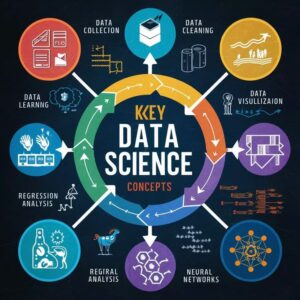
1. Data Science Fundamentals
Before learning advanced techniques, students need to understand what data science is and how data moves through a typical workflow.
A basic workflow might look like:
Problem → Data Collection → Data Cleaning → Exploration → Analysis → Modelling → Evaluation → Communication
Understanding this process helps learners see how individual tools fit together.
2. Statistics
Statistics is an important part of data science.
A Data Science Course in Port Harcourt may introduce concepts such as:
- Mean
- Median
- Mode
- Variance
- Standard deviation
- Probability
- Correlation
- Distributions
- Sampling
- Hypothesis testing
- Regression
Statistics helps learners interpret data rather than simply manipulate numbers.
3. Python Programming
Python is widely used in the data science ecosystem.
A beginner Data Science Course in Port Harcourt should ideally introduce programming gradually.
Learners may study:
- Variables
- Data types
- Operators
- Conditional statements
- Loops
- Functions
- Lists
- Dictionaries
- File handling
- Basic programming logic
After learning Python fundamentals, learners can move into libraries used specifically for data work.
4. Pandas and NumPy
Pandas is useful for working with tabular data, while NumPy provides tools for numerical computing.
With these tools, learners can practise tasks such as:
- Loading datasets
- Filtering information
- Removing duplicates
- Handling missing values
- Creating calculated fields
- Grouping data
- Combining datasets
- Performing numerical calculations
5. SQL
SQL is another valuable skill for data professionals.
Many organisations store information in databases, so understanding how to retrieve and manipulate data is important.
A Data Science Course in Port Harcourt may teach:
- SELECT statements
- Filtering
- Sorting
- Aggregation
- GROUP BY
- JOIN
- CASE statements
- Subqueries
- Common table expressions
For example, a learner could use SQL to answer:
“Which products generated the highest revenue during the last six months?”
That is more meaningful than simply learning SQL syntax without applying it.
6. Data Cleaning
Real-world data often contains errors.
A dataset may include:
- Missing information
- Duplicate records
- Incorrect spellings
- Invalid values
- Different date formats
- Inconsistent categories
Data cleaning is therefore an important part of a practical Data Science Course in Port Harcourt.
Students should learn not only how to clean data but also how to identify why a problem exists.
7. Data Visualisation
Data visualisation allows findings to be communicated more clearly.
Learners may work with:
- Bar charts
- Line charts
- Scatter plots
- Histograms
- Box plots
- Heatmaps
- Interactive dashboards
The goal is not to create attractive charts for their own sake. A good visualisation should help the audience understand an important finding.
Data Science Tools Beginners Should Learn
A good Data Science Course in Port Harcourt does not need to teach every technology available.
Instead, beginners should develop strong foundations in a manageable set of tools.
Python
Used for programming, data analysis, automation and machine learning.
SQL
Used for interacting with relational databases.
Pandas
Used for data manipulation and analysis.
NumPy
Used for numerical operations.
Jupyter Notebook
Useful for combining code, analysis, explanations and visualisations in one environment.
Power BI
Power BI is primarily a business intelligence and data visualisation platform, but it can complement data science skills by helping learners communicate analytical findings.
Git and GitHub
These tools can help learners organise projects and demonstrate their work to others.
Data Science Course in Port Harcourt: Practical Learning Matters
One of the most important factors to consider when selecting a Data Science Course in Port Harcourt is how much practical work is included.
There is a major difference between:
Learning what a machine learning algorithm is
and
Using a dataset to build, evaluate and explain a machine learning model.
Practical learning helps bridge that gap.
A learner should have opportunities to:
- Receive a problem
- Find or receive relevant data
- Clean the data
- Explore the dataset
- Analyse patterns
- Build a model where appropriate
- Evaluate results
- Explain findings
- Present recommendations
This type of practice makes the learning process more realistic.
Real-World Data Science Projects in Port Harcourt
A strong Data Science Course in Port Harcourt can use projects that reflect realistic Nigerian scenarios.
1. Retail Sales Analysis
Imagine a retail company operating in Port Harcourt.
Students could analyse:
- Monthly sales
- Product categories
- Customer purchases
- Revenue
- Inventory
- Seasonal patterns
The final result could be a report explaining which products perform well and where improvements may be needed.
2. Customer Churn Prediction
A telecommunications or subscription business could be interested in identifying customers who may stop using its service.
Students could explore:
- Customer tenure
- Usage
- Service plans
- Customer complaints
- Payment behaviour
They could then develop a basic predictive model and evaluate its performance.
3. Demand Forecasting
A business could use historical sales data to estimate future demand.
This can introduce learners to:
- Time-series data
- Trends
- Seasonality
- Forecasting concepts
- Model evaluation
4. Nigerian Business Dashboard
Learners could combine SQL, Python or spreadsheet data with a dashboarding tool to create a business performance report.
The project could display:
- Revenue
- Expenses
- Sales
- Customers
- Product performance
- Monthly trends
These projects make a Data Science Course in Port Harcourt more connected to practical problem-solving.
Data Science Course in Port Harcourt and Portfolio Building
A portfolio is one of the most useful outcomes of practical technology training.
Instead of telling an employer:
“I have learned Python.”
A learner can demonstrate:
“Here is a Python project where I cleaned a dataset, analysed customer behaviour and communicated the results.”
A good beginner portfolio could contain:
- Python data analysis project
- SQL project
- Data visualisation project
- Machine learning project
- Business case study
- Capstone project
Each project should explain:
The problem → The data → The process → The findings → The conclusion
This makes the portfolio easier for someone else to understand.
Data Science vs Data Analytics
People searching for a Data Science Course in Port Harcourt often also encounter data analytics courses.
Although the fields overlap, they are not exactly the same.
Data analytics commonly focuses on examining data to understand performance, trends and business questions.
Data science generally covers a broader collection of methods involving programming, statistics, data analysis, machine learning and predictive modelling.
For example:
Data analytics question:
“What were our highest-selling products last month?”
Data science question:
“Can historical customer and product data help us predict future purchasing behaviour?”
Both approaches are valuable, and data analytics can provide a useful foundation for people who later want to progress into data science.
Career Opportunities After Data Science Training
Completing a Data Science Course in Port Harcourt does not automatically guarantee employment. However, developing relevant technical skills can prepare learners to explore different roles within the wider data and technology ecosystem.
Possible career directions include:
Data Analyst
Data analysts examine data and communicate insights that support organisational decisions.
Junior Data Scientist
Junior data scientists may assist with data preparation, analysis, experimentation and modelling.
Machine Learning Engineer
Machine learning engineers focus on developing and deploying machine learning systems.
Business Intelligence Analyst
BI analysts work with business data, reporting systems and dashboards.
Data Engineer
Data engineers help build systems and infrastructure for collecting, transforming and providing access to data.
Research and Quantitative Roles
Learners with strong mathematical and statistical foundations may also explore research-oriented data roles.
Data Science Career Opportunities in Nigeria
Data science can be applied across many Nigerian industries.
Examples include:
- Banking
- Fintech
- Telecommunications
- Healthcare
- Energy
- Insurance
- Logistics
- Retail
- Education
- E-commerce
- Technology companies
- Professional services
For learners in Port Harcourt, this creates opportunities to think beyond a single industry.
A person could develop data skills and later apply them to business, finance, technology, energy or another field where data is important.
How AI Fits Into Data Science
Artificial intelligence is increasingly connected with modern data workflows.
AI tools can assist with activities such as:
- Code development
- Data exploration
- Documentation
- Text analysis
- Automation
- Pattern identification
- Predictive modelling
However, AI does not eliminate the need for fundamental knowledge.
Someone taking a Data Science Course in Port Harcourt should still understand statistics, data quality, programming logic and model evaluation.
AI should be treated as a tool that supports good technical work rather than a replacement for understanding.
How to Choose a Data Science Course in Port Harcourt
Before enrolling in a Data Science Course in Port Harcourt, ask several practical questions.
Does the Course Include Practical Exercises?
Find out how much time is spent actually working with data.
Does the Curriculum Include Python and SQL?
These are important foundations for many data-related roles.
Are Real-World Projects Included?
Projects help turn theoretical knowledge into practical experience.
Will You Build a Portfolio?
Ask whether learners complete projects that they can organise and present professionally.
Is Mentorship Available?
Beginners often need help understanding errors and difficult concepts.
Does the Programme Include Career Preparation?
Consider whether the training covers topics such as project presentation, professional communication, interview preparation and workplace expectations.
Does the Programme Address AI?
Modern data professionals should understand how AI is changing data-related workflows.
How Potenmunia Tech School Approaches Data Science
For learners considering a Data Science Course in Port Harcourt, Potenmunia Tech School approaches technology education with an emphasis on practical application and career preparation.
The learning approach focuses strongly on hands-on practice rather than relying only on classroom theory. Students can work through exercises and practical projects designed to help them understand how technology skills apply to real problems.
Real-world projects and capstone experiences are particularly important because data science requires more than knowing definitions. Learners need opportunities to work through complete problems from data preparation to analysis and communication.
Portfolio building is another important part of the approach. Students can use completed projects as evidence of their developing technical abilities.
Mentorship provides learners with guidance as they encounter challenges, while career and job-readiness support can help them understand how to present their skills and projects professionally.
Potenmunia also incorporates AI and future-focused skills, helping learners understand how emerging technologies can complement traditional data science techniques.
The school additionally encourages innovation and entrepreneurship, giving learners an opportunity to think about how technology and data can be used to create solutions, products or services.
For someone comparing options for a Data Science Course in Port Harcourt, these practical considerations can be more useful than choosing a programme based only on its title.
A Beginner’s Data Science Learning Roadmap
If you are completely new to data science, you can follow a gradual learning path.
1. Learn Computer and Data Fundamentals
Understand files, folders, spreadsheets, databases and basic data concepts.
2. Learn Excel
Practise formulas, sorting, filtering, tables, PivotTables and basic charts.
3. Learn Statistics
Build an understanding of descriptive statistics, probability and relationships between variables.
4. Learn SQL
Practise retrieving and summarising data from databases.
5. Learn Python
Start with programming fundamentals before moving into data science libraries.
6. Learn Pandas and NumPy
Practise manipulating and analysing datasets.
7. Learn Data Visualisation
Learn how to communicate findings using appropriate charts and dashboards.
8. Learn Machine Learning
Start with basic supervised and unsupervised learning concepts.
9. Build Projects
Apply your knowledge to realistic datasets and business problems.
10. Build Your Portfolio
Document your projects and organise them so that other people can understand your work.
How Long Does a Data Science Course in Port Harcourt Take?
There is no single answer because course duration varies between programmes and learners.
Someone studying full-time may progress faster than someone learning part-time.
More importantly, learners should measure progress by competence rather than simply counting weeks.
For example, ask:
- Can I clean a dataset?
- Can I write useful SQL queries?
- Can I analyse data using Python?
- Can I create meaningful visualisations?
- Can I explain my findings?
- Can I build and evaluate a basic model?
- Can I document a project?
Being able to answer these questions provides a better indication of progress.
Is Data Science Suitable for Beginners?
Yes.
A beginner does not need to know advanced programming before starting a Data Science Course in Port Harcourt.
However, learners should expect to encounter mathematics, statistics and programming.
The learning process becomes easier when students progress gradually.
Instead of attempting to learn Python, SQL, statistics, machine learning and artificial intelligence simultaneously, beginners can build one foundation before moving to the next.
Common Mistakes to Avoid When Learning Data Science
Focusing Only on Certificates
A certificate can document completion, but practical skills and projects help demonstrate competence.
Learning Too Many Tools
It is better to understand a small number of relevant tools deeply than to know the names of dozens of technologies.
Copying Portfolio Projects
Learners should understand the projects they present rather than simply copying tutorials.
Ignoring Statistics
Statistics is an important foundation for interpreting data and understanding machine learning.
Avoiding Practice
Data science is a practical field. Regular practice is essential.
Expecting Instant Results
Becoming comfortable with data science takes time. Consistent practice is more useful than rushing through topics.
Who Should Take a Data Science Course in Port Harcourt?
A Data Science Course in Port Harcourt may be suitable for:
- University students
- Recent graduates
- Working professionals
- Data analysts
- Technology enthusiasts
- Business professionals
- Entrepreneurs
- People changing careers
- Learners interested in artificial intelligence
The ideal starting point depends on your current skills and career goals.
Someone with a statistics background may progress differently from someone who is completely new to technology.
Frequently Asked Questions About Data Science Course in Port Harcourt
What is a Data Science Course in Port Harcourt?
A Data Science Course in Port Harcourt is a structured programme that teaches learners how to work with data using programming, statistics, data analysis, visualisation and machine learning techniques.
Can beginners take a Data Science Course in Port Harcourt?
Yes. Beginners can start with fundamental computer, programming, mathematics and statistics concepts before progressing into more advanced areas.
What programming language should I learn for data science?
Python is an important language to consider because it has a large ecosystem of libraries for data analysis, visualisation and machine learning.
Is SQL important for a Data Science Course in Port Harcourt?
Yes. SQL is useful for accessing and analysing information stored in relational databases.
Do I need mathematics to study data science?
You do not need to be an advanced mathematician to start, but mathematics and statistics become increasingly important as you progress into advanced data science and machine learning.
Can I learn data science without a computer science degree?
Yes. People enter data-related careers from different academic and professional backgrounds. Practical skills, projects and continued learning are important.
What should I look for in a Data Science Course in Port Harcourt?
Look for a programme with a clear curriculum, practical exercises, real-world projects, portfolio development, mentorship and appropriate career preparation.
Can a Data Science Course help me build a portfolio?
A practical programme can provide projects that become part of a portfolio. Learners should document those projects clearly and understand the work they present.
Is data science the same as data analytics?
No. They overlap, but data science generally encompasses a broader range of programming, statistics, machine learning and predictive modelling techniques.
Can data science skills be used in Nigeria?
Yes. Data-related skills can be applied across sectors including finance, telecommunications, healthcare, energy, logistics, retail, education and technology.
Learn More About Data Science
For an additional general reference, readers can explore Wikipedia’s overview of Data Science, which provides background on the field, its interdisciplinary nature and related concepts.
Conclusion
Choosing a Data Science Course in Port Harcourt is an important first step, but the course itself is only part of the learning journey.
The most valuable approach is to combine foundational knowledge with continuous practice.
A strong learning path should help you develop skills in:
- Statistics
- Python
- SQL
- Data cleaning
- Data analysis
- Data visualisation
- Machine learning
- Artificial intelligence
- Problem-solving
- Communication
Most importantly, you should have opportunities to apply these skills to realistic projects.
For learners in Port Harcourt, a practical Data Science Course in Port Harcourt can provide a structured environment for developing these capabilities while building a portfolio and preparing for future opportunities.
Potenmunia Tech School provides a practical, career-focused technology learning environment in Port Harcourt, with an emphasis on hands-on training, projects, portfolio development, mentorship, AI integration and career preparation.
If you are considering learning data science, take time to compare the curriculum, practical experience, project opportunities and support available before choosing a programme. The right course should help you move beyond simply learning about data science toward actually using data science skills to solve problems.
If you are looking for Data Science Training in Port Harcourt, you are probably trying to understand what data science involves, what you will learn, which tools you need, how much programming is required, and whether data science is a worthwhile skill to develop in Nigeria.
Data Science Training in Port Harcourt is becoming increasingly relevant to students, graduates, working professionals, entrepreneurs, and technology enthusiasts who want to understand how data can be used to solve real-world problems.
Data science combines areas such as statistics, programming, data analysis, data visualisation, machine learning and domain knowledge. Wikipedia describes data science as an interdisciplinary field concerned with extracting knowledge and insights from data. You can learn more about the subject through Wikipedia’s Data Science overview.
However, learning data science is not simply about learning Python or memorising machine-learning algorithms. Effective Data Science Training in Port Harcourt should help you understand the complete process of working with data—from collecting and cleaning information to analysing it, building models, communicating findings and applying results to practical problems.
This guide explains what you should know before choosing Data Science Training in Port Harcourt, what skills you can expect to develop and how to approach your learning journey.
What Is Data Science?
Data science is the practice of using scientific methods, statistics, programming, algorithms and analytical techniques to extract useful knowledge and insights from data.
In simple terms, data science helps people and organisations answer questions using data.
For example, imagine a retail business in Port Harcourt has five years of sales records.
The business may want to know:
- Which products sell most frequently?
- Which months produce the highest revenue?
- Which customers purchase most often?
- What factors influence sales?
- Can future sales be predicted?
- Which products should the business keep in stock?
- Are there unusual patterns in customer transactions?
A data science process can help investigate these questions.
This is why Data Science Training in Port Harcourt should focus not only on software but also on problem-solving and analytical thinking.
What Is Data Science Training in Port Harcourt?
Data Science Training in Port Harcourt refers to structured learning programmes designed to teach students and professionals how to work with data using programming, statistics, databases, visualisation and machine-learning techniques.
A comprehensive Data Science Training in Port Harcourt programme may introduce learners to:
- Python programming
- SQL
- Statistics
- Data cleaning
- Data analysis
- Data visualisation
- NumPy
- Pandas
- Matplotlib
- Seaborn
- Jupyter Notebook
- Machine learning
- Predictive modelling
- Model evaluation
- Data storytelling
- Portfolio development
The exact curriculum differs between training providers, so learners should examine the curriculum carefully before enrolling.
Why Is Data Science Training Important in Port Harcourt?
Port Harcourt is an important commercial centre in Nigeria, with businesses and organisations operating across different industries.
These organisations generate and use data every day.
A business may have data about:
- Customers
- Sales
- Employees
- Inventory
- Payments
- Marketing
- Logistics
- Operations
- Website visitors
- Social media activity
Without appropriate analysis, large amounts of information can remain underused.
This creates opportunities for people who understand how to organise, analyse and interpret data.
For someone considering Data Science Training in Port Harcourt, the local environment can also provide useful ideas for practical projects.
For example, learners could analyse a fictional dataset representing:
- Port Harcourt retail transactions
- Nigerian e-commerce purchases
- Transportation activity
- Customer service records
- Energy consumption
- School performance
- Hospital appointment records
- Small-business revenue
- Nigerian financial transactions
The objective is not simply to create charts. It is to learn how to investigate a problem and use evidence to reach reasonable conclusions.
Who Should Enrol for Data Science Training in Port Harcourt?
One of the misconceptions about data science is that it is only suitable for computer scientists.
That is not necessarily true.
Students
Students studying computer science, mathematics, statistics, engineering, economics, business or related subjects may find data science useful.
A student can combine an existing academic background with practical technology skills.
Graduates
Graduates who want to enter technology or analytical roles can use data science training to develop practical capabilities.
For example, an economics graduate could learn Python, statistics and data analysis and apply those skills to economic datasets.
Working Professionals
Professionals who already work with reports, spreadsheets or business information can expand their analytical capabilities through data science.
Business Owners
Entrepreneurs can learn how data can support decisions involving customers, sales, marketing and business performance.
Career Switchers
People from non-technical backgrounds can also begin learning data science, although they may need additional time to develop programming and statistical foundations.
What Do You Learn in Data Science Training in Port Harcourt?
A strong Data Science Training in Port Harcourt programme should gradually introduce learners to several interconnected areas.
1. Data Science Fundamentals
Before writing advanced code, learners need to understand the fundamentals.
Topics can include:
- What data science means
- Types of data
- Structured and unstructured data
- Data collection
- Data preparation
- Data analysis
- Data visualisation
- Statistics
- Machine learning
- Predictive analytics
- Data ethics
Understanding these concepts gives learners a foundation for the technical subjects that follow.
2. Python for Data Science
Python is an important programming language in modern data science.
During Data Science Training in Port Harcourt, beginners may learn:
- Variables
- Data types
- Operators
- Conditional statements
- Loops
- Functions
- Lists
- Dictionaries
- File handling
- Basic error handling
- Working with data
The objective should be practical application.
Instead of learning Python syntax without context, students can use Python to solve data-related problems.
3. NumPy
NumPy is commonly used for numerical computing in Python.
Learners can use NumPy for:
- Arrays
- Numerical calculations
- Mathematical operations
- Data manipulation
- Scientific computing
It can become particularly useful when working with larger numerical datasets.
4. Pandas
Pandas is one of the most useful Python libraries for practical data analysis.
During Data Science Training in Port Harcourt, learners can use Pandas to:
- Import datasets
- Examine data
- Select columns
- Filter records
- Handle missing values
- Remove duplicates
- Group information
- Merge datasets
- Create calculated columns
- Summarise data
For example, a learner could receive a dataset containing 20,000 fictional Nigerian retail transactions and use Pandas to determine which product categories generate the most revenue.
5. SQL and Databases
Data is often stored inside databases.
SQL allows users to retrieve and manipulate information from relational databases.
A beginner may learn:
- SELECT
- WHERE
- ORDER BY
- GROUP BY
- JOIN
- Aggregate functions
- Subqueries
- Basic database concepts
SQL is particularly useful because data professionals frequently need to retrieve information before analysing it with other tools.
6. Statistics for Data Science
Statistics is an important component of Data Science Training in Port Harcourt.
Students may study:
- Mean
- Median
- Mode
- Range
- Variance
- Standard deviation
- Probability
- Correlation
- Distributions
- Sampling
- Hypothesis testing
Statistics helps learners understand what data is actually saying.
For example, if a dataset shows that two variables increase together, correlation analysis can help investigate their relationship. However, correlation alone does not automatically prove that one variable causes the other.
7. Data Cleaning
Real-world data is often messy.
A dataset may contain:
- Missing values
- Duplicate records
- Incorrect spellings
- Inconsistent dates
- Invalid entries
- Incorrect data types
- Extreme values
Data cleaning is therefore an essential part of Data Science Training in Port Harcourt.
Students should learn how to identify problems and decide how they should be handled.
8. Data Visualisation
Data visualisation transforms information into charts and graphical representations.
Common visualisations include:
- Bar charts
- Line charts
- Histograms
- Scatter plots
- Box plots
- Heatmaps
For example, instead of giving a business owner thousands of rows of monthly sales data, a data professional could create a visual showing sales trends over several years.
The visual can make patterns easier to identify.
Machine Learning and Data Science Training in Port Harcourt
Machine learning is another major area students may encounter during Data Science Training in Port Harcourt.
Machine learning involves creating systems that learn patterns from data and use those patterns to make predictions or classifications.
Beginners may encounter:
Supervised Learning
The model learns from data where the expected outcome is known.
Examples include:
- Predicting sales
- Classifying customers
- Estimating property prices
Unsupervised Learning
The system looks for patterns or groups without a predefined target.
Examples include:
- Customer segmentation
- Clustering
- Pattern discovery
Regression
Regression can be used when predicting numerical values.
For example, a model could estimate future sales based on historical information.
Classification
Classification is used when assigning observations to categories.
For example, a model might classify transactions into different categories.
Model Evaluation
Students should also learn that building a model is not the end of the process.
A model needs to be evaluated to determine how well it performs on appropriate data.
This is an important part of responsible Data Science Training in Port Harcourt because learners need to understand both the strengths and limitations of predictive models.
Data Science Training in Port Harcourt: Tools Beginners Should Learn
Beginners do not need to master every available technology.
A practical learning path might include:
| Tool | Purpose |
|---|---|
| Python | Programming and data science |
| Pandas | Data manipulation |
| NumPy | Numerical computing |
| SQL | Database querying |
| Jupyter Notebook | Interactive analysis |
| Matplotlib | Data visualisation |
| Seaborn | Statistical visualisation |
| Scikit-learn | Machine learning |
| Excel | Spreadsheet analysis |
| Power BI | Business intelligence and reporting |
The important thing is understanding how the tools work together.
For example:
SQL → retrieve data → Python/Pandas → clean and analyse → visualisation → communicate findings
Data Science vs Data Analytics
People searching for Data Science Training in Port Harcourt often encounter another term: data analytics.
The two fields overlap, but they are not identical.
Data analytics generally focuses on examining data to answer questions, identify trends and support decisions.
Data science can include data analytics but may extend into programming, predictive modelling, machine learning and other advanced techniques.
Consider a supermarket.
A data analyst might investigate why sales declined last month.
A data scientist could potentially use historical data to build a model that predicts future sales.
Both roles use data, but their responsibilities and technical depth can differ.
This is why someone interested in Data Science Training in Port Harcourt may also benefit from learning data analytics first.
Why Hands-On Learning Matters
One of the most important things to consider when choosing Data Science Training in Port Harcourt is how much practical work is included.
There is a major difference between:
“I watched a tutorial about Pandas.”
and
“I used Pandas to clean and analyse a dataset and explained my findings.”
The second demonstrates application.
Hands-on training allows learners to:
- Write code
- Work with datasets
- Make mistakes
- Debug problems
- Interpret results
- Build projects
- Explain their methodology
- Improve through feedback
This is why practical projects should form a meaningful part of data science education.
Real-World Data Science Projects for Port Harcourt Learners
A learner completing Data Science Training in Port Harcourt can develop projects around realistic scenarios.
Retail Sales Project
Analyse fictional sales data from a Port Harcourt retail business.
Questions could include:
- Which products sell most?
- Which month generates the most revenue?
- Which branch performs best?
- What is the average order value?
Customer Analysis Project
Analyse customer records to understand purchasing behaviour.
Nigerian E-Commerce Project
Study a simulated online shopping dataset to investigate customer purchases, product categories and sales trends.
Transportation Project
Analyse fictional transportation data to examine passenger numbers, journey patterns and peak periods.
Education Project
Use an appropriate educational dataset to investigate relationships between attendance, study habits and academic performance.
The key is to treat every project as a problem-solving exercise rather than merely a coding assignment.
Building a Data Science Portfolio
A portfolio is one of the most useful outcomes of practical Data Science Training in Port Harcourt.
Instead of simply saying that you know Python or machine learning, your portfolio can demonstrate your ability.
Each project can contain:
- Project title
- Problem statement
- Dataset description
- Data-cleaning process
- Exploratory analysis
- Visualisations
- Methodology
- Model, if applicable
- Results
- Recommendations
- Limitations
- Lessons learned
A portfolio also gives you something concrete to discuss when applying for opportunities.
How Long Does Data Science Training in Port Harcourt Take?
There is no universal duration for Data Science Training in Port Harcourt.
The timeframe depends on:
- Your previous experience
- Course structure
- Number of training hours
- Study time outside class
- Your programming background
- The complexity of the curriculum
- Your career objective
A beginner may first need to learn programming and data fundamentals before progressing to machine learning.
A learner who already understands Python and statistics may move more quickly through introductory topics.
The important question is not simply:
“How quickly can I finish data science training?”
A better question is:
“How much practical competence will I have when I finish?”
How to Choose Data Science Training in Port Harcourt
Before paying for a programme, evaluate the training carefully.
Check the Curriculum
Does it include:
- Python?
- SQL?
- Statistics?
- Data cleaning?
- Data visualisation?
- Machine learning?
- Practical projects?
Ask About Practical Classes
Find out how much of the programme involves actually working with datasets and technology.
Ask About Projects
Will you complete projects that can become part of your portfolio?
Consider Mentorship
Mentorship can help learners overcome technical challenges and improve their projects.
Examine Career Support
If employment is your goal, look for programmes that provide useful career preparation.
Consider Learning Mode
Some learners prefer physical classroom training, while others prefer online or hybrid learning.
Potenmunia Tech School states that it offers physical, online and hybrid learning options from its Port Harcourt base.
Data Science Training in Port Harcourt at Potenmunia Tech School
Potenmunia Tech School approaches technology education with an emphasis on practical skills and career development.
Its technology programmes include data-related training alongside areas such as artificial intelligence, Python programming and Power BI.
For learners interested in Data Science Training in Port Harcourt, the practical approach is particularly relevant because data science requires more than theoretical knowledge.
The learning experience can be viewed around several important areas.
100% Practical, Hands-On Learning
The objective of practical training is to give learners opportunities to work with technology rather than simply listen to explanations.
In data-related learning, this can mean working with datasets, writing code, cleaning information, creating visualisations and interpreting results.
Real-World Projects
Projects give learners an opportunity to connect concepts with realistic problems.
Rather than learning Python, SQL or machine learning in isolation, students can apply those skills to practical scenarios.
Portfolio Development
A portfolio provides evidence of what a learner can actually do.
This is particularly useful for beginners who may not yet have extensive professional experience.
Mentorship
Learning data science can involve difficult concepts and technical challenges. Mentorship provides an opportunity for learners to receive guidance and feedback as they progress.
Career and Job Readiness
Potenmunia also emphasises career preparation, including portfolio development and other forms of career support. Its website describes programmes for students, graduates, working professionals and job seekers.
AI and Future Skills
Artificial intelligence is increasingly connected with modern data workflows.
Developing foundational skills in data analysis, Python, statistics and machine learning can therefore provide a useful foundation for understanding newer AI technologies.
Innovation and Entrepreneurship
Data skills can also be applied beyond traditional employment.
A learner could use data to identify a business problem, develop an analytical solution or create a technology-based service.
This innovation mindset is useful for people interested in entrepreneurship as well as employment.
Data Science Career Opportunities in Nigeria
Completing Data Science Training in Port Harcourt does not automatically guarantee employment.
However, developing practical data skills can prepare learners for different career directions.
Potential roles include:
- Data Analyst
- Junior Data Scientist
- Business Intelligence Analyst
- Research Analyst
- Business Analyst
- Data Engineer
- Machine Learning Engineer
- Analytics Consultant
The appropriate career path depends on the individual’s skills, experience and interests.
For many beginners, starting with data analytics before progressing into advanced data science can be a practical strategy.
Can You Learn Data Science Without a Computer Science Degree?
Yes.
A computer science degree can provide useful foundations, but it is not the only route into data science.
People from backgrounds such as:
- Economics
- Mathematics
- Statistics
- Engineering
- Finance
- Business
- Social sciences
can also develop data skills.
However, learners should expect to spend time developing programming, statistics and analytical thinking.
Is Data Science Difficult for Beginners?
Data science can be challenging because it combines multiple disciplines.
You may encounter programming, mathematics, statistics, databases and machine learning.
The solution is not to avoid the difficult areas.
Instead, learn progressively.
A practical pathway is:
Computer fundamentals → Python → SQL → Statistics → Data Analysis → Visualisation → Machine Learning → Projects → Portfolio
Trying to jump directly into advanced machine learning without understanding the foundations can make the learning process unnecessarily difficult.
Common Mistakes to Avoid When Learning Data Science
Learning Too Many Tools
You do not need to learn every programming language or platform.
Start with the core tools and build from there.
Focusing Only on Certificates
Certificates can document training, but practical competence matters too.
Avoiding Statistics
Statistics is an important part of understanding data and evaluating models.
Copying Projects Without Understanding Them
A project is more valuable when you understand why each step was performed.
Not Building a Portfolio
Document your strongest projects as you learn.
Expecting Immediate Professional-Level Skills
Data science takes practice.
Consistent learning is more sustainable than trying to master everything within a very short period.
A Beginner’s Data Science Training Roadmap in Port Harcourt
If you are starting from zero, consider the following roadmap.
1 Understand Data
Learn basic data concepts and how organisations use information.
2. Learn Python
Develop fundamental programming skills.
3. Learn SQL
Understand databases and how to retrieve information.
4. Learn Statistics
Build your foundation in statistical reasoning.
5. Learn Pandas and NumPy
Start manipulating and analysing datasets.
6. Learn Data Visualisation
Learn how to communicate information through appropriate charts.
7. Learn Machine Learning
Begin with fundamental algorithms and model evaluation.
8. Complete Practical Projects
Work on realistic datasets and solve clearly defined problems.
9. Build Your Portfolio
Document your projects and explain your decisions.
10.Prepare for Career Opportunities
Develop your CV, portfolio, interview skills and professional network.
What Makes Good Data Science Training Different?
Not every Data Science Training in Port Harcourt programme will provide the same learning experience.
A strong programme should help you move through three levels:
Knowledge → Practice → Application
Knowledge means understanding concepts.
Practice means working with tools and datasets.
Application means using those skills to solve problems independently.
If a programme gives you only the first level, you may understand data science but struggle to apply it.
That is why practical exercises, real-world projects, mentorship and portfolio development are important considerations when selecting Data Science Training in Port Harcourt.
Final Thoughts on Data Science Training in Port Harcourt
Data Science Training in Port Harcourt can be a valuable learning pathway for people who want to develop practical skills in programming, statistics, data analysis, visualisation and machine learning.
The field is broad, so beginners should avoid trying to learn everything at once.
Start with the fundamentals.
Learn Python.
Understand SQL.
Study statistics.
Practise data analysis.
Learn how to visualise information.
Progress into machine learning.
Then apply what you know through practical projects.
Most importantly, build evidence of your ability through a portfolio.
For learners comparing Data Science Training in Port Harcourt, look beyond certificates and course titles. Examine the curriculum, practical training, projects, mentorship, portfolio opportunities and career preparation.
Potenmunia Tech School provides a technology-learning environment in Port Harcourt with physical, online and hybrid options, while its broader programmes emphasise practical technology skills, projects, career development and innovation.
If you are considering Data Science Training in Port Harcourt, take time to understand what you want to achieve and choose a learning path that helps you develop genuine, usable skills.
Frequently Asked Questions About Data Science Training in Port Harcourt
What is Data Science Training in Port Harcourt?
Data Science Training in Port Harcourt is structured education that teaches learners how to use programming, statistics, data analysis, visualisation and machine learning to work with data and solve practical problems.
Where can I learn data science in Port Harcourt?
Learners can investigate technology training schools and programmes in Port Harcourt and compare their curriculum, practical components, projects, mentorship and career support before choosing a programme.
Is Data Science Training in Port Harcourt suitable for beginners?
Yes. Beginners can start data science by learning foundational concepts and progressing gradually into Python, SQL, statistics, data analysis and machine learning.
What programming language should I learn for data science?
Python is an important language for data science. SQL is also valuable because it allows professionals to work with data stored in databases.
Do I need mathematics to learn data science?
You do not need to be an advanced mathematician to begin, but mathematics and statistics become increasingly important as you progress into more advanced data science and machine learning.
How long does Data Science Training in Port Harcourt take?
The duration varies according to the training provider, curriculum, learning schedule and student’s previous experience. Developing professional competence also requires continued practice after formal training.
What tools are used in Data Science Training in Port Harcourt?
Common tools include Python, Pandas, NumPy, SQL, Jupyter Notebook, Matplotlib, Seaborn and Scikit-learn. Excel and Power BI may also be useful depending on the learner’s career objectives.
Can I learn data science without a computer science degree?
Yes. Learners from mathematics, statistics, economics, engineering, finance, business and other backgrounds can develop data science skills.
What projects can I build while learning data science?
You can build projects around sales analysis, customer behaviour, forecasting, Nigerian business data, transportation, education, finance and other suitable datasets.
Is data analytics the same as data science?
No. They overlap significantly, but data science generally covers a broader range of technical areas, including programming, predictive modelling and machine learning.
Is Data Science Training in Port Harcourt useful for Nigerian jobs?
Data skills can be relevant across sectors including finance, retail, technology, logistics, healthcare, education, telecommunications and other industries. However, employment depends on your actual skills, experience, portfolio and the requirements of individual employers.
What should I look for before enrolling for Data Science Training in Port Harcourt?
Look for a clear curriculum, practical learning, real-world projects, experienced mentorship, portfolio development and appropriate career preparation.
Can data science be used for entrepreneurship?
Yes. Data can help entrepreneurs understand customers, analyse business performance, identify trends and develop data-driven products or services.
Where can I read more about data science?
For a general reference and overview of the field, you can read Wikipedia’s Data Science article.
If you are searching for Data Science in Port Harcourt, you may be wondering what Data Science actually involves, what skills you need, which tools you should learn, and whether you can build a career in the field without an advanced technical background.
This guide provides a practical introduction to Data Science in Port Harcourt, especially for beginners in Port Harcourt and other parts of Nigeria.
Data Science is an interdisciplinary field that combines areas such as statistics, mathematics, computer science, programming, data analysis, visualization, and machine learning to extract useful knowledge and insights from data.
For someone beginning a Data Science Port Harcourt learning journey, the field may initially appear overwhelming because it combines several different disciplines. The good news is that you do not need to learn everything at once.
You can start with fundamental data concepts, Excel and statistics, then progress to SQL, Python, data analysis, visualization, and eventually machine learning and AI.
This article explains what Data Science means, why it matters in Port Harcourt, what beginners should learn, useful tools, project ideas, career possibilities, and how to develop practical skills.
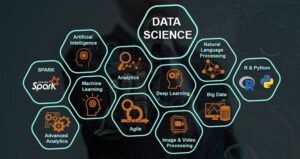
What Is Data Science?
Data Science is the process of using data, scientific methods, programming, statistics and computational techniques to discover patterns, generate insights, make predictions and solve problems.
A simple Data Science workflow can be represented as:
Data Collection → Data Cleaning → Data Analysis → Modelling → Evaluation → Insights → Decision
According to Wikipedia’s current overview, Data Science combines statistics, scientific computing, scientific methods, visualization, algorithms and systems to extract or extrapolate knowledge from structured and unstructured data.
You can explore the subject further through Wikipedia’s Data Science article.
For example, imagine a business in Port Harcourt that records thousands of transactions.
The business might want to know:
- Which products sell most frequently?
- Which months generate the highest revenue?
- Which customers purchase most often?
- Which locations generate the most sales?
- Can future demand be predicted?
- Which customers may stop using the service?
Data Science provides techniques that can help answer questions like these.
Why Data Science Port Harcourt Is Becoming an Important Skill
The phrase Data Science Port Harcourt represents more than simply a search for a training programme.
It also reflects a broader question:
How can people and organizations in Port Harcourt use data to solve real problems?
Port Harcourt has economic activity across industries including energy, logistics, retail, education, healthcare, finance, hospitality and professional services.
Each of these areas can generate data.
For example, a logistics company may collect:
- Delivery locations
- Delivery times
- Vehicle information
- Fuel consumption
- Customer orders
- Distance travelled
- Failed deliveries
A Data Science approach could help the organization investigate patterns in those records.
A retailer could analyse customer purchases.
A school could examine student performance.
A hospital could study appointment patterns.
A financial organization could analyse transactions and customer behaviour.
This demonstrates why Data Science in Port Harcourt should not be viewed as a skill limited to software companies.
Who Should Learn Data Science in Port Harcourt?
Data Science can be suitable for different types of learners.
You may want to explore Data Science Port Harcourt if you are:
- A university student
- A recent graduate
- A professional interested in technology
- A business owner
- A data analyst who wants to advance
- A programmer interested in machine learning
- A researcher
- Someone changing careers
- Someone interested in AI
- A beginner looking for a technical skill
You do not necessarily need to begin as an expert programmer.
What matters is having the willingness to learn, practise and solve problems.
What Should You Learn for Data Science in Port Harcourt?
A beginner should avoid trying to learn Python, machine learning, artificial intelligence, SQL and advanced statistics simultaneously.
A more manageable path is:
Computer Fundamentals → Excel → Statistics → SQL → Python → Data Analysis → Visualization → Machine Learning → AI → Projects
The exact sequence can vary, but the important principle is progressive learning.
1. Computer Fundamentals
Before beginning advanced Data Science Port Harcourt training, you should be comfortable using a computer.
Important skills include:
- Managing files and folders
- Installing software
- Using browsers
- Managing documents
- Using keyboard shortcuts
- Working with spreadsheets
- Searching for information
- Using cloud-based applications
Strong computer fundamentals make later technical learning easier.
2. Excel for Data Science Beginners
Excel is a useful starting point for many people exploring Data Science in Port Harcourt.
It allows beginners to understand datasets without immediately having to write code.
You can learn:
- Data entry
- Sorting
- Filtering
- Formulas
- Functions
- Conditional formatting
- Charts
- PivotTables
- Data cleaning
- Basic statistics
Useful Excel functions include:
SUM, AVERAGE, COUNT, COUNTA, COUNTBLANK, IF, SUMIF, COUNTIF, ROUND, ROUNDUP and ROUNDDOWN.
For example, a beginner studying Data Science Port Harcourt could create a fictional dataset of monthly sales from businesses in different areas of Port Harcourt.
The learner could then use Excel to identify:
- Highest-selling products
- Monthly sales trends
- Average transaction values
- Sales by location
- Product categories with the strongest performance
This provides an excellent introduction to thinking analytically.
3. Statistics for Data Science Port Harcourt
Statistics is one of the foundations of Data Science.
You should understand concepts such as:
- Mean
- Median
- Mode
- Range
- Variance
- Standard deviation
- Probability
- Percentages
- Correlation
- Sampling
- Distributions
- Hypothesis testing
You do not need to become an advanced mathematician before starting.
However, as your Data Science skills grow, your understanding of statistics should grow as well.
Example
Suppose two businesses each report average monthly revenue of ₦2 million.
That information alone does not tell the whole story.
One business might generate nearly ₦2 million every month.
The other might generate ₦500,000 one month and ₦4 million the next.
Statistics can help describe the difference in their patterns.
4. SQL for Data Science in Port Harcourt
SQL stands for Structured Query Language.
It is used to retrieve and manipulate information stored in relational databases.
SQL is an important skill for people learning Data Science Port Harcourt because organizations frequently store large amounts of information in databases.
Beginners should learn:
- SELECT
- WHERE
- ORDER BY
- GROUP BY
- HAVING
- JOIN
- CASE
- Aggregate functions
- Subqueries
- Common Table Expressions
- Window functions
For example, imagine a company has 500,000 customer transactions stored in a database.
Instead of manually searching the records, SQL can help answer questions such as:
Which products generated the highest revenue?
Which customers purchased most frequently?
What were the monthly sales totals?
SQL therefore becomes an important bridge between databases and Data Science.
5. Python for Data Science Port Harcourt
Python is one of the most widely used programming languages in Data Science.
For someone beginning Data Science in Port Harcourt, Python can become an important long-term skill.
Start with:
- Variables
- Strings
- Numbers
- Lists
- Dictionaries
- Conditional statements
- Loops
- Functions
- Modules
- File handling
- Error handling
After learning Python fundamentals, move into Data Science libraries.
Important Python Libraries
Pandas
Pandas is widely used for manipulating and analysing structured data.
It can help you:
- Load datasets
- Filter records
- Clean information
- Handle missing values
- Group data
- Combine datasets
- Transform columns
NumPy
NumPy provides tools for numerical computing and forms an important part of the Python data ecosystem.
Matplotlib
Matplotlib can be used to create data visualizations.
Seaborn
Seaborn provides tools for statistical visualization.
Scikit-learn
Scikit-learn provides tools for machine-learning tasks such as classification, regression, clustering and model evaluation.
Data Cleaning: One of the Most Important Data Science Skills
A dataset collected from the real world is rarely perfect.
You may encounter:
- Missing values
- Duplicate records
- Incorrect spellings
- Wrong data types
- Inconsistent dates
- Outliers
- Invalid values
- Inconsistent location names
For example, a dataset could contain:
Port Harcourt
port harcourt
PH
P/H
Port-Harcourt
If these values represent the same location, they may need to be standardized before analysis.
This is why data cleaning should be an important part of any practical Data Science Port Harcourt learning programme.
Data Visualization and Data Science in Port Harcourt
Data visualization makes patterns easier to understand.
Common visualization types include:
- Bar charts
- Line charts
- Histograms
- Scatter plots
- Box plots
- Heatmaps
- Dashboards
For example, if you want to understand how sales change from January to December, a line chart may make the trend easier to see.
If you want to compare product categories, a bar chart may be more suitable.
The purpose of visualization is not simply to make a report attractive.
It is to communicate information clearly.
Data Science vs Data Analytics
Many people searching for Data Science in Port Harcourt also encounter Data Analytics.
The two fields overlap but are not identical.
Data Analytics
Data Analytics generally focuses on analysing existing data to discover patterns and answer questions.
A Data Analyst may ask:
- What happened?
- Why did it happen?
- Which products performed well?
- What trends can we identify?
Data Science
Data Science can include analytics but may extend into:
- Programming
- Statistical modelling
- Machine learning
- Predictive modelling
- Automation
- Artificial intelligence
A Data Scientist may ask:
- What might happen next?
- Can we predict customer behaviour?
- Can we automatically classify new information?
- Can we build a model that supports decision-making?
For many beginners, Data Analytics can provide a useful foundation before moving into more advanced Data Science.
Artificial Intelligence and Data Science Port Harcourt
AI is increasingly connected with Data Science.
However, Data Science and Artificial Intelligence are not the same thing.
Data Science focuses on extracting useful knowledge from data.
AI focuses on building systems that can perform tasks associated with intelligent behaviour.
Machine learning is one of the major areas connecting Data Science and AI.
For example, historical customer data could be used to train a model that predicts whether a customer may be likely to purchase a particular product.
For learners interested in Data Science Port Harcourt, understanding AI alongside strong foundations in statistics, programming and data analysis can be valuable.
Machine Learning for Data Science Beginners
Machine learning allows computers to learn patterns from data and use those patterns to make predictions or classifications.
Supervised Learning
The algorithm learns from labelled examples.
Applications include:
- Price prediction
- Customer churn prediction
- Classification
- Fraud-related pattern detection
Unsupervised Learning
The algorithm works with data without predefined labels.
Applications include:
- Customer segmentation
- Clustering
- Pattern discovery
Model Evaluation
A beginner should also learn how to evaluate models.
Important concepts include:
- Training data
- Testing data
- Validation
- Accuracy
- Precision
- Recall
- F1 score
- Overfitting
- Underfitting
Simply creating a machine-learning model does not mean the model is useful.
It must be evaluated appropriately.
Practical Data Science Port Harcourt Project Ideas
Projects are one of the most effective ways to turn theoretical knowledge into practical ability.
Here are several project ideas suitable for learners.
Port Harcourt Sales Analysis Project
Create a fictional sales dataset containing:
- Product
- Quantity
- Price
- Date
- Customer location
- Salesperson
Then analyse:
- Monthly revenue
- Best-selling products
- Sales by location
- Average order value
- Product performance
This project can introduce Excel, SQL, Python and visualization.
Port Harcourt Customer Analysis Project
Create a customer dataset and investigate:
- Customer age groups
- Purchase frequency
- Average spending
- Product preferences
- Customer segments
The project can introduce exploratory data analysis and clustering concepts.
Nigerian Business Dashboard
Create a dashboard showing:
- Revenue
- Expenses
- Profit
- Product performance
- Monthly trends
- Customer segments
This project can combine Data Science, Data Analytics and visualization skills.
Delivery Analysis Project
Create a fictional delivery dataset containing:
- Delivery location
- Distance
- Delivery time
- Vehicle
- Fuel consumption
- Delivery status
Then investigate factors associated with delivery delays.
This demonstrates how Data Science can be connected to practical operational problems.
Building a Data Science Portfolio in Port Harcourt
Completing a course is only one part of developing technical competence.
A portfolio allows you to demonstrate what you can actually do.
Your portfolio could include:
- Excel analysis
- SQL projects
- Python notebooks
- Data-cleaning projects
- Power BI dashboards
- Statistical analysis
- Machine-learning projects
- Business case studies
For every project, explain:
- The problem
- The dataset
- The tools used
- Data-cleaning steps
- Analysis
- Results
- Recommendations
- Limitations
This is much more useful than simply uploading a screenshot of a chart without explaining the work behind it.
Data Science Career Opportunities in Port Harcourt and Nigeria
Data Science skills can be applied across different sectors.
Energy
Data can support:
- Forecasting
- Operational analysis
- Maintenance planning
- Performance monitoring
Finance
Possible applications include:
- Customer analysis
- Risk analysis
- Fraud-pattern detection
- Forecasting
Retail
Retail businesses can analyse:
- Sales
- Inventory
- Customer behaviour
- Product performance
- Pricing
Healthcare
Data can support:
- Operational planning
- Appointment analysis
- Resource management
- Research
Education
Schools and educational organizations can analyse:
- Student performance
- Attendance
- Engagement
- Learning outcomes
Logistics
Logistics businesses can use data to examine:
- Routes
- Delivery times
- Vehicle performance
- Fuel usage
- Customer demand
This wide range of applications is one reason Data Science in Port Harcourt can be relevant to learners with different career interests.
Skills You Need to Develop for Data Science
Technical skills are important, but Data Science requires more than programming.
Problem-Solving
Learn how to turn a real-world problem into a data problem.
Critical Thinking
Do not automatically assume that every dataset tells the truth.
Ask:
- Where did the data come from?
- Is it complete?
- Could there be bias?
- Are there errors?
- Does the conclusion make sense?
Communication
A Data Scientist must often explain technical findings to people who are not technical.
Business Understanding
Understanding the purpose behind an analysis helps you focus on useful questions.
Attention to Detail
Small mistakes in data preparation can affect an entire analysis.
How Potenmunia Tech School Approaches Data Science
For someone researching Data Science Port Harcourt, the learning method is worth considering alongside the subjects being taught.
Potenmunia Tech School approaches technology education with an emphasis on practical application and career preparation.
The goal is to help learners move beyond simply knowing definitions and toward actually using technology to solve problems.
100% Practical, Hands-On Learning
Learners can spend time working directly with tools, datasets and technical workflows rather than relying entirely on theory.
Real-World Projects
Projects provide opportunities to apply concepts to realistic problems.
For example, instead of only learning data cleaning as a definition, a learner can work through a messy dataset and document how it was prepared.
Portfolio Building
Completed projects can become portfolio pieces that demonstrate practical ability.
Mentorship
Guidance can help learners understand difficult concepts, improve projects and develop better problem-solving habits.
Career and Job Readiness
The learning process can also include practical preparation such as project presentation, professional communication, CV development and interview preparation.
AI Integration
Modern Data Science increasingly interacts with AI.
Learners can explore how appropriate AI tools can support coding, research, analysis and productivity while still developing the foundational skills required to verify results and make sound decisions.
Innovation and Entrepreneurship
Data skills can also support entrepreneurship.
A learner may identify a business problem, analyse available information and develop a technology-based solution.
How to Start Data Science in Port Harcourt
If you are completely new, use a gradual approach.
1. Understand Data
Learn about datasets, variables, records and data types.
2. Learn Excel
Practise formulas, sorting, filtering, PivotTables and charts.
3. Learn Statistics
Study averages, percentages, probability, correlation and basic distributions.
4. Learn SQL
Practise querying, filtering, grouping and joining database information.
5. Learn Python
Begin with Python fundamentals.
6. Learn Pandas and NumPy
Use Python to work with datasets.
7. Learn Visualization
Create charts and dashboards that communicate insights.
8. Learn Machine Learning
Move into predictive modelling after developing strong foundations.
9. Build Projects
Create realistic projects based on problems that interest you.
10. Build a Portfolio
Document your work and explain your methodology and findings.
Common Data Science Mistakes Beginners Should Avoid
Trying to Learn Everything Immediately
Data Science is broad. Learn progressively.
Focusing Only on Certificates
Certificates can document learning, but practical ability is equally important.
Avoiding Projects
You need practice to turn concepts into skills.
Ignoring Statistics
Statistics is important for understanding data and evaluating models.
Copying Projects
A copied project does not demonstrate your ability to solve problems independently.
Ignoring Communication
A great analysis is less useful if you cannot explain its meaning.
Is Data Science Difficult?
Data Science can be challenging because it combines several areas.
You may need to learn:
- Mathematics
- Statistics
- Programming
- Databases
- Visualization
- Machine learning
But beginners do not need to master all these subjects immediately.
The better approach is to learn one concept, practise it and then build upon it.
A person beginning Data Science Port Harcourt training can start with simple datasets and progressively work toward more complex projects.
How Long Does It Take to Learn Data Science?
There is no single answer.
Your progress depends on:
- Your previous computer experience
- Mathematics background
- Programming experience
- Study schedule
- Practice
- Learning environment
- Project experience
Instead of asking only how many months it will take, ask:
What can I actually do after each stage of learning?
For example:
Foundation: Work confidently with spreadsheets.
Data Skills: Query and clean datasets.
Programming: Use Python to manipulate data.
Analysis: Find and communicate meaningful patterns.
Machine Learning: Build and evaluate basic predictive models.
Career Preparation: Complete projects and present a portfolio.
Data Science Port Harcourt Beginner’s Checklist
Use this checklist to measure your progress:
- Understand basic data concepts
- Work confidently with Excel
- Understand basic statistics
- Write basic SQL queries
- Understand Python fundamentals
- Use Pandas
- Use NumPy
- Clean a dataset
- Create useful charts
- Explain analytical findings
- Understand machine-learning fundamentals
- Complete a Data Science project
- Build a portfolio
- Present your work professionally
You do not have to complete everything immediately.
Think of the checklist as a roadmap.
Frequently Asked Questions About Data Science Port Harcourt
What is Data Science Port Harcourt?
Data Science Port Harcourt refers broadly to learning, practising, applying and building careers around Data Science within Port Harcourt and its surrounding technology and business environment.
Where can I learn Data Science in Port Harcourt?
You can research technology training providers in Port Harcourt and compare their curriculum, practical projects, mentorship, portfolio opportunities and career preparation. Potenmunia Tech School is one option for learners looking for a practical technology-training environment.
Can beginners learn Data Science in Port Harcourt?
Yes. Beginners can start with computer fundamentals, Excel and statistics before progressing to SQL, Python, data analysis and machine learning.
What should I learn first for Data Science?
Start with fundamental data concepts and statistics. Excel can provide an accessible introduction before progressing to SQL and Python.
Is Python important for Data Science?
Yes. Python is widely used for data manipulation, analysis, visualization and machine learning.
Is SQL important for Data Science?
Yes. SQL is particularly useful for accessing and manipulating information stored in relational databases.
Is Data Science the same as Data Analytics?
No. They overlap, but Data Science generally has a broader scope that can include programming, statistics, machine learning and predictive modelling.
Can Data Science be useful for Nigerian businesses?
Yes. Data-driven methods can be applied across areas such as finance, retail, logistics, healthcare, education, telecommunications and energy.
Do I need advanced mathematics?
You do not need advanced mathematics to begin. However, mathematical and statistical knowledge becomes increasingly important as you progress into advanced Data Science and machine learning.
Can I learn Data Science without programming experience?
Yes. You can begin with basic computer and data skills and gradually learn programming.
What projects can I build as a Data Science beginner?
You could build sales-analysis projects, customer segmentation projects, business dashboards, delivery-analysis projects, forecasting projects and other projects based on realistic datasets.
How can I become job-ready?
Develop practical skills, complete projects, build a portfolio, learn to communicate your findings and practise solving realistic business problems.
Conclusion on Data Science Port Harcourt
Data Science Port Harcourt is not simply about learning Python or memorizing machine-learning algorithms.
It is about learning how to use data to understand problems, discover patterns, make predictions, communicate insights and support better decisions.
A practical learning journey can look like:
Excel → Statistics → SQL → Python → Data Analysis → Visualization → Machine Learning → AI → Projects → Portfolio
The most important part is not trying to learn everything immediately.
Start with the fundamentals.
Practise regularly.
Work with realistic datasets.
Build projects.
Learn how to explain your findings.
Then gradually move toward advanced Data Science and AI.
For learners exploring Data Science in Port Harcourt, Potenmunia Tech School provides a practical, career-focused technology learning environment that emphasizes hands-on experience, real-world projects, portfolio development, mentorship, career preparation, AI integration and innovation.
If you are considering Data Science as a career or professional skill, take time to compare learning paths, understand the skills involved and choose an environment where you can practise what you learn.
The goal should not simply be to say that you have studied Data Science.
The goal should be to demonstrate that you can use data to solve problems.
Every time a customer makes a purchase, someone visits a website, a company records an expense, a student completes a course, a business receives an enquiry, or an organization tracks its operations, data is created.
But raw data is not automatically useful.
A spreadsheet containing thousands of rows can contain valuable information while still being difficult for a person to understand. Data visualization helps solve this problem by transforming data into charts, graphs, dashboards, maps and other visual formats that make patterns and relationships easier to see.
At its simplest, data visualization is the visual representation of data.
At a more practical level, data visualization helps answer questions such as:
- What is happening?
- Why is it happening?
- Where is it happening?
- When did it happen?
- Which category is performing better?
- What has changed?
- Are there unusual results?
- What should the business investigate next?
This is why data visualization is an important part of modern data analytics and business intelligence.
For businesses, data visualization can turn complicated reports into understandable information. For analysts, it can make patterns and anomalies easier to investigate. For managers and entrepreneurs, it can provide a clearer basis for decision-making.
For learners developing technology skills in Port Harcourt and across Nigeria, data visualization is therefore more than a software skill. It is a way of thinking about data and communicating what the data means.

What Is Data Visualization?
Data visualization is the process of representing data visually so that people can understand, explore and communicate information more effectively.
Data visualization can use:
- Bar charts
- Line charts
- Pie charts
- Donut charts
- Histograms
- Scatter plots
- Box plots
- Heat maps
- Geographic maps
- Tables
- KPI cards
- Interactive dashboards
- Area charts
- Treemaps
- Waterfall charts
- Funnel charts
- Bubble charts
- Network diagrams
The appropriate visualization depends on the type of data, the question being asked and the audience.
Wikipedia’s overview of data and information visualization similarly describes visualization as the creation of graphical or visual representations that can help people explore data, identify patterns, understand relationships and gain insights.
You can learn more about the broader concept through Wikipedia’s Data and Information Visualization reference.
Data Visualization Is More Than Making Charts
One common misunderstanding is that data visualization simply means creating attractive charts.
It does not.
A chart can be visually impressive and still communicate information badly.
Good data visualization combines:
Data + analysis + visual design + context + communication
For example, imagine that a company has the following sales data:
| Month | Sales |
|---|---|
| January | ₦2.1 million |
| February | ₦2.3 million |
| March | ₦2.2 million |
| April | ₦2.8 million |
| May | ₦3.2 million |
| June | ₦3.5 million |
The table contains the information.
A line chart could make the upward movement easier to recognize.
But the real question is:
Why did sales increase?
Perhaps the company launched a new product. Perhaps it increased marketing. Perhaps demand is seasonal.
The visualization helps reveal the pattern, but analysis is needed to understand the reason.
That distinction is central to effective data visualization.
Why Is Data Visualization Important?
Modern organizations generate enormous amounts of data.
Businesses may have information about:
- Customers
- Products
- Revenue
- Expenses
- Employees
- Marketing campaigns
- Website traffic
- Inventory
- Locations
- Transactions
- Customer support
- Operations
- Business performance
If all of this information is presented as raw tables, decision-makers may struggle to identify what matters.
Data visualization provides a way to organize information visually.
Data Visualization Makes Complex Data Easier to Understand
Imagine looking at 50,000 rows of customer transactions.
It would take significant time to manually identify patterns.
Now imagine seeing a dashboard containing:
- Total sales
- Sales by month
- Sales by location
- Top products
- Average transaction value
- Customer growth
The same underlying data can become much easier to interpret.
This is one of the central purposes of data visualization.
Data Visualization Helps Identify Trends
A data visualization can show how something changes over time.
For example:
- Monthly revenue
- Daily website traffic
- Quarterly expenses
- Customer growth
- Product demand
- Student enrolment
A line chart can reveal whether a metric is increasing, decreasing or remaining relatively stable.
Without visualization, those patterns may be hidden among individual values.
Data Visualization Helps With Comparisons
Suppose a business operates in several Nigerian cities.
A visualization could compare sales across:
- Port Harcourt
- Lagos
- Abuja
- Ibadan
- Enugu
Instead of reading separate numbers, a manager can compare the categories visually.
This can support questions about market performance, customer demand and business expansion.
Data Visualization Helps Identify Outliers
An outlier is a data point that differs substantially from other observations.
For example, if a business normally records between 400 and 600 daily orders but suddenly records 2,000 orders, that value deserves investigation.
The increase could represent:
- A successful promotion
- A seasonal event
- A major customer
- Duplicate records
- A technical problem
- A data-entry error
Data visualization can make unusual values easier to spot.
Data Visualization Improves Communication
Data analysts frequently need to communicate findings to people who are not data specialists.
A business executive may not want to examine a spreadsheet containing thousands of rows.
They may instead want answers to questions such as:
Are sales increasing?
Which products are performing well?
Which location needs attention?
Are our costs rising?
A clear visualization can make these answers easier to communicate.
How Data Visualization Turns Raw Data Into Business Insights
The journey from data to insight usually involves several stages.
Raw data → Data preparation → Data analysis → Data visualization → Insight → Decision
Data visualization sits within this larger analytical process.
1. Define the Business Question
Do not start by asking:
What chart should I create?
Start by asking:
What problem am I trying to understand?
For example:
Weak question:
What charts can I make from this sales dataset?
Better question:
Which products are responsible for the recent decline in monthly revenue?
The second question gives the analysis a clear direction.
2. Collect the Data
The next stage is obtaining relevant information.
A business might collect data from:
- Excel files
- Databases
- Point-of-sale systems
- Websites
- Customer relationship management systems
- Accounting software
- Surveys
- Digital marketing platforms
- APIs
- Internal business systems
The quality of the final visualization depends heavily on the quality of the underlying data.
3. Clean the Data
Data cleaning is an important part of data analytics.
An analyst may need to:
- Remove duplicate records
- Correct spelling inconsistencies
- Standardize dates
- Handle missing values
- Correct numerical errors
- Remove irrelevant records
- Check unusual values
- Combine datasets
For example, a location field might contain:
- Port Harcourt
- Port-Harcourt
- PH
- P/H
- Port Harcourt, Rivers
If these represent the same location but are not standardized, analysis may produce misleading results.
4. Analyze the Data
After cleaning, the analyst examines the information.
This might involve calculating:
- Totals
- Averages
- Percentages
- Growth rates
- Ratios
- Minimum values
- Maximum values
- Trends
- Correlations
The purpose is to understand what the data is showing.
5. Choose the Right Data Visualization
Now the analyst chooses a visual format.
For example:
Comparison: Bar chart
Trend over time: Line chart
Relationship between variables: Scatter plot
Geographic information: Map
Part-to-whole relationship: Pie or donut chart
Multiple business metrics: Dashboard
The best visualization is usually the one that makes the intended message easiest to understand.
6. Interpret the Visualization
Creating the visualization is not the end.
Ask:
- What pattern can I see?
- What changed?
- Is the difference significant?
- Are there unusual values?
- What could explain the pattern?
- What additional data should be investigated?
This is where visualization supports analytical thinking.
7. Turn the Insight Into Action
A business insight becomes more valuable when it informs a decision.
For example:
Data: Product A sales increased by 35% over several months.
Observation: Product A is growing faster than other products.
Possible insight: Demand for Product A may be increasing.
Possible action: The company could investigate inventory planning, customer demand and marketing opportunities.
The visualization supports the process, but the final business decision should consider additional evidence and context.
Types of Data Visualization
There are many types of data visualization, and each has a different purpose.
Bar Chart
A bar chart is one of the most useful forms of data visualization for comparing categories.
For example, a business could compare:
- Sales by product
- Revenue by branch
- Customers by age group
- Expenses by department
- Enrolment by course
If the question is:
Which category is largest?
a bar chart can often provide a clear answer.
Line Chart
Line charts are commonly used for time-series data.
Examples include:
- Monthly revenue
- Weekly website traffic
- Daily orders
- Quarterly profit
- Annual customer growth
A line chart can make changes over time visually obvious.
Pie Chart
Pie charts show how categories contribute to a whole.
For example, a business could visualize its revenue distribution across several product categories.
However, pie charts can become difficult to read when there are too many categories or when the values are very similar.
Donut Chart
A donut chart is similar to a pie chart and is often used in dashboards.
It can be useful for simple proportions, such as:
- Completed vs pending tasks
- New vs returning customers
- Product category shares
Histogram
A histogram shows the distribution of numerical data.
For example, a company could use a histogram to understand the distribution of:
- Customer ages
- Order values
- Delivery times
- Examination scores
Histograms can help analysts understand whether values are concentrated in particular ranges.
Scatter Plot
Scatter plots are useful for examining relationships between two numerical variables.
For example:
Advertising expenditure vs sales revenue
The visualization could help an analyst explore whether higher advertising spending is associated with higher sales.
However, a relationship between two variables does not automatically prove that one causes the other.
Heat Map
A heat map uses variations in visual intensity to represent values.
Heat maps can be useful for identifying areas of high and low activity.
For example, a business could visualize customer activity by:
- Day of the week
- Hour of the day
This might reveal periods of unusually high demand.
Geographic Data Visualization
Maps are useful when location is an important part of the analysis.
A Nigerian company could visualize:
- Customers by state
- Revenue by region
- Branch locations
- Delivery activity
- Market penetration
Geographic data visualization can make spatial patterns easier to recognize.
KPI Cards
KPI cards are common in business dashboards.
A KPI card might show:
Total Revenue: ₦45.8 million
Customers: 12,450
Orders: 8,210
Conversion Rate: 6.4%
KPI cards provide quick access to important business metrics.
Interactive Dashboards
Interactive dashboards combine several forms of data visualization.
A sales dashboard could include:
- Revenue KPI
- Sales trend
- Product comparison
- Regional map
- Customer segmentation
- Monthly performance
Users can sometimes filter the dashboard by date, product, location or customer type.
Data Visualization and Data Analytics
Data visualization is closely connected to data analytics.
Data analytics involves examining data to discover useful information, patterns and insights.
Data visualization provides an important way of exploring and communicating the results.
A typical data analytics workflow might look like:
Collect → Clean → Analyze → Visualize → Interpret → Communicate → Decide
Data visualization can therefore be useful at multiple stages.
Exploratory Data Visualization
Exploratory visualization helps the analyst investigate the dataset.
The analyst may create several charts to discover:
- Patterns
- Trends
- Relationships
- Outliers
- Distribution
- Missing information
At this stage, the analyst is asking:
What is happening in this data?
Explanatory Data Visualization
Explanatory visualization is used when the analyst already has a finding and wants to communicate it.
The question becomes:
How can I explain this finding clearly?
This distinction is important.
An exploratory dashboard might contain many visualizations because the analyst is investigating possibilities.
A management report might contain only a few carefully selected visualizations because the purpose is to communicate specific findings.
Data Visualization and Business Intelligence
Business intelligence, often called BI, involves using data, analytical methods and technology to support business decisions.
Data visualization is a major component of many business intelligence systems.
A business intelligence dashboard can allow managers to monitor:
- Revenue
- Profit
- Customer acquisition
- Sales performance
- Inventory
- Operational efficiency
- Marketing performance
For example, a retail business could build a Power BI dashboard showing sales performance across different branches.
A manager could filter the dashboard by:
- Month
- Branch
- Product
- Customer segment
Instead of asking an analyst to prepare a new spreadsheet every time, the dashboard can make information easier to explore.
Data Visualization and Data Storytelling
Data storytelling combines data, visualization and narrative.
Instead of simply displaying:
Revenue decreased by 14%.
a data story might explain:
Revenue declined over three consecutive months, with the largest decrease occurring in one product category. The decline coincided with reduced sales volume in several locations.
The visualization provides evidence.
The narrative provides context.
The insight provides meaning.
This is why effective data visualization is closely connected to communication.
A good data analyst should not only know how to create charts. They should also know how to explain what the charts mean.
Data Visualization in the Nigerian Business Environment
Data visualization has applications across many industries in Nigeria.
Retail
Retail businesses can visualize:
- Sales by product
- Revenue by location
- Inventory
- Customer purchases
- Seasonal demand
A retailer in Port Harcourt, for example, could create a dashboard showing which product categories generate the most revenue during different periods.
Banking and Financial Services
Financial organizations work with large amounts of transactional and customer information.
Data visualization can help teams monitor:
- Transactions
- Customer activity
- Financial performance
- Operational metrics
- Risk indicators
Logistics
A logistics company can visualize:
- Delivery times
- Orders by location
- Fleet activity
- Delivery volumes
- Delayed shipments
Location-based data visualization can be particularly useful for understanding operational patterns.
Education
Educational institutions can visualize:
- Enrolment
- Attendance
- Student performance
- Course completion
- Examination results
A school could use data visualization to identify subjects where student performance changes significantly between terms.
Marketing
Marketing teams can visualize:
- Website traffic
- Leads
- Advertising spending
- Conversion rates
- Social media engagement
- Customer acquisition
This allows marketers to compare campaigns and investigate which activities are producing useful results.
Small Businesses
Data visualization is not only for large corporations.
A small business can create a simple Excel dashboard containing:
- Monthly revenue
- Expenses
- Profit
- Number of customers
- Best-selling products
Even a relatively simple data visualization can improve understanding of business performance.
Data Visualization Tools
There are many tools available for creating data visualizations.
Microsoft Excel
Excel is a useful starting point for beginners.
Excel supports:
- Charts
- Tables
- PivotTables
- Conditional formatting
- Formulas
- Basic dashboards
A learner can develop foundational data visualization skills in Excel before progressing to more specialized tools.
Microsoft Power BI
Power BI is a business intelligence platform that supports interactive reporting and data visualization.
Learners can use Power BI to:
- Connect to data
- Transform data
- Build data models
- Create charts
- Design dashboards
- Create interactive reports
Power BI can be particularly relevant to people interested in business intelligence and data analyst roles.
Tableau
Tableau is another popular data visualization and business intelligence platform.
It is designed around visual data exploration and interactive dashboards.
Python
Python provides powerful possibilities for data analysis and visualization.
Popular Python visualization libraries include:
- Matplotlib
- Seaborn
- Plotly
Python can be especially useful when data visualization is combined with:
- Data analysis
- Automation
- Machine learning
- Artificial intelligence
- Data science
Data Visualization With Excel
For beginners, Excel can provide a practical introduction to data visualization.
A simple Excel data visualization project could involve sales data.
Start with columns such as:
- Date
- Product
- Quantity
- Price
- Location
- Revenue
Then calculate useful metrics and create visualizations.
For example:
Bar chart: Revenue by product
Line chart: Revenue by month
Pie chart: Revenue share by category
KPI: Total revenue
This simple exercise teaches an important principle:
The visualization should answer a question.
Do not create charts simply because the software makes it possible.
Power BI and Data Visualization
Power BI can take data visualization further by allowing users to create interactive dashboards.
Imagine a dashboard for a Nigerian retail company.
The first page could show:
- Total revenue
- Total orders
- Number of customers
- Average order value
Additional visuals could show:
- Revenue by month
- Sales by product
- Sales by location
- Customer trends
A filter could allow the user to select a specific month or branch.
This turns a static report into an interactive data visualization environment.
Python Data Visualization
Python becomes valuable when learners want greater flexibility or want to integrate visualization with programming.
For example, a Python workflow could:
- Import a dataset.
- Clean the data.
- Analyze the data.
- Create a visualization.
- Export a report.
- Automate the process.
Python data visualization is therefore useful for learners who want to move beyond manual reporting and explore programming-based analytics.
Common Data Visualization Mistakes
Effective data visualization requires more than choosing a chart.
Using Too Many Charts
A dashboard with 25 charts may contain a lot of information but provide little clarity.
More visualization does not necessarily mean better visualization.
Choosing the Wrong Chart
A line chart is usually better for showing a trend over time than a pie chart.
A bar chart is usually more suitable for comparing categories.
The chart should match the analytical question.
Using Too Many Colours
Colour can help highlight important information, but excessive colour can make a dashboard difficult to understand.
Use visual emphasis deliberately.
Removing Important Context
A chart without labels, units, dates or definitions may confuse the audience.
Always provide enough context to interpret the visualization.
Ignoring Data Quality
A visualization cannot correct fundamentally inaccurate data.
Poor data produces poor analysis.
Creating Misleading Visualizations
Charts should represent the data honestly.
Manipulating scales, omitting relevant context or exaggerating small differences can lead people to incorrect conclusions.
Designing for Yourself Instead of the Audience
The person who creates a dashboard understands the dataset better than someone seeing it for the first time.
Always consider the audience.
A technical dashboard for a data analyst may look very different from a management dashboard for a business owner.
Principles of Good Data Visualization
Several principles can improve the quality of data visualization.
1. Start with a question
Know what you want the visualization to communicate.
2. Keep it clear
Remove unnecessary visual elements.
3. Use appropriate charts
Match the visualization to the data and question.
4. Provide context
Include useful labels, units and time periods.
5. Highlight what matters
Use visual emphasis to draw attention to important information.
6. Avoid unnecessary complexity
A simple visualization that communicates clearly is often better than an elaborate visualization that confuses the audience.
7. Consider accessibility
Ensure that people can distinguish important information and understand the visualization.
8. Tell the truth with the data
Visualization should clarify information, not manipulate perception.
How to Create an Effective Data Visualization
A practical data visualization process can be summarized as follows:
1.Understand the data
Know what each column represents.
2. Define the objective
Determine the business or analytical question.
3. Select relevant data
Do not automatically visualize every available field.
4. Clean the data
Check for errors, duplicates and missing information.
5. Analyze the data
Calculate relevant metrics and identify patterns.
6. Select the visualization
Choose a chart based on the question.
7. Design the visualization
Make the chart readable and appropriately labelled.
8. Interpret the results
Explain what the visualization shows.
9. Communicate the insight
Present the finding in language the audience understands.
10. Connect the insight to action
Explain what the business might investigate or consider doing next.
Data Visualization Projects for Beginners
One of the most effective ways to learn data visualization is through projects.
Here are several project ideas.
1. Nigerian Retail Sales Dashboard
Create a dataset containing:
- Products
- Prices
- Quantities
- Locations
- Dates
Then create a dashboard showing:
- Total sales
- Monthly revenue
- Top products
- Sales by location
2. Student Performance Dashboard
Analyze fictional student data.
Visualize:
- Average scores
- Attendance
- Subject performance
- Performance by term
3. Digital Marketing Dashboard
Create a marketing dataset containing:
- Campaign
- Impressions
- Clicks
- Leads
- Spending
- Conversions
Then calculate relevant marketing metrics and visualize campaign performance.
4. Small Business Financial Dashboard
Create a dashboard containing:
- Revenue
- Expenses
- Profit
- Monthly growth
- Product performance
These projects can become portfolio pieces for learners interested in data analytics.
How to Learn Data Visualization
A beginner does not need to learn every visualization tool simultaneously.
A practical learning path can be:
Excel → Data Cleaning → Data Analysis → Power BI → Dashboard Design → Portfolio Projects → Advanced Analytics → Python
The exact sequence can vary depending on your career goals.
If your goal is business intelligence, you may spend more time with Excel, SQL and Power BI.
If your goal is data science, you may eventually add Python, statistics and machine learning.
If your goal is business analytics, you may focus heavily on understanding business questions, KPIs, dashboards and communication.
The important thing is to develop practical competence rather than simply collecting software certifications.
Data Visualization Skills for Aspiring Data Analysts
Someone interested in becoming a data analyst should aim to develop several connected skills.
Technical skills
- Excel
- SQL
- Data cleaning
- Data analysis
- Power BI or another BI tool
- Data visualization
- Basic statistics
Analytical skills
- Problem-solving
- Critical thinking
- Pattern recognition
- Asking useful questions
- Interpreting results
Communication skills
- Presenting findings
- Data storytelling
- Writing reports
- Explaining technical information simply
Professional skills
- Portfolio development
- Project management
- Collaboration
- Presentation
- Job-readiness
Data visualization sits at the intersection of these skills.
Data Visualization and Artificial Intelligence
Artificial intelligence is changing how people interact with data.
AI tools can increasingly assist with tasks such as:
- Exploring datasets
- Generating summaries
- Identifying patterns
- Writing analytical code
- Suggesting visualizations
- Explaining charts
However, AI does not eliminate the need for human analytical judgment.
A person still needs to understand:
- Whether the data is reliable
- Whether the question is meaningful
- Whether the visualization is appropriate
- Whether the interpretation makes sense
- Whether an apparent relationship is actually meaningful
Future data professionals therefore need both technology skills and critical thinking.
How Potenmunia Tech School Approaches Data Visualization
At Potenmunia Tech School in Port Harcourt, data visualization can be learned as part of a broader practical approach to technology and data skills.
The emphasis is on moving beyond simply learning where to click inside a software application.
A learner should understand:
What problem am I solving?
What data do I need?
How should I analyze it?
Which visualization communicates the result?
What does the result actually mean?
How can I present the insight to another person?
This approach connects data visualization with practical projects and real-world problem-solving.
For example, instead of simply asking learners to create a bar chart, a project could involve a fictional Nigerian business with several months of sales data.
The learner could:
- Import the data.
- Clean the dataset.
- Analyze sales.
- Identify trends.
- Create visualizations.
- Build a dashboard.
- Explain the findings.
- Recommend areas for further investigation.
- Document the project as part of a portfolio.
This is where hands-on learning becomes important.
Potenmunia’s practical approach can also connect data visualization to portfolio building, giving learners opportunities to demonstrate what they can actually create rather than relying only on a list of completed courses.
Mentorship can help learners understand how technical projects relate to real workplace expectations, while career and job-readiness support can help them develop the communication and presentation skills needed to explain their work.
The same foundation can also support innovation and entrepreneurship. An entrepreneur who understands data visualization can use dashboards and analytics to monitor customers, sales, expenses, marketing performance and other business indicators.
As technology continues to evolve, AI integration and future-focused skills can further expand how learners approach data analysis and visualization.
Why Data Visualization Is a Valuable Technology Skill
Data visualization is useful because data alone does not automatically create understanding.
An organization can collect millions of records and still struggle to answer basic business questions.
The value comes from being able to move from:
Data → Information → Analysis → Visualization → Insight → Decision
That ability is useful across many roles.
A:
- Data analyst
- Business analyst
- Business intelligence professional
- Marketing analyst
- Product analyst
- Operations professional
- Entrepreneur
- Manager
may all use data visualization differently.
The tools may change, but the underlying skill remains valuable:
understanding information and communicating what it means.
Data Visualization Checklist
Before publishing a dashboard or report, ask:
Data
- Is the data accurate?
- Is the data complete?
- Have duplicates been checked?
- Are dates and categories consistent?
Analysis
- What question am I answering?
- Are the calculations correct?
- Have I investigated unusual values?
Visualization
- Is the chart appropriate?
- Is the chart easy to read?
- Are the labels clear?
- Is unnecessary information removed?
Communication
- Can someone understand the main message quickly?
- Have I explained important findings?
- Is there enough context?
Decision-making
- What does the insight mean?
- What should the organization investigate next?
- What additional information might be required?
Frequently Asked Questions About Data Visualization
What is data visualization?
Data visualization is the graphical representation of data using charts, graphs, dashboards, maps and other visual formats. It helps people explore, understand and communicate patterns and relationships in data.
Why is data visualization important?
Data visualization makes complex information easier to understand. It can help people identify trends, compare categories, discover unusual results and communicate analytical findings.
What is the purpose of data visualization?
The purpose of data visualization is to make data easier to explore, interpret and communicate. In business environments, it can support data-driven decision-making.
Is data visualization part of data analytics?
Yes. Data visualization is an important part of data analytics. Analysts use visualizations to explore datasets, identify patterns and communicate findings.
What are the most common types of data visualization?
Common types include:
- Bar charts
- Line charts
- Pie charts
- Histograms
- Scatter plots
- Heat maps
- Maps
- Dashboards
- Tables
- KPI cards
What is a data visualization dashboard?
A data visualization dashboard is a collection of charts, metrics and other visual elements presented together to help users monitor and understand important information.
What is the best tool for data visualization?
There is no single tool that is best for every situation. Excel is useful for beginners, while Power BI and Tableau are widely used for interactive business intelligence. Python provides additional flexibility for people who want to combine programming with data analysis and visualization.
Can I learn data visualization without programming?
Yes. You can learn many data visualization fundamentals using tools such as Excel and Power BI without first becoming a programmer.
Programming can be added later as your analytical requirements become more advanced.
Is Power BI a data visualization tool?
Power BI is a business intelligence platform that includes extensive data visualization and reporting capabilities.
Can Excel be used for data visualization?
Yes. Excel supports many types of charts, PivotTables, conditional formatting and dashboard-style reporting.
Is data visualization useful for small businesses?
Yes. Small businesses can use data visualization to monitor sales, expenses, customers, inventory, marketing and other important business metrics.
What is data storytelling?
Data storytelling combines data analysis, visualization and narrative to communicate an insight clearly to an audience.
What should a beginner learn before data visualization?
A beginner can start with spreadsheet fundamentals, basic data analysis and data-cleaning concepts. From there, they can learn dashboard creation and tools such as Power BI.
How can I build a data visualization portfolio?
Create several practical projects based on realistic datasets. Explain the business question, data-cleaning process, analysis, visualizations, insights and recommendations for each project.
Is data visualization useful for a data analyst career?
Yes. Data visualization is an important skill for many data-related roles. However, aspiring data analysts should also develop data cleaning, SQL, statistics, analytical thinking and communication skills.
Conclusion
Data visualization is one of the most practical ways to transform complex information into something people can understand.
A spreadsheet may contain thousands of numbers.
A data visualization can reveal a trend.
A dashboard can bring several metrics together.
A well-designed chart can make a comparison obvious.
A data story can explain what happened.
And a carefully interpreted visualization can contribute to a better business decision.
That is why learning data visualization should not be limited to learning how to create charts.
The deeper skill is learning how to move from raw data to useful insight.
For learners in Port Harcourt and across Nigeria, developing this capability can provide a strong foundation for further study in data analytics, business intelligence, technology and related fields.
Potenmunia Tech School approaches technology education with an emphasis on practical learning, real-world projects, portfolio development, mentorship, career preparation, innovation and future-oriented skills.
If you are beginning your data journey, start with a small dataset. Ask a meaningful question. Clean the data. Analyze it. Create a visualization. Explain what you discovered.
Then do it again with a more challenging problem.
Over time, you will learn that the most valuable part of data visualization is not the chart itself.
It is the insight the chart helps you see and communicate.