
If you are searching for the top full-stack development courses in Nigeria, you will find many programs offering different learning paths, technologies, durations, teaching formats, and career-support options. Choosing the right course therefore requires more than looking at the course title or price.
The top full-stack development courses in Nigeria should help learners understand how complete web applications are designed, developed, tested and deployed. A strong program should normally cover frontend development, backend programming, databases, APIs, version control, deployment, and practical projects.
For beginners, the right full-stack development course in Nigeria can provide a structured path into software development. For professionals, it can provide an opportunity to expand from frontend or backend development into broader application development.
This guide explains what to look for when comparing the top full-stack development courses in Nigeria, what technologies you may learn, what projects you should build, how long training can take, and how to evaluate a practical full-stack development program.

What Is Full-Stack Development?
Full-stack development involves working across the major layers of a web application, particularly the frontend and backend.
The frontend is the part of an application that users see and interact with. It commonly involves technologies such as HTML, CSS and JavaScript.
The backend handles application logic, server-side processing, APIs, authentication and communication with databases.
A full-stack developer therefore needs to understand how these different components work together.
For a simple example, imagine an online shopping platform.
A customer sees products through the frontend. When the customer adds an item to a cart, the frontend communicates with the backend. The backend processes the request and interacts with a database containing products, customers and orders.
That complete flow is why full-stack development is broader than learning only how to create webpages.
Wikipedia’s overview of web development also distinguishes frontend development from backend development and explains that full-stack developers can work across both sides of a web application.
Why Are Full-Stack Development Courses Popular in Nigeria?
The growth of digital businesses, startups, online services and technology-enabled organizations has increased interest in software development skills.
Learners in Nigeria may be interested in full-stack development because it provides exposure to several parts of the software development process rather than limiting them to one layer.
A full-stack learner can eventually explore areas such as:
- Frontend development
- Backend development
- API development
- Database development
- Software engineering
- Web application development
- Freelance development
- Startup product development
- Remote software development
This broad foundation is one reason people search for the top full-stack development courses in Nigeria rather than looking only for frontend or backend training.
However, learning full-stack development does not mean that a student must become an expert in every technology. It means developing a useful understanding of how the different parts of an application connect.
What Should the Top Full-Stack Development Courses in Nigeria Teach?
When comparing the top full-stack development courses in Nigeria, start with the curriculum.
A course that calls itself “full-stack” should provide meaningful coverage of both frontend and backend development, along with the tools required to connect and deploy applications.
1. HTML and CSS
HTML provides the structure of a webpage, while CSS controls its appearance and layout.
Beginners should learn:
- HTML structure
- Semantic HTML
- Forms
- Links and navigation
- CSS selectors
- Flexbox
- CSS Grid
- Responsive design
- Mobile-friendly layouts
These skills form the foundation of web development.
2. JavaScript Programming
JavaScript is an important part of modern web development.
A beginner-oriented full-stack program should introduce concepts such as:
- Variables
- Functions
- Arrays
- Objects
- Loops
- Conditions
- DOM manipulation
- Events
- Asynchronous programming
- Fetching data from APIs
- Modern JavaScript syntax
Students should practice these concepts by building working applications rather than simply memorizing definitions.
3. Frontend Frameworks
Many modern applications use frontend frameworks or libraries.
Depending on the program, learners may encounter technologies such as React, Vue or Angular.
For example, some current Nigerian full-stack programs teach React alongside backend technologies such as Python/Django or Node.js.
A useful course should explain why a framework is used and how its components fit into a complete application.
4. Backend Development
Backend development is another major component of the top full-stack development courses in Nigeria.
Students may learn technologies such as:
- Node.js
- Express
- Python
- Django
- PHP
- Laravel
- Java
- C#
- Other backend frameworks
The specific language matters less than whether learners understand backend concepts such as routing, APIs, authentication, validation and application logic.
5. Databases
Most useful applications need somewhere to store information.
A full-stack development course should introduce database concepts and, depending on its technology stack, systems such as:
- MySQL
- PostgreSQL
- MongoDB
- Other SQL or NoSQL databases
Students should understand how applications create, retrieve, update and delete information.
6. APIs
APIs allow different software components to communicate.
For example, a frontend application might send a request to a backend API to retrieve a customer’s information.
Students should understand:
- HTTP requests
- GET and POST requests
- PUT/PATCH requests
- DELETE requests
- JSON
- Authentication
- API endpoints
- Error handling
7. Git and GitHub
Git is widely used for version control.
A practical full-stack course should teach learners how to:
- Create repositories
- Commit changes
- Create branches
- Merge changes
- Work with GitHub
- Document projects
- Collaborate with other developers
A GitHub profile can also become part of a learner’s professional portfolio.
8. Deployment
A developer should understand what happens after an application has been built locally.
Depending on the program, students may be introduced to hosting platforms, cloud services, domain configuration, environment variables and basic deployment workflows.
Some current Nigerian programs explicitly include deployment and DevOps topics in their full-stack curriculum.
Top Full-Stack Development Courses in Nigeria: What Makes a Course Worth Considering?
There is no single curriculum that will suit every learner.
When researching the top full-stack development courses in Nigeria, consider the following factors.
Practical Project-Based Learning
One of the first questions to ask is:
What will I build during the course?
A learner may understand programming concepts but still struggle to create an application independently.
Practical projects help bridge that gap.
A strong full-stack course may involve projects such as:
- Portfolio websites
- Blog platforms
- Student management systems
- E-commerce applications
- Booking systems
- Business dashboards
- Authentication systems
- REST APIs
- Full-stack CRUD applications
Current Nigerian programs demonstrate different approaches to project-based learning. For example, some advertise capstone projects or live applications as part of their curriculum.
A Clear Learning Progression
The top full-stack development courses in Nigeria should have a logical progression.
A beginner should not be expected to understand complex backend architecture before learning basic programming concepts.
A sensible progression might look like:
HTML/CSS → JavaScript → Frontend → Backend → Databases → APIs → Integration → Deployment → Capstone Project
This allows learners to build on previous knowledge.
Instructor Support
Learning programming can involve difficult problems.
A learner may spend hours trying to understand why an application is not working.
Instructor feedback can help explain:
- What caused the problem
- How to debug it
- How to improve the code
- How to approach similar problems independently
This is particularly valuable for beginners.
Portfolio Development
A course should ideally help students produce evidence of their practical skills.
Instead of finishing with only a certificate, learners should have projects that they can demonstrate.
A portfolio might include:
- GitHub repositories
- Live applications
- Project descriptions
- Screenshots
- Technical explanations
- Personal developer website
Career Preparation
The learning process does not end with writing code.
Aspiring developers may also need to understand:
- Technical interviews
- Behavioral interviews
- CV preparation
- LinkedIn profiles
- GitHub presentation
- Portfolio presentation
- Job applications
- Freelance proposals
These areas can be particularly useful for learners who intend to pursue software development professionally.
Top Full-Stack Development Courses in Nigeria for Beginners
Beginners should pay particular attention to how a program introduces programming.
A course that assumes substantial prior knowledge may not be suitable for someone writing their first lines of code.
A beginner-friendly full-stack development course in Nigeria should gradually introduce concepts.
1. Programming Fundamentals
Learn:
- Variables
- Data types
- Functions
- Conditions
- Loops
- Arrays
- Objects
- Problem-solving
2. Web Development Fundamentals
Learn:
- HTML
- CSS
- Responsive design
- JavaScript
- Browser concepts
3. Frontend Development
Build interactive interfaces using JavaScript and a modern frontend framework.
4. Backend Development
Learn:
- Servers
- APIs
- Routing
- Authentication
- Backend programming
- Application logic
5. Databases
Learn how applications store and retrieve information.
6. Full-Stack Integration
Connect the frontend, backend and database into one working application.
7. Deployment
Publish applications so that they can be accessed through the internet.
8. Portfolio Development
Select your strongest projects and present them professionally.
Full-Stack Development Courses in Nigeria: Technologies You May Learn
Different schools use different technology stacks.
For example, some programs focus on JavaScript, React and Node.js, while others combine React with Python and Django or PHP and Laravel.
Current Nigerian course offerings illustrate this variety. Univelcity’s full-stack program, for example, combines React.js with Python/Django, while other programs use combinations such as React, Node.js, PostgreSQL, PHP, Laravel or MySQL.
This means students should not select a course simply because it contains a long list of programming languages.
Instead, ask:
Does the technology stack support the type of development I want to learn?
A student interested in modern JavaScript development may prefer a JavaScript/TypeScript-based pathway.
Another learner may prefer Python/Django.
Someone interested in PHP-based business applications may find a Laravel pathway more relevant.
The important thing is to understand the fundamentals and learn how to build complete applications.
Top Full-Stack Development Courses in Nigeria and Practical Projects
Projects should become progressively more complex.
Beginner Project: Personal Portfolio
A portfolio website teaches:
- HTML
- CSS
- Responsive design
- Basic JavaScript
- Deployment
Intermediate Project: Blog Platform
A blog can introduce:
- User authentication
- Database operations
- CRUD functionality
- APIs
- Backend programming
Advanced Project: E-Commerce Platform
An e-commerce application can introduce:
- User accounts
- Product management
- Shopping carts
- Orders
- Authentication
- Database relationships
- Payment integration
- Backend APIs
Capstone Project
A capstone should combine multiple technologies into one meaningful application.
For example, Nigerian learners could build:
- A school management system
- A local service-booking platform
- A small-business inventory system
- A marketplace
- A logistics management application
- A community platform
The goal should be to solve a realistic problem while demonstrating technical ability.
Full-Stack Development Training in Port Harcourt
Learners searching for top full-stack development courses in Nigeria may also be specifically interested in full-stack development training in Port Harcourt.
Port Harcourt learners should consider more than proximity.
When evaluating a technology training school, examine:
- Curriculum
- Practical sessions
- Instructor access
- Class size
- One-on-one support
- Projects
- Portfolio development
- Mentorship
- Interview preparation
- Job application support
- Learning schedule
The learning environment can have a significant effect on the experience of a beginner.
For someone who repeatedly gets stuck while learning JavaScript, direct instructor feedback may be more useful than simply watching additional tutorials.
How Potenmunia Tech School Approaches Full-Stack Development
At Potenmunia Tech School in Port Harcourt, full-stack development can be approached from a practical and career-focused perspective.
Rather than treating programming as purely theoretical, the learning approach emphasizes hands-on practice and real-world projects.
One feature is one-on-one learning with a dedicated personal instructor. This gives learners an opportunity to receive individualized guidance, feedback and mentorship based on their progress.
The practical structure also allows learners to work through coding exercises and projects instead of relying exclusively on lectures.
As learners develop their technical skills, portfolio development can become part of the process. Real projects provide examples that can eventually be presented to employers, clients or collaborators.
Career preparation is another part of the wider learning approach. Learners can receive support with CV development, portfolio presentation, technical interviews, behavioral interviews and job applications.
For someone in Port Harcourt researching top full-stack development courses in Nigeria, these practical and career-focused elements are worth examining alongside the technology stack and curriculum.
How Long Do Full-Stack Development Courses in Nigeria Take?
There is no standard duration for every full-stack development course in Nigeria.
Current programs demonstrate significant variation. For example, publicly listed programs include courses lasting approximately eight weeks, six months and nine months, depending on their curriculum and learning structure.
The duration should therefore be considered alongside the amount of practical work involved.
A shorter course may provide an introduction, while a longer program may have more time for projects, advanced concepts, mentorship and capstone development.
Instead of asking only:
“How many months is the course?”
also ask:
“What will I be able to build when I finish?”
How Much Do Full-Stack Development Courses in Nigeria Cost?
The cost varies considerably depending on the institution, duration, learning format, curriculum and level of support.
Publicly listed Nigerian programs currently show different pricing structures. For example, some programs advertise fees in the hundreds of thousands of naira, while others use different payment structures or installment options.
Rather than choosing a course solely because it is cheaper, compare what the tuition includes.
Check whether the fee covers:
- Instructor-led classes
- Practical projects
- Mentorship
- Course materials
- Code reviews
- Portfolio development
- Career preparation
- Certification
- Capstone projects
- Post-training support
A lower tuition price does not necessarily mean lower value, and a higher price does not automatically guarantee a better learning experience.
Top Full-Stack Development Courses in Nigeria: Online vs Physical Training
Another consideration is how you prefer to learn.
Physical Training
Physical classes can provide:
- Direct instructor interaction
- Classroom structure
- Peer collaboration
- Immediate feedback
- A dedicated learning environment
Online Training
Online programs can provide:
- Flexible location
- Remote learning
- Recorded materials
- Flexible scheduling
- Access from different parts of Nigeria
Hybrid Training
Hybrid programs combine physical and online elements.
The right option depends on the learner’s schedule, learning style and access to reliable internet and equipment.
Career Opportunities After Full-Stack Development Training
Completing a full-stack program can provide a foundation for several technology roles.
Possible career directions include:
- Junior Full-Stack Developer
- Frontend Developer
- Backend Developer
- Web Developer
- Software Developer
- Application Developer
- Freelance Developer
- Remote Developer
- Startup Developer
A learner may initially study full-stack development and later specialize.
For example, someone may discover a strong interest in frontend development and specialize in React and TypeScript.
Another learner may prefer backend development, databases and APIs.
Full-stack development can therefore provide a broad foundation from which specialization can develop.
A Practical Checklist for Choosing Among the Top Full-Stack Development Courses in Nigeria
Before enrolling, ask these questions:
Curriculum
- Does the program teach frontend development?
- Does it teach backend development?
- Does it include databases?
- Does it cover APIs?
- Does it teach Git and GitHub?
- Does it include deployment?
Practical Experience
- How many projects will I build?
- Is there a capstone project?
- Will my applications be deployed?
- Will I receive code reviews?
Instructor Support
- Can I ask questions directly?
- Is there one-on-one guidance?
- How frequently do instructors provide feedback?
Career Support
- Is CV development included?
- Is interview preparation included?
- Is portfolio development supported?
- Is job application guidance available?
Learning Format
- Is it physical, online or hybrid?
- What is the class schedule?
- How much practice is expected each week?
Cost
- What does the tuition include?
- Are payment plans available?
- Are there additional costs for tools or examinations?
This checklist can help you compare the top full-stack development courses in Nigeria based on actual learning outcomes rather than marketing language.
What Skills Should You Have Before Starting?
You do not necessarily need professional programming experience.
However, basic computer literacy can make the learning process easier.
You should be prepared to:
- Use a computer regularly
- Install software
- Work with files and folders
- Search for technical information
- Practice consistently
- Read documentation
- Solve problems
- Learn from mistakes
The most important beginner skill is persistence.
Programming often involves errors. Learning how to investigate and solve those errors is part of becoming a developer.
How to Become a Full-Stack Developer in Nigeria
A practical roadmap can look like this:
1. Learn HTML and CSS.
2. Learn JavaScript and programming fundamentals.
3. Build small frontend projects.
4. Learn a frontend framework such as React.
5. Learn backend programming.
6. Learn databases and APIs.
7. Connect frontend and backend applications.
8. Learn Git and GitHub.
9. Learn deployment.
10. Build substantial portfolio projects.
11. Prepare your CV and developer portfolio.
12. Practice technical interviews and begin applying for suitable opportunities.
This roadmap can be followed through a structured course, self-study or a combination of both.
Conclusion on the Top Full-Stack Development Courses in Nigeria
The top full-stack development courses in Nigeria should be evaluated by the skills, projects and practical experience they provide rather than by the name of the institution alone.
A useful full-stack development program should give learners a structured path through frontend development, backend programming, databases, APIs, version control and deployment.
Beginners should also look for instructor support and a curriculum that does not assume extensive previous programming knowledge.
For aspiring professionals, portfolio development, interview preparation, CV support and job application guidance can add another important dimension to technical training.
For learners in Port Harcourt, evaluating local training options should involve examining the actual learning experience, project structure, instructor support and career preparation.
Ultimately, the purpose of learning full-stack development is not simply to collect technologies or complete a certificate. It is to develop the ability to understand problems, write code, build applications, debug errors and create useful digital products.
If you are exploring the top full-stack development courses in Nigeria, take time to compare the curriculum, practical projects, mentorship, learning format, cost and career support before making your choice. A well-structured learning journey can give you a stronger foundation for continued growth in software development.
Frequently Asked Questions
What are the top full-stack development courses in Nigeria?
The top full-stack development courses in Nigeria are programs that provide structured training in frontend development, backend programming, databases, APIs, version control, deployment and practical application development. Learners should compare programs based on curriculum, projects, mentorship and career support.
Which full-stack development course is best for beginners?
Beginners should look for a course that starts with programming and web fundamentals before progressing into frontend, backend and database development. Instructor support and practical projects are particularly useful for beginners.
Can I learn full-stack development without a computer science degree?
Yes. Full-stack development can be learned through structured training, self-study, projects and practical experience. A computer science degree can provide useful foundations, but it is not the only route into web development.
How long do full-stack development courses in Nigeria take?
The duration varies. Current Nigerian programs range from shorter intensive courses to programs lasting six months or longer. The appropriate duration depends on the curriculum, learning schedule and amount of practical work.
How much do full-stack development courses in Nigeria cost?
Costs vary by institution, duration, curriculum and learning format. Students should compare what is included in tuition rather than considering price alone.
What programming languages should a full-stack developer learn?
There is no requirement to learn every programming language. A learner can begin with JavaScript and later explore technologies such as TypeScript, Python, PHP or other languages depending on their goals.
Is React important for full-stack development?
React is widely used for frontend development and is included in several current Nigerian full-stack programs. However, understanding JavaScript and fundamental web development concepts is important before relying heavily on a framework.
What database should a beginner learn?
SQL databases such as PostgreSQL or MySQL provide useful foundational knowledge. Learners may later explore NoSQL databases such as MongoDB depending on the applications they build.
Can I learn full-stack development in Port Harcourt?
Yes. Learners in Port Harcourt can pursue full-stack development through physical technology schools, online programs and independent learning. When choosing a local program, evaluate its curriculum, practical work, instructor support and career preparation.
What projects should I build after learning full-stack development?
Build projects that demonstrate increasing levels of ability. Examples include portfolio websites, blogs, authentication systems, dashboards, booking platforms, e-commerce applications and other complete web applications.
Is a full-stack development certificate enough to get a job?
A certificate documents training, but employers may also want evidence of practical ability. A portfolio containing working applications, GitHub repositories and clearly explained projects can help demonstrate what you can build.
What should I look for when comparing the top full-stack development courses in Nigeria?
Compare curriculum depth, practical projects, instructor access, mentorship, portfolio development, interview preparation, job application support, learning format, duration and total cost.
Can full-stack development help me build my own technology business?
Yes. Full-stack skills can help entrepreneurs understand and build prototypes, websites, web applications and digital products. However, building a successful business also requires knowledge of customers, product development, marketing, operations and business management.
You want to learn cloud computing in Port Harcourt in 2026. You want to get job in cloud, remote work, or start freelance. You search Cloud Computing Training in P.H.
Many beginners choose wrong training. They watch only videos. They get certificate without practical labs. They cannot deploy real cloud projects. They cannot find job.
This guide explains Cloud Computing Training in P.H in simple English. You will learn what Cloud Computing Training in P.H means, why Cloud Computing Training in P.H is important in 2026 in Port Harcourt, 8 courses inside Cloud Computing Training in P.H, certifications after Cloud Computing Training in P.H, skills you gain from Cloud Computing Training in P.H, career opportunities after Cloud Computing Training in P.H, salary, and how Potenmunia Tech School teaches Cloud Computing Training in P.H with 100 percent practical labs and one-on-one dedicated instructor.
For general background on cloud computing, see: https://en.wikipedia.org/wiki/Cloud_computing
Table of Contents
- What is Cloud Computing Training in P.H?
- Why Cloud Computing Training in P.H is Best in 2026 for Port Harcourt Beginners and Professionals
- 8 Courses Inside Cloud Computing Training in P.H Explained
- Certifications You Can Prepare For After Cloud Computing Training in P.H
- Skills You Gain From Cloud Computing Training in P.H
- Career Opportunities After Cloud Computing Training in P.H
- How Potenmunia Tech School Teaches Cloud Computing Training in P.H Practically
- Table: Cloud Computing Training in P.H Compared by Courses and Career
- How to Choose Right Cloud Computing Training in P.H for Your Level
- Frequently Asked Questions About Cloud Computing Training in P.H

What is Cloud Computing Training in P.H?
Cloud Computing Training in P.H means structured training that teaches you how to use cloud platforms like AWS, Azure, Google Cloud to store data, run applications, and manage servers without buying physical hardware.
Good Cloud Computing Training in P.H teaches cloud basics, Linux basics, networking basics, virtual machines, storage, databases, security in cloud, deployment, and cost management with hands-on labs.
At Potenmunia Tech School in Port Harcourt, Cloud Computing Training in P.H is 100 percent practical and session based with dedicated personal instructor who mentors you throughout your journey.
Why Cloud Computing Training in P.H is Best in 2026 for Port Harcourt Beginners and Professionals
Why is Cloud Computing Training in P.H best in 2026?
First, businesses in Port Harcourt and Lagos are moving to cloud. Shops use cloud POS. Schools use cloud storage. Oil and gas companies use cloud for data. Banks use cloud for apps.
Second, cloud jobs are high demand in Nigeria and remote. Companies need cloud support engineers, cloud administrators, DevOps beginners, cloud security beginners.
Third, cloud skills pay well. Entry cloud support roles in Port Harcourt pay N200k to N500k with practical portfolio from Cloud Computing Training in P.H. Remote cloud roles pay $1000 to $4000 monthly.
Fourth, you can start with zero experience. Good Cloud Computing Training in P.H starts from networking and Linux basics, then moves to cloud basics, then to real deployment labs.
That is why Cloud Computing Training in P.H is one of most valuable trainings in 2026 for beginners and professionals in Port Harcourt.
8 Courses Inside Cloud Computing Training in P.H Explained
Here are 8 courses inside Cloud Computing Training in P.H at Potenmunia Tech School. Arranged from foundation to advanced. For beginners and professionals.
1. Cloud Computing Foundation Course – First Module in Cloud Computing Training in P.H
What it is: Introduction to cloud computing. What is cloud, types of cloud like public, private, hybrid, service models like IaaS, PaaS, SaaS, benefits of cloud for businesses in Port Harcourt.
Why it matters: Foundation for all Cloud Computing Training in P.H. You must understand what cloud is before you use it.
What you learn at Potenmunia: You learn cloud foundation with simple diagrams for small business in Port Harcourt. You compare on-premise vs cloud. Dedicated instructor explains in simple English and checks lab one-on-one.
2. Networking and Linux Basics for Cloud – Essential Module in this cloud program
What it is: Basics of IP address, ports, DNS, HTTP, how internet works, and Linux terminal basics like ls, cd, cat, chmod.
Why it matters: Cloud runs on networking and Linux. If you do not understand IP and Linux basics, you cannot manage cloud servers. This is essential module in this cloud program.
What you learn at Potenmunia: Hands-on labs from day one. You practice networking commands and Linux commands every session with one-on-one guidance.
3. Virtual Machines and Compute Services Course – Core Module in this cloud program
What it is: How to create and manage virtual machines in cloud, like EC2 in AWS, Virtual Machines in Azure, Compute Engine in GCP. How to choose size, OS, and configure.
Why it matters: Virtual machines are heart of cloud computing. This is core practical module in this cloud program.
What you learn at Potenmunia: You create virtual machines in lab account that mirrors small business setup in Port Harcourt. You practice start, stop, secure, and connect via SSH. You write simple deployment report.
4. Cloud Storage and Database Services Course – Practical Module in this cloud program
What it is: How to use cloud storage like S3 in AWS, Blob in Azure, and cloud databases like RDS.
Why it matters: Businesses in Port Harcourt need to store files, backups, and customer data in cloud safely. This is practical module in this cloud program that employers ask for.
What you learn at Potenmunia: You create storage buckets in lab, set permissions, upload files, enable backup. You create simple cloud database for small business in Port Harcourt lab. Instructor reviews one-on-one.
5. Cloud Security and Identity Management Course – Protective Module in this cloud program
What it is: How to secure cloud with IAM, strong passwords, 2FA, firewall rules, security groups, and how to prevent data leaks.
Why it matters: Weak security is number one reason cloud accounts get hacked. Businesses need someone who can secure cloud. This is protective module in this cloud program.
What you learn at Potenmunia: You practice IAM in lab. You create users with limited permissions, enable 2FA, configure security groups for shop and office in Port Harcourt. You create security checklist.
6. Cloud Deployment and Website Hosting Course – High Demand Module in this cloud program
What it is: How to deploy website and app in cloud. How to host WordPress site for small business in Port Harcourt on cloud, how to deploy static site.
Why it matters: Many businesses in Port Harcourt want website hosted in cloud for speed and uptime. If you can deploy website in cloud ethically and securely, you get many clients. This is high demand module in this cloud program.
What you learn at Potenmunia: You deploy website in lab cloud account, not real business. You learn how domain connects to cloud, how SSL works, how to make site secure. You build portfolio with website hosting project.
7. Cost Management and Monitoring Course – Business Module in this cloud program
What it is: How to monitor cloud usage and control cost. How to use billing dashboard, alerts, and optimize resources.
Why it matters: Businesses fear cloud bill shock. If you can manage cost and explain bill in simple English, you are valuable. This is business module in this cloud program.
What you learn at Potenmunia: You practice cost monitoring in lab. You set budget alerts, you learn how to choose right size to save money for business in Port Harcourt. You write cost report in simple English.
8. Capstone Project and Job Readiness Course – Final Module in this cloud program
What it is: Final course that combines all previous courses into capstone project that proves you are job-ready.
Why it matters: Portfolio is what gets you hired. Capstone shows you can deploy secure cloud project for small business. This is most important module in this cloud program for job readiness.
What you learn at Potenmunia: Compulsory capstone. You are given lab small business scenario that mirrors real business in Port Harcourt. You design cloud architecture, create virtual machines, storage, database, secure it, deploy website, set cost alerts, and present professional report with portfolio proof. You get CV and portfolio building support, structured interview preparation, and job application support.
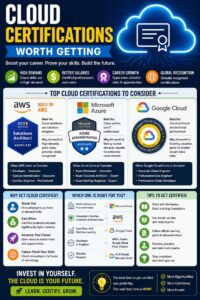
Certifications You Can Prepare For After Cloud Computing Training in P.H
After Cloud Computing Training in P.H at Potenmunia Tech School with practical labs and portfolio, you can prepare for global certifications:
AWS Certified Cloud Practitioner: Entry level certification that proves you understand AWS cloud basics. Foundation from Cloud Computing Training in P.H helps.
Microsoft Azure Fundamentals AZ-900: Entry level Azure certification for beginners. Networking and cloud foundation from Cloud Computing Training in P.H helps.
Google Cloud Digital Leader: Entry level Google Cloud certification. Cloud foundation from Cloud Computing Training in P.H helps.
CompTIA Cloud Essentials+: Vendor neutral cloud certification for beginners.
At Potenmunia Tech School, Cloud Computing Training in P.H gives you practical foundation, then you add certification preparation with mentorship from dedicated instructor.
Skills You Gain From Cloud Computing Training in P.H
After Cloud Computing Training in P.H at Potenmunia Tech School, you gain:
Cloud Foundation Skills: You understand IaaS, PaaS, SaaS, public, private, hybrid cloud.
Networking and Linux Skills: IP, ports, DNS, HTTP, Linux terminal basics essential for Cloud Computing Training in P.H.
Compute Skills: Create and manage virtual machines in AWS, Azure, or GCP.
Storage and Database Skills: Create buckets, set permissions, backup, create cloud database.
Security Skills: IAM, 2FA, security groups, firewall rules for cloud.
Deployment Skills: Host website and app in cloud for small business in Port Harcourt.
Cost Management Skills: Monitor usage, set alerts, optimize cost and write simple report.
Portfolio and Report Writing Skills: Write professional cloud deployment report that business owner understands. This skill gets you hired after Cloud Computing Training in P.H.
Problem Solving Skills: Combine all modules into capstone project that proves you are job-ready.
Career Opportunities After Cloud Computing Training in P.H
After Cloud Computing Training in P.H at Potenmunia Tech School with portfolio, you can apply for:
Cloud Support Engineer: You support businesses using cloud. You troubleshoot virtual machines, storage, permissions. High demand after Cloud Computing Training in P.H.
Cloud Administrator Junior: You manage cloud accounts for companies in Port Harcourt and Lagos.
IT Support with Cloud Skills: You support businesses in Port Harcourt with cloud storage, backup, and website hosting.
Freelance Cloud Consultant: You help small businesses in Port Harcourt move website and files to cloud, secure it, and manage cost.
DevOps Beginner / Deployment Support: You help deploy apps in cloud with basic CI/CD understanding after Cloud Computing Training in P.H.
Remote Cloud Jobs: You can work remotely for foreign companies while living in Port Harcourt. Portfolio from Cloud Computing Training in P.H helps you get remote roles.

How Potenmunia Tech School Teaches Cloud Computing Training in P.H Practically
Many schools teach theory and give certificate only. Potenmunia Tech School teaches Cloud Computing Training in P.H practically.
At Potenmunia Tech School in Port Harcourt:
100 percent practical and session based learning. Every session you do lab in cloud console.
One-on-one learning with dedicated personal instructor. Not large crowded class.
Both one-on-one and cohort learning options.
Real world projects and capstone experience that mirror real problems businesses in Port Harcourt face.
Mentorship ecosystem throughout your journey.
Career and job readiness focus. CV and portfolio building support, structured interview preparation, job application support, innovation and entrepreneurship orientation.
You build portfolio of 8 to 10 professional cloud projects that prove you can do jobs after Cloud Computing Training in P.H.
Table: Cloud Computing Training in P.H Compared by Courses and Career
|
Module at Potenmunia |
Best For |
Key Skills |
Career Use After Training |
|---|---|---|---|
|
Cloud Foundation |
Absolute beginners |
IaaS, PaaS, SaaS, cloud types |
Foundation for this cloud program |
|
Networking and Linux Basics |
Beginners wanting cloud environment |
IP, DNS, Linux terminal |
Core for this cloud program |
|
Virtual Machines and Compute |
Cloud compute beginners |
EC2, VM creation, SSH |
Cloud Support Engineer |
|
Cloud Storage and Database |
Storage and backup beginners |
S3, Blob, RDS basics |
Cloud Administrator |
|
Cloud Security and IAM |
Security focused beginners |
IAM, 2FA, security groups |
Cloud Security Beginner |
|
Deployment and Website Hosting |
Website hosting beginners |
WordPress on cloud, SSL |
Freelance Cloud Consultant |
|
Cost Management and Monitoring |
Business focused beginners |
Billing dashboard, alerts |
Cost Optimization Support |
|
Capstone and Job Readiness |
Job readiness for all beginners |
Combined cloud labs plus portfolio |
Job ready for all cloud paths |
How to Choose Right Cloud Computing Training in P.H for Your Level
If you are absolute beginner with zero experience, choose program that starts with networking and Linux foundation, gives one-on-one dedicated instructor, teaches in simple English, then moves to cloud foundation and virtual machines. Potenmunia Tech School does this for Cloud Computing Training in P.H.
If you are IT professional, like IT support, network admin, web developer who wants to add cloud skills, choose Cloud Computing Training in P.H that offers storage, security, deployment, and capstone portfolio. Potenmunia Tech School offers this for professionals with practical labs.
If you want job in bank or oil company, choose Cloud Computing Training in P.H that offers security, cost management, and capstone portfolio. Potenmunia offers all.
If you want freelance with small businesses in Port Harcourt, choose Cloud Computing Training in P.H that offers website hosting and storage labs relevant to small businesses. Potenmunia offers this.
Best approach: Visit Potenmunia Tech School in Port Harcourt, see lab, meet instructor, ask for capstone demo and portfolio samples before enrolling for Cloud Computing Training in P.H.
Salary Growth After Cloud Computing Training in P.H
Month 0 to 6 after Cloud Computing Training in P.H: Junior roles N200k to N500k in Port Harcourt with practical portfolio.
Year 1 to 2: Mid level N500k to N900k in Lagos and Port Harcourt.
Remote: $1000 to $4000 monthly depending on skills and portfolio from Cloud Computing Training in P.H.
Best way to increase salary is portfolio plus global certification like AWS Cloud Practitioner and Azure Fundamentals after practical training at Potenmunia Tech School for Cloud Computing Training in P.H.
Frequently Asked Questions About Cloud Computing Training in P.H
What is Cloud Computing Training in P.H for beginners?
Cloud Computing Training in P.H for beginners is structured training that teaches cloud basics, networking, Linux, virtual machines, storage, security, deployment, cost management, and capstone project with practical labs and one-on-one instructor at Potenmunia Tech School in Port Harcourt.
Do I need coding to start Cloud Computing Training in P.H?
No, you do not need coding to start Cloud Computing Training in P.H. You need networking and Linux basics. At Potenmunia, instructor teaches from scratch in simple English. Coding basics can come later.
How long does it take to complete Cloud Computing Training in P.H in Port Harcourt?
With practical training at Potenmunia Tech School, you can become competent and job ready from Cloud Computing Training in P.H within 3 to 4 months of session based labs, real projects, capstone, and mentorship.
Will I get job after Cloud Computing Training in P.H at Potenmunia Tech School?
Potenmunia gives CV and portfolio building support, structured interview preparation, job application support, and capstone project that you can show employers in Port Harcourt and Lagos. Portfolio plus Cloud Computing Training in P.H makes you job ready.
Why is Potenmunia Tech School best for Cloud Computing Training in P.H in Port Harcourt?
Because Potenmunia offers 100 percent practical and session based learning, one-on-one learning with dedicated personal instructor, real world projects and capstone that mirrors problems businesses in Port Harcourt face, mentorship throughout your journey, career and job readiness focus.
Final Words
If you want Cloud Computing Training in P.H that takes you from zero to job-ready as beginner or upgrades you as professional in 2026, your search ends at Potenmunia Tech School in Port Harcourt.
We teach Cloud Computing Training in P.H practically with one-on-one dedicated instructor, real world projects, capstone, portfolio building, interview preparation, and job application support.
We build competence not just certificates. That is why we are regarded as best tech school in Port Harcourt for Cloud Computing Training in P.H.
Ready to start your journey with Cloud Computing Training in P.H?
Visit Potenmunia Tech School in Port Harcourt today and enrol. Your cloud career starts with practical skills, not just certificate.
Extra Tips to Succeed After Cloud Computing Training in P.H
Tip 1: Practice daily. Do cloud labs at Potenmunia Tech School.
Tip 2: Build portfolio as you learn. Every lab report goes to portfolio with screenshots and simple English.
Tip 3: Explain cloud bill in simple English. Business owners in Port Harcourt are not technical. Simple explanation builds trust.
Tip 4: Get mentorship. Ask your dedicated instructor questions.
Tip 5: Focus on one career path first. Start with cloud support engineer or freelance consultant, then add more.
Tip 6: Prepare for interview with support at Potenmunia Tech School.
Tip 7: Stay updated. Cloud changes fast. Practice new labs at Potenmunia Tech School.
With these tips, you can build successful career after Cloud Computing Training in P.H while living in Port Harcourt.
Why Port Harcourt Businesses Need Cloud in 2026
Port Harcourt is oil and gas hub. Many businesses use digital systems. Small shops use POS and inventory in cloud. Schools use cloud storage for results. Offices use cloud email and backup.
Cloud helps them save money on hardware, get uptime, backup data, and work from anywhere.
They need local talent who understands Port Harcourt business context and can deploy secure cloud with simple English report. That is why practical training with real world projects that mirror Port Harcourt businesses is critical at Potenmunia Tech School.
Final Checklist for Choosing Cloud Training
Before you enrol, check this list for your chosen training:
Does school offer 100 percent practical labs every session? Potenmunia does.
Do you get one-on-one dedicated instructor who checks labs? Potenmunia does.
Do you build real portfolio of cloud projects? Potenmunia gives 8 to 10 projects.
Do you get CV building, interview preparation, job support? Potenmunia gives all.
Do projects mirror real problems businesses in Port Harcourt face? Potenmunia labs do.
If school meets all, enrol. Your career from zero to job-ready starts with right practical program and mentorship.
The top software engineering careers in Nigeria now cover a wide range of technical specializations, from full-stack development and backend engineering to mobile development, cloud engineering, DevOps, artificial intelligence, and software security.
Software engineering involves the systematic design, development, testing, and maintenance of software systems.
For Nigerians considering a career in technology, understanding the different software engineering career paths in Nigeria is important before choosing what to learn. You do not have to become an expert in every area. Instead, you can build strong software development fundamentals and then specialize according to your interests, skills, and career goals.
This guide explores the top software engineering careers in Nigeria, the skills associated with each path, potential job opportunities, career progression, and practical steps beginners can take to become job-ready.
What Are the Top Software Engineering Careers in Nigeria?
The top software engineering careers in Nigeria are specialized roles involved in designing, developing, testing, deploying and maintaining software.
Some of the major paths include:
- Full-stack software development
- Frontend engineering
- Backend engineering
- Mobile application development
- Cloud engineering
- DevOps engineering
- AI and machine learning engineering
- Software security engineering
- Data-focused software engineering
- Software architecture
Software engineering is broader than simply writing code. Software development can involve requirements analysis, design, implementation, testing, deployment and maintenance.
This means aspiring software engineers should develop problem-solving, communication, testing and system-design skills alongside programming ability.
Top Software Engineering Careers in Nigeria
1. Full-Stack Software Developer
Full-stack development is one of the broadest software engineering careers in Nigeria.
Full-stack developers work on both the frontend and backend of applications. Depending on the project, they may build interfaces, APIs, databases, authentication systems and deployment workflows.
Common technologies include:
- HTML
- CSS
- JavaScript
- TypeScript
- React
- Node.js
- Python
- SQL
- Git
- GitHub
- REST APIs
A beginner could start with a simple website and gradually progress to a complete application containing authentication, a database, backend APIs and a professional user interface.
Full-stack development can be useful for people interested in startups, freelance development, product development and broad software engineering responsibilities.
2. Frontend Software Engineer
Frontend engineering focuses on the part of an application users interact with directly.
Frontend engineers may develop:
- Websites
- Web applications
- Dashboards
- E-commerce interfaces
- Administrative systems
- Interactive forms
Core technologies include HTML, CSS and JavaScript, followed by frameworks such as React.
However, becoming a strong frontend engineer involves more than learning a framework. Developers should understand responsive design, accessibility, performance, browser behavior, application architecture and API integration.
For someone looking at top software engineering careers in Nigeria, frontend engineering can be an entry point into the wider software development field.
3. Backend Software Engineer
Backend engineers develop the server-side components that power applications.
They can be responsible for:
- Business logic
- APIs
- Databases
- Authentication
- Server-side processing
- Application security
- Data management
Popular technologies include Python, Java, JavaScript/Node.js, PHP and C#.
Backend engineers should understand databases, APIs, data structures, algorithms, security and system architecture.
For example, when a user logs into an online banking or e-commerce application, backend systems may authenticate the user, retrieve information from databases and process application requests.
4. Mobile App Developer
Mobile development is another important software engineering career path.
Mobile developers create applications for smartphones and tablets, including applications used for:
- Banking
- Education
- E-commerce
- Transportation
- Communication
- Entertainment
- Business services
Developers can specialize in Android, iOS or cross-platform development.
Technologies can include Kotlin, Swift, Flutter and React Native.
A beginner can start with a simple mobile application before progressing to applications involving APIs, databases, authentication and cloud services.
5. Cloud Engineer
Cloud engineering is an increasingly important specialization for software professionals.
Cloud engineers work with computing infrastructure that allows applications and services to be deployed, managed and scaled.
Important areas include:
- Cloud computing
- Virtual machines
- Storage
- Networking
- Databases
- Containers
- Identity management
- Monitoring
- Infrastructure automation
Software engineers who understand cloud environments can contribute to the deployment and operation of applications beyond the local development environment.
6. DevOps Engineer
DevOps engineering focuses on improving software development and delivery processes.
A DevOps engineer may help development teams automate:
- Software testing
- Builds
- Deployments
- Infrastructure
- Monitoring
- Application releases
Important skills include:
- Linux
- Git
- CI/CD
- Docker
- Kubernetes
- Cloud platforms
- Infrastructure as code
- Automation
For example, a development team can create a CI/CD pipeline that automatically tests new code and prepares approved changes for deployment.
7. AI and Machine Learning Engineer
Artificial intelligence and machine learning provide another direction for software engineers.
AI engineers can develop or integrate systems that process information, generate predictions, automate tasks or provide intelligent features.
Relevant skills include:
- Python
- Mathematics
- Statistics
- Machine learning
- Data processing
- APIs
- Model evaluation
- Cloud computing
- AI development tools
AI can be applied to many Nigerian business and technology problems, including customer support, education, financial services, business automation and information systems.
A software engineer interested in AI should still develop strong programming and software development fundamentals.
8. Software Security Engineer
Software security is an important specialization because applications increasingly handle sensitive business and personal information.
Security-focused software engineers may work on:
- Secure application design
- Authentication
- Authorization
- Secure coding
- Vulnerability identification
- Security testing
- Data protection
Developers in this area need a strong understanding of how applications work and how security weaknesses can emerge during development.
Security knowledge is also useful for developers who do not specialize exclusively in cybersecurity.
9. Data-Focused Software Engineer
Data-focused software engineering combines programming with data processing and infrastructure.
These engineers may build systems for:
- Collecting data
- Processing data
- Moving data between systems
- Managing databases
- Building data pipelines
- Supporting analytics applications
Useful skills include Python, SQL, databases, APIs, cloud platforms and data-processing technologies.
This can be an interesting career path for people who enjoy programming while also working with large datasets and information systems.
10. Software Architect
Software architecture is a more advanced direction within the software engineering profession.
Software architects and experienced engineers may make decisions concerning:
- Application architecture
- Scalability
- Performance
- Security
- Technology selection
- System integration
- Engineering standards
This is normally a progression that comes after substantial practical software development experience.
A beginner should therefore focus first on learning how to build and maintain software before worrying about becoming a software architect.
Why Are Software Engineering Careers Important in Nigeria?
Software is used across many sectors of the Nigerian economy.
Potential areas of application include:
- Financial technology
- Banking
- Telecommunications
- E-commerce
- Education
- Healthcare
- Logistics
- Energy
- Professional services
- Government technology
- Media
- Agriculture
This creates different environments in which software engineers can apply their skills.
For example, a developer might build an inventory management platform for a local business, while another engineer could work on financial technology infrastructure or an international software product.
The top software engineering careers in Nigeria therefore should not be viewed as a single narrow profession. They represent multiple technical directions with different responsibilities and learning requirements.
Skills Needed for the Top Software Engineering Careers in Nigeria
Regardless of specialization, aspiring software engineers should develop several foundational skills.
Programming Fundamentals
Learn:
- Variables
- Data types
- Conditions
- Loops
- Functions
- Objects
- Arrays
- Error handling
- Modules
The goal is to understand programming concepts rather than memorize syntax.
Data Structures and Algorithms
Learn how common data structures work and how algorithms solve computational problems.
Examples include:
- Arrays
- Lists
- Stacks
- Queues
- Hash tables
- Trees
- Searching
- Sorting
These concepts become particularly important for technical interviews and more advanced engineering work.
Databases
Software engineers frequently interact with databases.
Learn:
- SQL
- Tables
- Relationships
- Queries
- Indexes
- Transactions
- Database design
You can later explore NoSQL databases when your projects require them.
Git and Version Control
Git helps developers track changes and collaborate on software projects.
Learn how to:
- Create repositories
- Commit changes
- Create branches
- Merge code
- Resolve conflicts
- Collaborate through GitHub
APIs
Understanding APIs is essential for modern application development.
Learn about:
- HTTP
- Requests
- Responses
- JSON
- REST APIs
- Authentication
- API errors
Testing and Debugging
Professional software engineering requires developers to test their work and investigate problems.
Learn:
- Debugging
- Unit testing
- Integration testing
- Error handling
- Code review
Communication
Software engineers frequently collaborate with designers, product managers, business teams and other developers.
Communication, documentation and teamwork can therefore be important parts of a successful software engineering career.
How to Choose Among the Top Software Engineering Careers in Nigeria
Choosing a specialization can be difficult when you are new to technology.
A simple approach is to explore your interests.
If You Enjoy Building Interfaces
Consider frontend development.
If You Enjoy Logic and Databases
Consider backend engineering.
If You Want to Build Complete Applications
Consider full-stack development.
If You Like Smartphones
Explore mobile development.
If You Like Infrastructure
Explore cloud engineering or DevOps.
If You Enjoy AI and Data
Explore AI, machine learning or data-focused engineering.
If You Are Interested in Protecting Applications
Explore software security.
You do not need to make a permanent decision at the beginning of your learning journey. Software engineering skills often overlap, and engineers can change specializations as they gain experience.
Software Engineering Jobs in Nigeria
People with software engineering skills can pursue different types of professional opportunities.
Potential roles include:
- Junior Software Developer
- Junior Software Engineer
- Frontend Developer
- Backend Developer
- Full-Stack Developer
- Mobile Developer
- Cloud Engineer
- DevOps Engineer
- AI Engineer
- Machine Learning Engineer
- Software Security Engineer
- Senior Software Engineer
- Software Architect
Software development also involves different professional roles beyond programming, including testing, documentation, product management and user support.
Software Engineering Opportunities in Port Harcourt
For learners in Port Harcourt, software engineering skills can be applied to local businesses and organizations as well as remote and international opportunities.
Port Harcourt’s business environment includes industries such as energy, professional services, education, commerce and logistics.
A developer can potentially use software skills to solve problems such as:
- Inventory management
- Business websites
- Booking systems
- School management
- Customer management
- E-commerce
- Financial tracking
- Logistics management
This is one reason practical project experience is valuable.
Instead of simply saying that you know JavaScript or Python, a portfolio can demonstrate what you have actually built with those technologies.
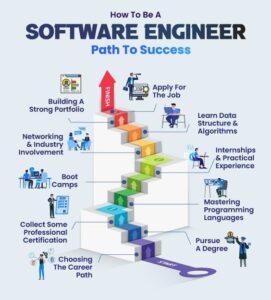
How to Become a Software Engineer in Nigeria
A beginner can follow a structured learning process.
1. Learn Programming
Choose a suitable programming language and learn the fundamentals.
2. Learn Development Tools
Learn Git, GitHub, code editors and basic command-line usage.
3. Learn Databases and APIs
Understand how applications store information and communicate with other systems.
4.Choose a Specialization
After learning the fundamentals, explore one of the major software engineering careers in Nigeria.
5. Build Real Projects
Move beyond tutorials.
Build applications that solve realistic problems.
6. Create a Portfolio
Document your projects and explain:
- The problem
- Your solution
- Technologies used
- Your contribution
- Challenges
- How you solved them
7. Prepare for Interviews
Practice technical questions, project explanations and behavioral interviews.
8. Start Applying
Look for internships, junior positions, freelance opportunities and other relevant professional experiences.
How Potenmunia Tech School Approaches Software Engineering Training
Potenmunia Tech School approaches software engineering education with an emphasis on practical application and career preparation.
Rather than relying entirely on lecture-based learning, the training approach emphasizes hands-on sessions and project development.
Learners can receive one-on-one instruction with a dedicated personal instructor, allowing them to receive individualized feedback and guidance. Learners who prefer collaborative environments can also use cohort-based learning.
As learners develop their technical abilities, practical projects can contribute to a professional portfolio.
Potenmunia also incorporates career preparation through CV and portfolio development, interview preparation and job application support. These areas connect technical education with the practical steps involved in pursuing software engineering opportunities.
The approach is designed around developing skills that learners can apply to real-world software problems rather than focusing only on completing theoretical lessons.
Building a Software Engineering Portfolio in Nigeria
A portfolio can be particularly useful when you are starting your career.
Instead of creating random projects, choose projects that demonstrate different technical abilities.
For example:
1. Business Website
Demonstrates:
- HTML
- CSS
- JavaScript
- Responsive design
2. Database Application
Demonstrates:
- Backend programming
- SQL
- APIs
- Authentication
3. Full-Stack Application
Demonstrates:
- Frontend
- Backend
- Database
- API integration
- Deployment
4. AI-Powered Application
Demonstrates:
- Programming
- APIs
- AI integration
- User interface
- Software architecture
These projects can give you practical examples to discuss during interviews.
AI and the Future of Software Engineering Careers in Nigeria
AI is changing how software developers work.
Modern developers can use AI tools to assist with:
- Code generation
- Debugging
- Documentation
- Testing
- Learning unfamiliar technologies
- Prototyping
However, developers still need fundamental software engineering knowledge.
A developer should be able to inspect generated code, identify problems, test functionality and make informed architectural decisions.
This means learning AI tools alongside programming fundamentals can be more useful than depending entirely on automatically generated code.
Common Mistakes When Starting a Software Engineering Career
Learning Too Many Languages
Start with one language and develop strong fundamentals.
Watching Tutorials Without Building
Learning should eventually result in independent projects.
Ignoring Git
Version control is an important professional development skill.
Focusing Only on Certificates
Certificates can demonstrate learning, but projects demonstrate practical application.
Copying Portfolio Projects
Only include projects you understand and can explain.
Trying to Master Everything
Software engineering is a large field. Choose a direction and gradually expand your knowledge.
Career Growth in Software Engineering
Software engineering can develop into several different professional directions.
A possible progression is:
Beginner → Junior Developer → Software Engineer → Mid-Level Engineer → Senior Engineer → Lead/Staff Engineer → Principal Engineer or Engineering Leadership
Other paths can include:
- Software architecture
- Cloud engineering
- DevOps
- AI engineering
- Security engineering
- Technical consulting
- Product development
- Entrepreneurship
- Engineering management
There is no single career progression that every engineer must follow.
Frequently Asked Questions About the Top Software Engineering Careers in Nigeria
What are the top software engineering careers in Nigeria?
Major career paths include full-stack development, frontend engineering, backend engineering, mobile development, cloud engineering, DevOps, AI and machine learning engineering, software security, data-focused engineering and software architecture.
Which software engineering career should a beginner choose?
Start with your interests. Beginners can first learn general programming and software development fundamentals before choosing a specialization.
Can I become a software engineer without a computer science degree?
A computer science or software engineering degree is one route into the profession, but people can also develop software skills through structured training, self-directed learning, practical projects and professional experience.
What programming language should I learn first?
Python and JavaScript are common starting choices, but the appropriate language depends on your career goals and the type of software you want to build.
Are software engineering jobs available in Port Harcourt?
Software skills can be applied across businesses and industries in Port Harcourt, while remote work and freelance arrangements can also allow developers to work with organizations outside their immediate location.
How can I prepare for a software engineering interview?
Study programming fundamentals, data structures and algorithms, practice coding problems, understand your projects thoroughly and prepare for behavioral questions.
Do I need to know AI to become a software engineer?
AI knowledge can be useful, but it should not replace fundamental programming, software design, testing and problem-solving skills.
How can I get software engineering experience as a beginner?
Build practical projects, contribute to appropriate open-source projects, pursue internships or entry-level opportunities and create a portfolio demonstrating your abilities.
Conclusion
The top software engineering careers in Nigeria cover a wide range of technical specializations. From frontend and backend engineering to full-stack development, mobile applications, cloud, DevOps, AI and security, aspiring developers have multiple directions they can explore.
The best starting point is not to attempt everything simultaneously. Build strong programming fundamentals, learn software development tools, create practical projects and gradually specialize.
For learners in Port Harcourt, structured practical training can provide an environment for developing technical skills, building projects, preparing a portfolio and becoming familiar with professional software development practices.
Whether your goal is local employment, remote work, freelancing, entrepreneurship or long-term technical specialization, the foundation remains the same: learn, build, test, improve and keep developing your skills.
For additional background reading on software engineering and related concepts, you can explore Wikipedia.