If you are searching for the top full-stack development training centres in Port Harcourt, you will find several options offering web development, software engineering, and programming courses. However, choosing the right training centre requires looking beyond the course title.
A strong full-stack development programme should help you understand how modern applications are designed, developed, tested and deployed. It should cover both frontend and backend development while giving you enough practical experience to build projects independently.
For beginners, top full-stack development training centres in Port Harcourt can provide a structured pathway into software development. For professionals, full-stack training can help expand existing programming knowledge and introduce additional technologies, frameworks and development practices.
This guide explains what full-stack development involves, what to look for when comparing top full-stack development training centres in Port Harcourt, what a quality course should teach and how Potenmunia Tech School approaches practical full-stack development training.
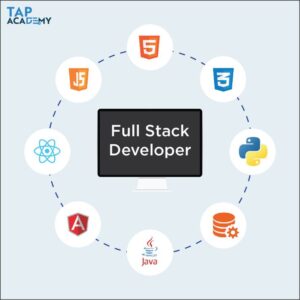
Full-stack development is the process of building both the frontend and backend components of a web application or software product.
The frontend is the part of an application that users see and interact with. It commonly involves:
- HTML
- CSS
- JavaScript
- React
- Responsive web design
- User interfaces
- Frontend application logic
The backend operates behind the scenes. It can include:
- Server-side programming
- Databases
- APIs
- Authentication
- Application logic
- Server configuration
- Deployment
A full-stack developer therefore needs to understand how different parts of an application communicate with one another.
For example, imagine a Nigerian business creating an online booking platform. A customer may use a website to select a service and submit a booking form. The frontend displays the interface, while the backend processes the booking, communicates with a database and returns information to the user.
That combination of frontend and backend knowledge is what makes full-stack development different from learning only basic web design.
Why Search for Top Full-Stack Development Training Centres in Port Harcourt?
The demand for digital products has created opportunities for people with software development skills. Businesses need websites, customer portals, internal systems, e-commerce platforms and other digital applications.
This makes full-stack development training in Port Harcourt relevant to:
- University students
- Recent graduates
- Career changers
- Entrepreneurs
- Freelancers
- Existing developers
- IT professionals
- Business owners
- People interested in remote technology careers
Port Harcourt also has a growing technology training ecosystem. Current local listings include several software and technology training providers, while some providers publish dedicated full-stack programmes covering frontend, backend and related technologies.
However, simply finding a training centre is not enough.
The important question is:
What will you actually learn, build and be able to demonstrate after completing the programme?
That question should guide your search for the top full-stack development training centres in Port Harcourt.
What Should You Look for in the Top Full-Stack Development Training Centres in Port Harcourt?
When comparing top full-stack development training centres in Port Harcourt, consider the following factors.
1. A Complete Full-Stack Curriculum
A full-stack programme should not focus exclusively on basic HTML and CSS.
Look for a curriculum that progresses through:
- HTML
- CSS
- JavaScript
- Frontend frameworks
- Backend programming
- Databases
- APIs
- Git and GitHub
- Authentication
- Testing
- Deployment
The exact technology stack can differ between training centres, but the programme should explain how the different components work together.
2. Hands-On Practical Training
Programming is learned through practice.
When evaluating top full-stack development training centres in Port Harcourt, ask how much time learners actually spend writing code and building applications.
A practical course should include exercises, assignments and projects rather than relying primarily on lectures.
3. Real-World Projects
Projects provide an opportunity to turn programming concepts into working applications.
A learner might build:
- An e-commerce website
- A school management application
- A booking system
- An inventory platform
- A task management application
- A customer relationship system
- A job board
- A financial tracking application
The projects should gradually become more complex as the learner’s skills improve.
4. Instructor Support
Beginners frequently encounter errors that they cannot immediately understand.
Good instructor support can help learners identify problems, understand why their code failed and learn better approaches to solving similar problems.
5. Portfolio Development
One of the most useful outcomes of practical full-stack training is a portfolio.
Instead of telling an employer that you know JavaScript or React, you can demonstrate your ability through working projects.
When researching top full-stack development training centres in Port Harcourt, ask whether the programme helps learners organize and present their projects professionally.
6. Career Preparation
Technical knowledge is important, but entering the technology industry also requires professional preparation.
A career-focused programme may include:
- CV preparation
- Portfolio development
- Technical interview preparation
- Behavioural interview preparation
- Job application guidance
- Professional communication
- Mentorship
These services can help learners connect technical education with career development.
Examples of Full-Stack Development Training Options in Port Harcourt
The phrase top full-stack development training centres in Port Harcourt should not automatically be interpreted as a fixed official ranking. Training providers differ in curriculum, duration, learning format and specialization.
Some examples worth researching include the following.
Potenmunia Tech School approaches technology education with an emphasis on practical learning and career readiness.
Its approach includes one-on-one learning with a dedicated instructor as well as cohort-based learning options. This can allow learners to choose a format that fits their learning preferences.
For full-stack development learners, the practical focus can include working through programming concepts and applying them through projects rather than treating development as purely theoretical.
Potenmunia also places emphasis on portfolio development, CV support, interview preparation, job application guidance and mentorship.
This means a learner’s journey can extend beyond simply completing programming lessons.
For example, instead of completing a JavaScript lesson and moving immediately to another topic, a learner can apply JavaScript concepts to an actual project and gradually build a portfolio that demonstrates practical ability.
What Technologies Do Full-Stack Developers Learn?
One of the most important questions to ask before enrolling in full-stack development training in Port Harcourt is which technologies the programme teaches.
HTML
HTML provides the structure of web pages.
Learners should understand headings, paragraphs, links, forms, images, tables, semantic elements and document structure.
CSS
CSS controls how websites look and respond to different screen sizes.
Important concepts include:
- Selectors
- Box model
- Flexbox
- CSS Grid
- Responsive design
- Typography
- Layout
- Animations
JavaScript
JavaScript provides programming functionality for web applications.
Students should learn concepts such as:
- Variables
- Functions
- Arrays
- Objects
- Loops
- Conditions
- Events
- DOM manipulation
- Asynchronous programming
- API requests
React and Other Frontend Technologies
Many modern applications use frontend frameworks or libraries.
React is one example.
Students should learn not just how to write components but also how applications manage data, communicate with APIs and organize larger interfaces.
Backend Programming
Backend development can be taught using different technologies.
Examples include:
- Node.js
- Python
- PHP
- Java
- C#
The specific language is less important than understanding backend programming concepts and how they apply to real applications.
Databases
Applications often need to store information.
Students may learn relational databases such as:
They may also encounter NoSQL databases depending on the programme.
APIs
APIs allow different software systems to communicate.
A full-stack developer should understand how frontend applications communicate with backend services through APIs.
Git and GitHub
Version control is an important part of professional development.
Learners should become familiar with:
- Git repositories
- Commits
- Branches
- Merging
- Pull requests
- GitHub
Beginners searching for top full-stack development training centres in Port Harcourt should prioritize programmes with a clear progression.
A possible learning pathway is:
1. Learn HTML and CSS
2. Learn JavaScript fundamentals
3. Build simple frontend projects
4. Learn a frontend framework
5. Learn backend programming
6. Learn databases
7. Learn APIs
8. Connect frontend and backend
9. Learn Git and GitHub
10. Build a complete full-stack application
11. Deploy the application
12. Add the project to your portfolio
This progression allows learners to understand the relationship between individual technologies.
Full-Stack Development Training for Professionals
Professionals may not need to start from the beginning.
Someone who already understands frontend development, for example, may want to concentrate on backend development and databases.
Another developer might already understand programming but want to learn:
- React
- Node.js
- TypeScript
- API development
- Cloud deployment
- DevOps
- Testing
- Application architecture
This is why learning flexibility matters when evaluating top full-stack development training centres in Port Harcourt.
A training programme should ideally recognize the learner’s current ability and career objectives.
Why Practical Projects Matter in Full-Stack Training
Projects provide evidence that a learner can apply technical concepts.
Consider two learners.
Learner A writes on a CV:
JavaScript, React, Node.js and MySQL
Learner B lists the same technologies but also provides links to:
- A deployed e-commerce application
- A booking platform
- A database-driven dashboard
- A REST API
- A GitHub repository
The second learner has more tangible evidence of application development.
This is why practical projects should be an important part of full-stack development training in Port Harcourt.
Potenmunia Tech School’s approach emphasizes practical, session-based learning.
The objective is to help learners move from understanding concepts to applying those concepts.
One distinguishing feature is the availability of one-on-one learning with a dedicated personal instructor. Instead of relying entirely on a standardized pace, learners can receive individualized explanations, feedback and mentorship.
For a beginner learning full-stack development, this can be particularly useful when dealing with difficult programming concepts.
For example, if a learner understands frontend development but struggles with databases, the instructor can spend additional time working through database concepts and practical exercises.
Potenmunia also focuses on real-world projects and portfolio development.
The career side of training can include:
- CV development
- Portfolio support
- Technical interview preparation
- Behavioural interview preparation
- Job application guidance
- Mentorship
This creates a learning pathway that connects technical education with career preparation.
How to Choose Among the Top Full-Stack Development Training Centres in Port Harcourt
Before paying for a programme, ask the following questions.
Does the Course Teach Both Frontend and Backend?
A full-stack course should provide exposure to both areas.
How Many Projects Will I Build?
Ask for examples of projects completed by previous learners if they are available.
Will I Build a Portfolio?
Your portfolio should demonstrate what you can actually create.
How Much Instructor Support Is Available?
Ask whether support is one-on-one, group-based, online or a combination.
Is There Interview Preparation?
If your goal is employment, interview preparation can be useful.
Does the Programme Teach Deployment?
Building locally is only part of software development. Understanding deployment helps learners take applications from development environments toward real users.
What Is the Learning Schedule?
Consider whether the schedule fits your school, work or other responsibilities.
What Is Included in the Course Fee?
Ask whether the stated price includes projects, mentorship, certification, learning materials and other relevant services.
How Much Does Full-Stack Development Training Cost in Port Harcourt?
There is no single price for full-stack development training in Port Harcourt.
The cost depends on:
- Course duration
- Learning format
- Technology stack
- Instructor support
- Number of projects
- Career services
- Certification
- Training provider
Some providers publish their fees online, while others require prospective students to contact them for current pricing. For example, currently published programme pages show different durations and prices among providers, demonstrating why learners should compare the actual programme rather than relying on a general average.
Always confirm current fees directly with the training provider before registering.
The duration varies considerably.
Some programmes are designed around several weeks, while more extensive programmes can last several months.
For example, current published Port Harcourt programmes include shorter full-stack courses and longer career-oriented programmes.
The important factor is not simply finishing quickly.
A learner should aim to understand the technologies well enough to build projects, troubleshoot errors and continue learning independently.
Can Beginners Learn Full-Stack Development?
Yes.
You do not necessarily need previous professional programming experience to begin.
However, beginners should expect to spend time practicing.
The learning process usually involves:
- Understanding a concept
- Writing code
- Encountering an error
- Debugging the problem
- Correcting the code
- Repeating the process
- Applying the knowledge to a project
This cycle is a normal part of becoming a developer.
Career Opportunities After Full-Stack Development Training
After developing sufficient skills and experience, learners may pursue roles such as:
- Full-stack developer
- Frontend developer
- Backend developer
- Web developer
- Software developer
- Junior software engineer
- Application developer
- Freelance developer
Full-stack skills can also help entrepreneurs build prototypes and digital products.
For example, someone developing a Nigerian business idea could use full-stack skills to create an early version of an application before expanding the product with additional developers.
Full-Stack Development and the Nigerian Technology Industry
Full-stack development can be useful in many areas of the Nigerian economy.
Potential application areas include:
- Fintech
- Education technology
- E-commerce
- Logistics
- Healthcare technology
- Real estate
- Agriculture
- Hospitality
- Professional services
- Small-business management
A Port Harcourt learner could therefore build projects around realistic Nigerian problems.
For example, instead of building another generic tutorial application, a learner could develop a prototype for a local service-booking platform or inventory management system.
This approach can make a portfolio more meaningful because it demonstrates both technical ability and problem-solving.
Full-Stack Development Training and AI
Artificial intelligence is increasingly becoming part of software development workflows.
However, AI tools should complement programming knowledge rather than replace it.
A developer still needs to understand:
- Programming fundamentals
- Application architecture
- Databases
- APIs
- Security
- Testing
- Debugging
- Deployment
AI can assist with certain development tasks, but developers need enough technical knowledge to evaluate generated code and identify mistakes.
This is another reason modern top full-stack development training centres in Port Harcourt should expose learners to practical development workflows and emerging technologies while maintaining strong programming fundamentals.
For general background reading on technology and related concepts, readers can also explore Wikipedia.
Frequently Asked Questions
What are the top full-stack development training centres in Port Harcourt?
There are several technology training providers in Port Harcourt offering software and full-stack development programmes. The right option depends on curriculum, practical projects, instructor support, learning format, cost and career goals.
Which skills should I learn in full-stack development?
Start with HTML, CSS and JavaScript, then progress into frontend frameworks, backend programming, databases, APIs, Git, testing and deployment.
Can I learn full-stack development as a complete beginner?
Yes. A structured programme can take beginners through programming fundamentals before progressing into frontend and backend development.
How long does full-stack development training take?
It depends on the programme and learning schedule. Some courses last several weeks, while more comprehensive programmes can run for several months.
How much does full-stack development training cost in Port Harcourt?
Fees vary by training provider, programme length, curriculum and learning format. Always confirm the current fee directly with the provider.
Do I need a university degree to become a full-stack developer?
A university degree is not the only pathway into software development. Practical skills, projects, experience and a strong portfolio can all be important.
What projects should a beginner build?
Beginners can start with simple websites and applications before progressing to database-driven applications, APIs, authentication systems and complete full-stack products.
Should I choose one-on-one or cohort training?
One-on-one training can provide more individualized attention, while cohort training can provide group interaction and collaboration. The right choice depends on your learning preferences.
Is full-stack development useful for freelancing?
Full-stack development can provide skills for building websites and applications for clients. However, freelancing also requires communication, project management, client handling and business skills.
Can full-stack developers work remotely?
Remote software development opportunities exist, but employment depends on skills, experience, portfolio quality, communication and the requirements of individual employers.
Conclusion
Searching for the top full-stack development training centres in Port Harcourt is only the first step.
The more important task is finding a programme that matches your current ability and career objectives.
Look for a training centre that provides:
- A structured curriculum
- Frontend development
- Backend development
- Database training
- API development
- Git and GitHub
- Practical projects
- Portfolio development
- Instructor support
- Mentorship
- Interview preparation
- Career guidance
- Exposure to modern development tools
Potenmunia Tech School provides a practical learning environment for people interested in developing technology skills in Port Harcourt. Its emphasis on hands-on sessions, individualized instructor support, real-world projects, portfolio development and career preparation can make the learning journey extend beyond simply completing programming lessons.
Ultimately, the most useful way to compare top full-stack development training centres in Port Harcourt is to examine what each programme actually teaches, what learners build, how instructors provide support and how the training connects technical skills with real-world application.
If you are considering full-stack development as a career, take time to compare curricula, ask about practical projects and choose a learning pathway that gives you opportunities to build, practice and demonstrate your skills.
If you’ve searched for the best software engineering courses, you’ve probably noticed the term gets used loosely. Some programs teach you to build a single website in six weeks and call it software engineering. Others cover data structures, system design, and version control in depth but never touch what it takes to actually get hired.
Software engineering, broadly, is the systematic application of engineering principles to the design, development, and maintenance of software (see Wikipedia’s overview of software engineering for the formal definition). Good software engineering training should teach you to write working code, understand why the code works, and apply that understanding to problems you haven’t seen before — because that’s what the job demands. The best software engineering courses in Port Harcourt treat interview prep, portfolio work, and CV clarity as part of the curriculum, not extras — that’s often the real difference between a certificate and a job offer.

What to Look For in the Best Software Engineering Courses in Port Harcourt
Before comparing specific programs, it helps to know what separates the best software engineering courses from ones that just take your money.
Curriculum depth vs. curriculum breadth
A course that touches ten languages in ten weeks will leave you able to recognize syntax but not solve problems. The best software engineering courses in Port Harcourt go deep on one stack — usually JavaScript/Node, Python, or Java — before introducing anything else. Depth is what interviewers actually test for.
Practical project work
Reading about a REST API and building one that talks to a real database are different skills. Ask any prospective school directly: how many projects will I build, and will they be my own or copy-pasted from a tutorial? The strongest software engineering courses will have a clear, specific answer.
Instructor access and mentorship
Class sizes above 40 with a single instructor mean you’ll rarely get feedback on your actual code. Among the best software engineering courses in Port Harcourt, one-on-one instructor time is a meaningful structural advantage — not a marketing phrase. It means someone is tracking your specific weak spots over weeks, not just delivering the same lecture to everyone.
Job-readiness support
Nigeria’s tech job market rewards people who interview well and show real work, not just people who finished a syllabus. The best software engineering courses include structured mock interviews, CV review, and portfolio building — that’s a different (and more urgent) problem than only teaching code.
Types of Software Engineering Programs Available in Port Harcourt
Self-paced online courses
Platforms like freeCodeCamp, Udemy, and Coursera (see Wikipedia’s list of MOOC providers for more background) are useful for exploring whether software engineering interests you, and they’re inexpensive or free. The tradeoff is accountability — most learners who start a self-paced course don’t finish it, because there’s no instructor checking in and no cohort creating momentum.
Cohort-based bootcamps
A group of learners moving through the same curriculum on a fixed schedule. This works well if you’re motivated by peer pressure and community, and it’s usually cheaper per learner than one-on-one training. The downside: pacing is fixed to the group, so if you’re ahead or behind, the format doesn’t flex.
One-on-one personalized training
Here, a single instructor is assigned to you, adjusting pace and depth based on how you’re actually performing. This is one reason it’s often cited among the best software engineering courses for career-changers: it closes gaps a cohort format can’t, especially for someone coming from a non-technical background.
University and polytechnic computer science programs
If you have four years and want a formal degree, Rivers State University and University of Port Harcourt both offer computer science tracks. These are strong on theory (algorithms, computation theory, discrete math) but historically weaker on the practical, industry-current skills employers now expect on day one which is why many graduates supplement a degree with a practical training program before job hunting.
How Potenmunia Tech School Approaches Software Engineering Training
Potenmunia Tech School runs both cohort-based and one-on-one learning paths, and in both formats every session is hands-on learners are writing and debugging real code from the first week rather than sitting through lecture-heavy theory blocks.
The one-on-one path pairs each learner with a dedicated personal instructor, which matters most for people coming from a non-CS background who need pacing adjusted rather than forced into a fixed cohort schedule. Learners in both tracks work toward a capstone project modeled on an actual industry problem, which becomes the centerpiece of their portfolio rather than a generic tutorial clone.
Because the market increasingly expects familiarity with AI-assisted development workflows, Potenmunia’s curriculum also integrates current AI tools into training rather than treating them as a separate add-on module. And because finishing the curriculum isn’t the same as getting hired, learners go through structured technical and behavioral interview coaching, CV and portfolio review, and practical job application support before they start applying — mentorship continues through that stage rather than stopping at graduation.
A Practical Checklist for Choosing the Best Software Engineering Courses in Port Harcourt
- Ask to see a sample project from a recent graduate, not a marketing showcase
- Confirm class size and whether instructor feedback is individual or group-only
- Ask what happens if you fall behind is there a plan, or are you left to catch up alone
- Check whether interview prep and CV support are included or sold separately
- Ask how many graduates from the last cohort are working in the field now, and in what roles
- Confirm the actual language/stack taught matches what local employers are hiring for
What Software Engineering Salaries and Job Prospects Look Like in Nigeria (2026)
Entry-level software developer roles in Nigeria’s more active tech hubs Lagos, Abuja, and increasingly Port Harcourt commonly start in the ₦150,000–₦350,000/month range for junior roles, with remote roles for international clients often paying significantly more in dollar terms once a developer has 1–2 years of demonstrable experience. The gap between candidates who get hired quickly and those who struggle usually isn’t raw coding ability it’s the ability to explain their thinking in an interview and show a portfolio that proves they can build something real.
Frequently Asked Questions
What are the best software engineering courses in Port Harcourt for beginners?
Look for programs offering hands-on, project-based learning with individual instructor feedback rather than lecture-only formats these tend to work best for people starting from zero.
How long does it take to become job-ready in software engineering?
Most focused, hands-on programs take 4–9 months to bring a beginner to an entry-level, job-ready standard, depending on prior background and hours committed per week.
Do I need a computer science degree to become a software engineer in Nigeria?
No. Many working developers in Nigeria are self-taught or came through practical training programs rather than a CS degree. Employers increasingly care more about a working portfolio and interview performance than the credential itself.
Is one-on-one training worth the extra cost compared to a cohort?
It depends on your starting point. If you’re coming from a non-technical background or have struggled with self-paced learning before, individualized pacing often shortens the overall time to competence, which can offset the higher per-session cost.
What programming language should I start with?
JavaScript (for web development) or Python (for general-purpose and data-adjacent work) are the most commonly recommended starting points because of the volume of local job openings and learning resources available.
Conclusion and Next Step
The best software engineering courses in Port Harcourt aren’t the ones with the flashiest marketing they’re the ones where the format matches how you actually learn, and where getting hired is treated as part of the curriculum, not an afterthought. If you’d like to see how a one-on-one or cohort learning path works in practice, explore Potenmunia Tech School’s software engineering programs or reach out to talk through which format fits your situation.
Software engineering is becoming an increasingly important technology career path for people who want to build websites, mobile applications, business systems, digital platforms, and other software products. For learners in Port Harcourt, understanding the most in-demand software engineering skills in Port Harcourt can make it easier to choose what to study and how to build a practical career path.
The most in-demand software engineering skills in Port Harcourt include programming, JavaScript, TypeScript, Python, frontend development, backend development, full-stack development, SQL, database management, Git and GitHub, API development, cloud computing, DevOps, software testing, cybersecurity fundamentals and the practical use of artificial intelligence.
Software engineering is broader than simply writing code. It involves designing, developing, testing, maintaining and improving software systems. Wikipedia provides a general overview of software engineering and its relationship with software development.
For anyone researching the most in-demand software engineering skills in Port Harcourt, the important question is not simply which programming language to learn. The bigger question is which combination of technical and professional skills can help you solve real problems and build useful software.
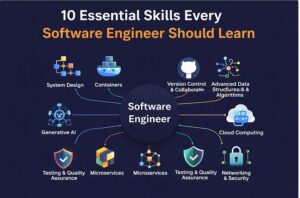
Software engineering skills are the technical and professional abilities used to create, test, deploy, maintain and improve software applications and systems.
They include skills such as:
- Programming
- Problem-solving
- Algorithms and data structures
- Frontend development
- Backend development
- Database management
- API development
- Version control
- Software testing
- Debugging
- Cloud computing
- DevOps
- Cybersecurity
- Software architecture
- Documentation
- Collaboration
This is why the most in-demand software engineering skills in Port Harcourt should not be viewed as a list of programming languages alone.
A developer may know JavaScript, for example, but still need to understand databases, APIs, Git, testing and application architecture to work effectively on a complete software project.
1. Programming and Problem-Solving
Programming remains one of the fundamental most in-demand software engineering skills in Port Harcourt because software applications are built through code.
Beginners should first understand programming fundamentals such as:
- Variables
- Data types
- Operators
- Conditional statements
- Loops
- Functions
- Arrays
- Objects
- Error handling
- Debugging
- Basic algorithms
- Data structures
However, learning syntax is only part of becoming a software engineer.
Problem-solving is equally important.
A developer may be asked to build a system that manages customer records, calculates invoices or tracks inventory. The ability to break such a problem into smaller technical tasks is what turns programming knowledge into practical software engineering ability.
For this reason, programming and problem-solving should form the foundation of any roadmap covering the most in-demand software engineering skills in Port Harcourt.
2. JavaScript
JavaScript remains an important skill for modern web development.
It can be used to create interactive websites and applications and can also be used on the server side through technologies such as Node.js.
A learner should gradually understand:
- JavaScript fundamentals
- Functions
- Objects
- Arrays
- DOM manipulation
- Events
- Asynchronous programming
- Promises
- API requests
- Error handling
- Modern JavaScript syntax
JavaScript can provide a pathway into frontend, backend and full-stack development.
3. TypeScript
TypeScript builds on JavaScript by introducing static typing and additional development features.
As applications become larger, developers need ways to organize and maintain code effectively.
Learning TypeScript can help developers understand concepts such as:
- Types
- Interfaces
- Generics
- Type safety
- Object-oriented programming
- Structured application development
For learners progressing beyond basic JavaScript, TypeScript can become a useful addition to their software engineering toolkit.
Python is another important programming skill for people entering technology.
Python is used in several areas, including:
- Backend development
- Automation
- Data processing
- Artificial intelligence
- Machine learning
- Scripting
- Software development
For example, a developer could use Python to build a backend service for a business application or automate repetitive tasks.
Someone researching the most in-demand software engineering skills in Port Harcourt should therefore consider Python, particularly if they are interested in backend development, automation or AI-related applications.
5. Frontend Development
Frontend development focuses on the part of an application that users see and interact with.
Important frontend skills include:
- HTML
- CSS
- JavaScript
- Responsive design
- Accessibility
- Browser developer tools
- Git
- Frontend frameworks
- API integration
A practical frontend project could involve building a website for a local business in Port Harcourt.
Another project could be an administrative dashboard that allows a business owner to monitor customers, products or sales.
The important point is to move from isolated coding exercises toward complete user-facing projects.
6. Backend Development
Backend development handles much of the logic behind an application.
Backend developers commonly work with:
- Servers
- Databases
- APIs
- Authentication
- Business logic
- Data validation
- Security
- Application architecture
For example, when a customer logs into an online platform, the frontend may provide the interface while the backend verifies the credentials and retrieves the appropriate information.
Backend development is therefore an important component of the most in-demand software engineering skills in Port Harcourt.
Full-stack development involves working across both frontend and backend technologies.
A full-stack developer may work with:
Frontend → API → Backend → Database → Deployment
Full-stack development can be useful for learners who want to understand how complete web applications are created.
A practical full-stack project might be an inventory management system containing:
- User authentication
- Product management
- Search
- Database storage
- Admin dashboard
- API integration
- User permissions
- Deployment
Projects like this allow learners to demonstrate that they can connect different parts of an application.
8. SQL and Database Management
Applications need to store information.
This makes database management another important area among the most in-demand software engineering skills in Port Harcourt.
Learners should understand:
- Tables
- Rows
- Columns
- Primary keys
- Foreign keys
- Relationships
- SELECT queries
- INSERT
- UPDATE
- DELETE
- JOIN
- Aggregation
- Database design
Consider a school management system.
It may need to store information about:
- Students
- Teachers
- Courses
- Attendance
- Fees
- Results
Understanding how this information is structured and retrieved is essential for building reliable applications.
9. Git and GitHub
Git is a version-control system used to track changes in software projects.
GitHub provides a platform where developers can host repositories and collaborate on projects.
Important Git skills include:
- Creating repositories
- Making commits
- Creating branches
- Merging branches
- Cloning repositories
- Pulling changes
- Pushing changes
- Working with pull requests
Git and GitHub are valuable because software development is often collaborative.
They can also help learners document their projects and demonstrate development work through a portfolio.
10. API Development
APIs allow different software systems to communicate with each other.
For example, a mobile application might communicate with a backend API to retrieve customer information.
Important API concepts include:
- HTTP
- Requests
- Responses
- JSON
- GET
- POST
- PUT
- PATCH
- DELETE
- Authentication
- Error handling
- REST APIs
Understanding APIs allows developers to connect different parts of a software ecosystem.
Cloud computing has become an important part of modern software deployment.
Developers should understand basic concepts such as:
- Application hosting
- Cloud storage
- Databases
- Virtual machines
- Networking
- Deployment
- Security
- Monitoring
A beginner does not necessarily need to become a cloud specialist immediately.
However, knowing how to deploy an application and understand basic cloud infrastructure can make a developer’s skill set more complete.
12. DevOps and CI/CD
DevOps brings development and operational practices together.
Software engineers can benefit from understanding:
- Continuous integration
- Continuous delivery
- Deployment
- Build pipelines
- Automated testing
- Environment management
- Monitoring
For example, automated workflows can help developers test software whenever new code is submitted.
These practices become particularly important as applications and development teams become larger.
13. Software Testing
Writing code is not enough.
Software needs to be tested to identify problems and confirm that it behaves as expected.
Important testing concepts include:
- Unit testing
- Integration testing
- Functional testing
- Regression testing
- Automated testing
- Debugging
Testing is therefore an important part of the most in-demand software engineering skills in Port Harcourt because professional software development requires more than simply creating features.
Developers should understand basic cybersecurity principles even when cybersecurity is not their primary specialization.
Important areas include:
- Authentication
- Authorization
- Input validation
- Secure password handling
- Data protection
- Secure APIs
- Common vulnerabilities
- Secure coding practices
For example, a developer creating an application that stores customer information needs to consider how that information is protected.
Security should be considered during development rather than added only after an application has been completed.
Artificial intelligence is influencing how software is developed and how software products are designed.
Software engineers can use AI tools for activities such as:
- Exploring code
- Debugging
- Documentation
- Testing
- Prototyping
- Automation
- Code explanation
Developers can also create applications that integrate AI functionality.
However, AI should not replace fundamental programming knowledge.
A developer still needs to understand the code, test generated solutions, identify errors and consider security and reliability.
16. Algorithms and Data Structures
Algorithms and data structures help developers think about how information is organized and how problems can be solved efficiently.
Important concepts include:
- Arrays
- Linked lists
- Stacks
- Queues
- Trees
- Hash tables
- Searching
- Sorting
- Algorithm complexity
These concepts can become especially important when preparing for technical interviews.
They also help developers understand why one approach to solving a problem may be more efficient than another.
17. Software Architecture
As applications become larger, developers need to understand how different components fit together.
Software architecture involves thinking about:
- Application structure
- Components
- Services
- Databases
- APIs
- Security
- Scalability
- Maintainability
A beginner does not need to master complex architecture immediately.
However, learning how to structure applications properly becomes increasingly important as projects grow.
18. Debugging
Debugging is one of the practical skills developers use regularly.
A program may fail because of:
- Syntax errors
- Logic errors
- Incorrect data
- API problems
- Database issues
- Configuration problems
- Unexpected user input
Developers need to investigate the problem, identify its cause and implement an appropriate solution.
Learning debugging early can make software development much more productive.
19. Technical Documentation
Software engineers need to communicate technical information.
Documentation may explain:
- How an application works
- How to install a project
- How an API works
- How a database is structured
- How to deploy software
- How developers should contribute
Good documentation also makes projects easier for other developers to understand.
20. Communication and Teamwork
Technical ability is important, but software development is also collaborative.
Developers may work with:
- Product managers
- Designers
- Project managers
- Other developers
- Business owners
- Customers
- Quality assurance professionals
Being able to explain technical ideas clearly can therefore support successful software projects.
Communication is an important complementary skill alongside the technical most in-demand software engineering skills in Port Harcourt.
Port Harcourt has businesses and organizations operating across sectors such as energy, education, finance, retail, logistics, professional services and entrepreneurship.
Many of these organizations can benefit from software solutions.
Examples include:
- Inventory management systems
- Business websites
- Customer management systems
- Booking platforms
- Educational applications
- Internal company tools
- E-commerce platforms
- Financial dashboards
- Logistics applications
This creates opportunities for people who can understand business problems and translate them into useful technology solutions.
The most in-demand software engineering skills in Port Harcourt therefore have applications beyond traditional software companies.
A developer could work on technology for a local business, build a product for a startup, work remotely with an international team or develop an independent software product.
Beginners should avoid trying to learn every technology at the same time.
A practical starting sequence could be:
1. Learn Programming Fundamentals
Choose one programming language and understand its fundamentals.
2. Learn Git and GitHub
Start tracking your projects with version control.
3. Choose a Development Direction
Decide whether you are primarily interested in:
- Frontend development
- Backend development
- Full-stack development
- Mobile development
- AI-related software development
4. Learn Databases
Understand how applications store and retrieve information.
5. Learn APIs
Understand how different applications communicate.
6. Build Projects
Create increasingly complex applications.
7. Learn Testing
Test the software you build and learn to debug problems.
8. Deploy Projects
Learn how to make applications available to users.
9. Build a Portfolio
Document your strongest projects and explain what you contributed.
1o. Prepare for Technical Interviews
Practise programming problems and learn to explain your technical decisions.
A Software Engineering Learning Roadmap for Port Harcourt Learners
A learner can structure their journey into several stages.
1. Programming Fundamentals
Learn programming logic, syntax, functions, data structures and problem-solving.
2. Web Development
Learn HTML, CSS and JavaScript if web development is your chosen direction.
3. Backend Development
Learn server-side programming, databases and APIs.
4. Professional Development Tools
Learn Git, GitHub, debugging and documentation.
5. Application Development
Build complete applications rather than isolated exercises.
6. Testing and Security
Learn how to test applications and identify basic security risks.
7. Deployment
Learn how to deploy projects using suitable hosting or cloud technologies.
8. Portfolio Development
Document your projects and technical decisions.
9. Career Preparation
Work on your CV, interview skills and job-application strategy.
How Potenmunia Tech School Approaches Software Engineering Training
Potenmunia Tech School in Port Harcourt takes a practical approach to technology training, with an emphasis on developing usable skills through hands-on learning.
For software engineering learners, practical training can involve progressing from programming fundamentals into real development projects.
One of the school’s distinguishing features is its one-on-one learning model with a dedicated personal instructor. This allows a learner to receive individualized feedback and guidance based on their current level and progress.
Practical learning can also be supported through project development. Instead of learning programming concepts only in isolation, learners can apply those concepts to projects that demonstrate how software is actually created.
Career preparation is another part of the approach. Learners can receive support with:
- CV development
- Portfolio building
- Technical interview preparation
- Behavioral interview preparation
- Job application guidance
- Career-focused mentorship
Potenmunia also provides both one-on-one and cohort learning paths, giving learners different ways to participate in practical technology education.
For someone studying the most in-demand software engineering skills in Port Harcourt, this type of project-focused approach can help connect classroom learning with the practical requirements of building software.
One of the best ways to practise software engineering is to build projects.
Beginner Projects
- Calculator application
- To-do list
- Personal portfolio website
- Simple expense tracker
- Contact management application
Intermediate Projects
- Inventory management system
- School management application
- Booking platform
- Customer management system
- Blog platform
- Expense management dashboard
Advanced Projects
- E-commerce platform
- Multi-user business management system
- Financial management application
- Learning management system
- Full-stack marketplace
- AI-powered application
The project should become more complex as your skills improve.
Software Engineering Skills for a Job-Ready Portfolio
A software engineering portfolio should demonstrate more than screenshots.
For each project, explain:
- The problem you wanted to solve
- The technologies used
- Your role
- The major features
- How the database was designed
- How the API works
- Challenges encountered
- How you solved those challenges
- Testing performed
- Deployment process
- What you would improve
This gives potential employers or clients a clearer picture of how you approach software development.
Common Mistakes When Learning Software Engineering
Learning Too Many Languages
You do not need to learn several programming languages simultaneously.
Start with one and build strong fundamentals.
Watching Tutorials Without Building
Tutorials can teach concepts, but projects force you to solve problems independently.
Ignoring Databases
Most useful applications need to store and retrieve information.
Ignoring Git
Version control is an important part of professional software development.
Copying Projects Without Understanding Them
A project becomes much more valuable when you can explain how and why it works.
Depending Completely on AI
AI tools can support learning and development, but you should understand and test the code you use.
Waiting Too Long to Build a Portfolio
Start documenting projects as you learn.
Your portfolio does not need to be perfect before you begin sharing your work.
How to Know Which Software Engineering Skill to Learn Next
Ask yourself three questions:
What do I want to build?
If you want to build websites, frontend skills may be a useful starting point.
What kind of role interests me?
A backend developer will need different depth from someone specializing in frontend development.
What problem am I trying to solve?
A business application may require databases, APIs and authentication, while a simple website may not require the same technical complexity.
This approach helps prevent learners from collecting technologies without understanding how they fit together.
Frequently Asked Questions
What are the most in-demand software engineering skills in Port Harcourt?
The most in-demand software engineering skills in Port Harcourt include programming, JavaScript, TypeScript, Python, frontend development, backend development, full-stack development, SQL, database management, Git, API development, cloud computing, DevOps, testing, cybersecurity fundamentals and AI-related development skills.
Which software engineering skill should I learn first?
Start with programming fundamentals and problem-solving. After that, choose a specialization such as frontend, backend or full-stack development.
Is Python a useful software engineering skill?
Yes. Python can be used for backend development, automation, scripting, data-related applications and AI development.
Is JavaScript still useful for software engineering?
JavaScript remains an important technology for web development and can be used across frontend and backend environments.
Should I learn frontend or backend development?
It depends on your interests. Frontend development focuses more on user interfaces, while backend development focuses on application logic, databases and server-side systems.
Is full-stack development difficult?
Full-stack development requires learning several connected areas, including frontend, backend, databases and APIs. It becomes more manageable when these areas are learned progressively.
Do software engineers need to learn SQL?
SQL is highly useful for developers working with relational databases. Understanding databases can help software engineers build more complete applications.
Do I need a university degree to learn software engineering?
A university degree is not the only way to develop software engineering skills. Practical training, consistent learning and strong projects can also help learners develop demonstrable technical abilities.
Can I learn software engineering in Port Harcourt?
Yes. Learners in Port Harcourt can pursue software engineering through structured technology training, self-directed learning, online resources, mentorship and practical project development.
How long does it take to learn software engineering?
There is no single timeframe that applies to everyone. The duration depends on your starting level, study schedule, chosen specialization and the complexity of the projects you want to build.
What projects should a beginner software engineer build?
Begin with manageable projects such as portfolio websites, task managers and expense trackers. Progress toward applications involving databases, APIs, authentication and deployment.
Are AI tools replacing software engineering skills?
AI is changing software development workflows, but developers still need programming knowledge, problem-solving ability, testing, security awareness and the ability to understand and evaluate code.
Conclusion on the Most In-Demand Software Engineering Skills in Port Harcourt
The most in-demand software engineering skills in Port Harcourt extend far beyond learning how to write code.
A developing software engineer should gradually build competence in programming, problem-solving, frontend or backend development, databases, APIs, Git, testing, security, deployment and modern technologies such as AI and cloud computing.
The most practical way to approach these skills is to learn progressively.
Start with programming fundamentals. Choose a development path. Build projects. Learn professional tools. Practise debugging. Develop a portfolio. Then continue expanding your skills as your career develops.
For learners in Port Harcourt, the goal should not simply be to collect certificates or memorize programming concepts. The stronger foundation comes from understanding technology, solving problems and demonstrating what you can build.
Potenmunia Tech School provides practical technology training in Port Harcourt for learners who want structured instruction, hands-on projects, mentorship and career preparation. Exploring a practical learning environment can be one way to turn the most in-demand software engineering skills in Port Harcourt from a list of concepts into usable abilities.
If you are searching for the best place to learn software engineering in Port Harcourt, it is important to look beyond the name of a training centre or the promise of a certificate. The right learning environment should help you understand programming, build real applications, solve technical problems, work with modern development tools, and develop a portfolio that demonstrates what you can actually do.
For beginners, students, professionals changing careers, and aspiring entrepreneurs, finding the best place to learn software engineering in Port Harcourt can be an important step toward developing practical digital skills.
Software engineering involves much more than learning how to type code. It covers the design, development, testing, deployment, and maintenance of software systems. Full-stack development takes this further by combining frontend, backend, and database technologies to create complete applications.
This is why anyone evaluating the best place to learn software engineering in Port Harcourt should examine the curriculum, teaching approach, practical projects, instructor support, portfolio development and career preparation offered by the training provider.
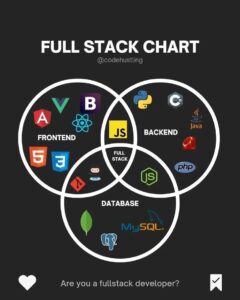
Software engineering is an engineering-oriented approach to designing, developing, testing and maintaining software applications and systems.
According to the general definition of the field, software engineering applies systematic and disciplined approaches to software development. It therefore goes beyond simply writing code.
You can learn more about the broader field through Wikipedia’s software engineering resource.
Software engineering can involve:
- Programming
- Software design
- Application development
- Database management
- Testing
- Debugging
- Version control
- APIs
- Security
- Deployment
- Documentation
- Software maintenance
- Problem-solving
Someone looking for the best place to learn software engineering in Port Harcourt should therefore look for a programme that introduces these concepts progressively instead of concentrating only on programming syntax.
Full-stack development involves working across the different layers of a software application.
The frontend is the part of an application that users see and interact with. The backend handles application logic, server-side processing and communication with databases and other services.
A full-stack development programme may cover:
- HTML
- CSS
- JavaScript
- Frontend frameworks
- Backend programming
- Databases
- SQL
- REST APIs
- Authentication
- Git and GitHub
- Testing
- Deployment
For example, imagine a local business in Port Harcourt wants an online booking system.
A full-stack developer could build the interface where customers select a service, create the backend logic that processes bookings, connect the application to a database and develop an administrative dashboard.
That is why the best place to learn software engineering in Port Harcourt for someone interested in full-stack development should provide opportunities to work on complete applications rather than isolated coding exercises.
Why Finding the Best Place to Learn Software Engineering in Port Harcourt Matters
There are different ways to learn software development.
You can use books, online tutorials, documentation, videos, bootcamps, university programmes or technology training schools.
However, beginners often encounter challenges such as:
- Not knowing what to learn first
- Getting stuck on programming errors
- Learning without practical projects
- Jumping between programming languages
- Having difficulty understanding databases
- Struggling to connect frontend and backend technologies
- Completing tutorials without building independent projects
- Not knowing how to create a professional portfolio
The best place to learn software engineering in Port Harcourt for a particular learner should therefore be determined by how well the programme addresses that learner’s goals, learning style and current skill level.
What Should You Look for in the Best Place to Learn Software Engineering in Port Harcourt?
Before choosing a software engineering training programme, consider the following factors.
1. Practical Software Engineering Training
Software engineering is a practical discipline.
A student should not spend an entire programme only listening to lectures about programming. There should be opportunities to write code, make mistakes, debug applications and build working projects.
When evaluating the best place to learn software engineering in Port Harcourt, ask:
- Will I write code during training?
- Will I build actual applications?
- Will an instructor review my work?
- Will I practise outside theoretical lessons?
- Will I complete projects independently?
Practical experience can help turn abstract programming concepts into usable skills.
2. A Structured Learning Path
A beginner can easily become overwhelmed by the number of programming technologies available.
There are hundreds of programming languages, frameworks, libraries, tools and platforms.
A good learning programme should provide a logical progression.
For example:
Programming fundamentals → Web fundamentals → Frontend development → Backend development → Databases → APIs → Full-stack projects → Portfolio development
A structured pathway can make it easier for learners to understand how individual technologies fit together.
3. Dedicated Instructor Support
One of the challenges of learning programming independently is knowing what to do when something does not work.
A dedicated instructor can help learners understand errors, review their code and identify areas where they need more practice.
At Potenmunia Tech School, one of the approaches used for technology training is one-on-one learning with a dedicated personal instructor.
This means a learner can receive individualized guidance rather than being expected to progress through every topic at exactly the same pace as everyone else.
For someone searching for the best place to learn software engineering in Port Harcourt, the availability of meaningful instructor feedback is an important factor to investigate.
4. Frontend Development
A full-stack developer needs to understand how users interact with software.
Frontend training can introduce technologies such as:
- HTML
- CSS
- JavaScript
- Responsive design
- Web accessibility
- Browser-based programming
- Frontend frameworks
Students should have opportunities to build interfaces rather than simply memorize definitions.
A project might involve creating a responsive website for a Port Harcourt business, followed by a more interactive web application.
5. Backend Development
Backend development introduces another side of software engineering.
Learners can study:
- Server-side programming
- Application logic
- APIs
- Authentication
- Authorization
- Data validation
- Error handling
- Server architecture
Backend skills become particularly important when building applications that need to store and process information.
6. Database Development
Most useful applications need some form of data storage.
A learner interested in finding the best place to learn software engineering in Port Harcourt should check whether databases are included in the curriculum.
Important database concepts can include:
- Tables
- Records
- Relationships
- Primary keys
- Queries
- SQL
- CRUD operations
- Database design
For example, a student building an appointment system could create a database containing customers, services, appointments and schedules.
7. Git and GitHub
Software developers need tools for managing changes to code.
Git provides version control, while GitHub can be used to store and collaborate on software projects.
Students should gradually become familiar with concepts such as:
- Repositories
- Commits
- Branches
- Merging
- Pull requests
- Version history
- Collaboration
These skills can also make a learner’s portfolio more useful because potential employers can inspect project repositories where appropriate.
8. Real-World Projects
Projects are one of the clearest ways to transform learning into practical experience.
The best place to learn software engineering in Port Harcourt should give students opportunities to work on projects that resemble problems businesses and organizations actually face.
Possible projects include:
- Inventory management systems
- Customer management applications
- Booking systems
- E-commerce platforms
- School management applications
- Financial dashboards
- Business websites
- Authentication systems
- REST APIs
- Content management systems
A project should not simply be created for the sake of completing an assignment. Learners should understand the problem being solved and why particular technologies are being used.
Most Important Software Engineering Skills to Learn in Port Harcourt
When evaluating the best place to learn software engineering in Port Harcourt, look beyond the number of programming languages advertised.
The quality of the curriculum and the ability to apply the knowledge are often more important than collecting many technologies.
Programming Fundamentals
Start with concepts such as:
- Variables
- Data types
- Operators
- Conditions
- Loops
- Functions
- Arrays
- Objects
- Error handling
- Problem-solving
These fundamentals provide the foundation for learning more advanced technologies.
HTML and CSS
For web development, HTML provides structure while CSS controls presentation and layout.
Learners should understand responsive design and be able to create websites that work across different screen sizes.
JavaScript
JavaScript is widely used for interactive web development.
Students can use it to build dynamic interfaces and, through appropriate technologies, develop server-side applications as well.
Frontend Frameworks
After understanding the fundamentals, learners can progress to suitable frontend frameworks and libraries.
The specific choice can depend on the curriculum and current project requirements.
Backend Programming
Backend development allows applications to process information, communicate with databases and provide services to frontend applications.
SQL and Databases
Database knowledge is essential for many software applications.
A developer should understand how information is stored, retrieved, updated and organized.
APIs
APIs allow different software components and services to communicate.
Understanding APIs is particularly important for full-stack development.
Authentication and Security Fundamentals
Applications handling user accounts need appropriate security practices.
Students should understand concepts such as authentication, authorization, secure password handling and input validation at an appropriate level.
Testing and Debugging
A developer needs to identify and fix problems.
Learning how to reproduce bugs, read error messages, inspect code and test solutions is an important part of software engineering.
Git and GitHub
Version control helps developers manage code changes and collaborate on projects.
AI-Assisted Development
AI tools are increasingly becoming part of software development workflows.
Learners can use AI to explore ideas, explain unfamiliar code, generate starting points and assist with debugging.
However, students should understand the code they use rather than blindly accepting AI-generated output.
Port Harcourt is an important commercial centre in Rivers State with businesses operating across industries including energy, logistics, education, healthcare, finance, hospitality and commerce.
Many organizations in these sectors can benefit from digital solutions.
For example, a company could need:
- A customer portal
- An inventory system
- A company website
- An online booking platform
- An employee management system
- An internal dashboard
- A payment-enabled application
- A mobile or web application
This creates a practical context for learning software engineering.
For people living in Port Harcourt, attending a local technology training programme can also provide access to instructors, practical sessions and other learners while developing skills that may eventually be applied to opportunities outside the city.
Best Place to Learn Software Engineering in Port Harcourt for Beginners
Beginners should pay particular attention to how a programme introduces difficult concepts.
If you have never written code before, a course that immediately introduces advanced frameworks can become overwhelming.
A beginner-friendly learning path should progressively introduce:
- Computer and programming fundamentals
- Programming logic
- Web development fundamentals
- JavaScript or another suitable programming language
- Frontend development
- Backend development
- Databases
- APIs
- Version control
- Full-stack projects
When looking for the best place to learn software engineering in Port Harcourt, ask whether beginners receive enough support to understand each stage before moving to the next.
Best Place to Learn Software Engineering in Port Harcourt for Career Changers
Software engineering can also be an option for people considering a transition into technology.
Career changers may have transferable skills from fields such as:
- Accounting
- Engineering
- Business administration
- Marketing
- Education
- Project management
- Customer service
For these learners, the best place to learn software engineering in Port Harcourt may be one that provides both technical instruction and career guidance.
A career-focused programme can help learners understand how to:
- Build technical projects
- Create a professional CV
- Present a portfolio
- Explain projects during interviews
- Prepare for technical interviews
- Search for suitable opportunities
- Apply for technology roles
Potenmunia Tech School in Port Harcourt approaches technology education with an emphasis on practical learning, mentorship and career readiness.
The learning model includes one-on-one sessions with a dedicated personal instructor, allowing learners to receive individualized guidance and feedback.
The training is also designed around practical sessions and projects. Instead of making theory the entire learning experience, learners can apply concepts by working on technology projects.
For software engineering and full-stack development, this can mean progressing from programming fundamentals to frontend development, backend development, databases and complete applications.
Another part of the approach is portfolio development.
Rather than treating a certificate as the only outcome of training, learners can work toward creating projects that demonstrate their abilities.
Potenmunia also provides support around:
- CV development
- Portfolio building
- Technical interview preparation
- Behavioural interview preparation
- Job application guidance
- Mentorship
- Real-world projects
- AI and emerging technology exposure
Learners can also choose between one-on-one and cohort learning paths.
This approach is particularly relevant for people researching the best place to learn software engineering in Port Harcourt because it connects technical training with practical application and career preparation.
One useful way to evaluate a software engineering course is to look at the projects students are expected to build.
1. Local Business Website
Build a responsive website for a fictional Port Harcourt business.
Include:
- Home page
- About page
- Services
- Contact form
- Responsive navigation
2. Student Management System
Create an application that stores student information.
The project can introduce:
- Forms
- Databases
- CRUD operations
- Authentication
- Search functionality
3. Appointment Booking System
Create a system where users can request appointments while administrators manage schedules.
4. E-Commerce Application
Build an online store containing:
- Products
- Categories
- User accounts
- Shopping cart
- Orders
- Administrative features
5. Business Dashboard
Create a dashboard displaying business information through tables, charts and summary statistics.
6. REST API
Develop an API that allows different applications to request and submit information.
These projects can help a learner demonstrate practical abilities when building a portfolio.
How Long Does It Take to Learn Software Engineering?
There is no single learning duration that applies to everyone.
Your progress can depend on:
- Previous technical experience
- Time available for study
- Learning method
- Instructor support
- Amount of practical practice
- Complexity of projects
- Personal learning pace
Someone studying several hours every week and regularly building projects may progress differently from someone who only studies occasionally.
Instead of asking only how quickly you can finish a course, ask what you will be capable of building when you finish it.
That is a more useful question when evaluating the best place to learn software engineering in Port Harcourt.
How to Choose the Best Place to Learn Software Engineering in Port Harcourt
Before enrolling in any programme, create a simple checklist.
Curriculum
Does the programme cover programming, frontend, backend, databases, APIs and development tools?
Practical Training
Will you build projects during the programme?
Instructor Support
Can you receive direct feedback when you encounter problems?
Learning Format
Does the provider offer one-on-one, cohort or other learning options that suit your needs?
Portfolio
Will you finish the programme with projects that can be presented professionally?
Career Preparation
Does the training include CV, interview and job application support?
Mentorship
Can you receive guidance as your skills develop?
Modern Technology
Does the curriculum introduce relevant modern tools and development practices?
Project Quality
Are the projects realistic enough to demonstrate actual software development skills?
These questions can help you make a more informed decision when searching for the best place to learn software engineering in Port Harcourt.
Software Engineering Career Opportunities
After developing sufficient skills and experience, software engineering can lead to different roles.
Possible career directions include:
- Frontend Developer
- Backend Developer
- Full-Stack Developer
- Web Developer
- Software Developer
- Junior Software Engineer
- API Developer
- Application Developer
- Technical Entrepreneur
Some professionals may work for Nigerian companies, international organizations, startups or remote teams.
Others may use their development skills to create their own products and businesses.
However, completing a training programme does not automatically guarantee employment. Technical competence, communication, project experience, portfolio quality and continued learning all matter.
Building a Software Engineering Portfolio
Your portfolio should demonstrate what you can actually build.
For every major project, consider documenting:
- Project name
- Problem being solved
- Technologies used
- Important features
- Your contribution
- Challenges encountered
- How you solved them
- GitHub repository, where appropriate
- Live project link, where available
For example, instead of simply writing:
“E-commerce project built with JavaScript.”
You could explain the application’s purpose, functionality, technologies and development process.
This gives employers or clients more context about your practical abilities.
A Software Engineering Learning Roadmap for Port Harcourt Learners
If you are starting from scratch, the following roadmap can provide a useful structure.
1. Learn Programming Fundamentals
Understand variables, conditions, loops, functions, arrays and problem-solving.
2. Learn Web Fundamentals
Study HTML, CSS and JavaScript if web development is your preferred direction.
3. Build Small Projects
Create simple applications before moving to larger projects.
4. Learn Git and GitHub
Start using version control for your projects.
5. Learn Frontend Development
Develop interactive interfaces and gradually introduce an appropriate framework.
6. Learn Backend Development
Understand servers, APIs, authentication and application logic.
7. Learn Databases
Study SQL, database design and CRUD operations.
8. Connect Everything
Build full-stack applications that connect frontend, backend and database components.
9. Create a Portfolio
Select your strongest projects and present them professionally.
10. Prepare for the Job Market
Develop your CV, practise interviews, improve communication skills and learn how to apply for suitable opportunities.
Is the Best Place to Learn Software Engineering in Port Harcourt the Same for Everyone?
Not necessarily.
The best place to learn software engineering in Port Harcourt for a complete beginner may not be the same choice for an experienced developer who wants to learn a specific framework.
Similarly, someone who prefers one-on-one instruction may choose differently from someone who enjoys learning in a cohort.
Before choosing a programme, consider:
- Your current skill level
- Your career objective
- Your preferred learning style
- Your available time
- Your budget
- The technologies you want to learn
- The amount of instructor support you need
- Whether you want employment or entrepreneurship
The goal should be to find a learning environment that matches your specific circumstances.
Frequently Asked Questions
What is the best place to learn software engineering in Port Harcourt?
The answer depends on your learning goals and requirements. When evaluating the best place to learn software engineering in Port Harcourt, consider practical training, curriculum quality, instructor support, projects, portfolio development, mentorship and career preparation.
Can I learn software engineering in Port Harcourt as a beginner?
Yes. Beginners can start with programming fundamentals and gradually progress into frontend, backend, database and full-stack development.
What is the difference between software engineering and full-stack development?
Software engineering is a broader discipline involving the systematic development and maintenance of software. Full-stack development focuses particularly on developing both the frontend and backend components of applications.
How much does software engineering training cost in Port Harcourt?
Training costs vary between providers and depend on factors such as programme duration, learning format, curriculum and level. Prospective students should contact individual training providers for current fees.
Can I learn software engineering without a computer science degree?
Yes. Many people learn software development through technology training programmes, self-study, bootcamps, professional courses and practical projects. A degree can be useful for some career paths, but learning opportunities exist outside traditional university programmes.
What should I learn first if I want to become a full-stack developer?
Start with programming fundamentals and web fundamentals. From there, progress through frontend development, backend development, databases, APIs and full-stack projects.
Do software engineering courses include practical projects?
This depends on the provider. Before enrolling, ask specifically about the number, type and complexity of projects included in the programme.
Can I build a portfolio while learning software engineering?
Yes. Building projects throughout your learning journey is one of the most useful ways to develop a portfolio.
Can software engineering lead to remote work?
Software development skills can be applicable to remote employment and freelance opportunities. However, obtaining work depends on your skills, experience, portfolio, communication and the requirements of the employer or client.
Is full-stack development difficult?
Full-stack development can be challenging because it involves several areas of technology. A structured learning path and consistent practical practice can make the learning process more manageable.
Conclusion
Searching for the best place to learn software engineering in Port Harcourt should involve more than searching for the training centre with the most attractive advertising.
Look carefully at what you will actually learn, how you will practise, what projects you will build, how instructors support you and whether the programme helps you develop a professional portfolio.
For aspiring full-stack developers, the learning path should ideally cover programming fundamentals, frontend development, backend development, databases, APIs, version control, testing and practical application development.
Potenmunia Tech School provides a practical technology learning environment in Port Harcourt with one-on-one and cohort learning options, dedicated instructor support, project-based training, mentorship, portfolio development, interview preparation and job application guidance.
If you are still researching the best place to learn software engineering in Port Harcourt, compare programmes based on their actual curriculum, practical experience, instructor access and career support. The right learning environment should help you move from understanding code to confidently using software engineering skills to build useful solutions.
You want to become ethical hacker in Port Harcourt. You are beginner with zero experience or you are IT professional who wants to add security skills. You search best ethical hacking program in P.H.
Many beginners choose wrong program. They pay for program that gives only videos and certificate without practical labs. They finish but cannot do real ethical hacking tasks. They cannot find job.
This guide explains best ethical hacking program in P.H in simple English. You will learn what best ethical hacking program in P.H means, why best ethical hacking program in P.H is important in Port Harcourt now, 10 modules in best ethical hacking program in P.H, how Potenmunia Tech School teaches best ethical hacking program in P.H with 100 percent practical labs and one-on-one dedicated instructor, comparison table, how to choose right program, career paths, salary, and frequently asked questions.
For general background on ethical hacking, see: https://en.wikipedia.org/wiki/Ethical_hacking
Table of Contents
- What is best ethical hacking program in P.H?
- Why best ethical hacking program in P.H is Important for Beginners and Professionals in Port Harcourt Now
- 10 Modules Inside best ethical hacking program in P.H Explained
- How Potenmunia Tech School Teaches best ethical hacking program in P.H Practically
- Table: best ethical hacking program in P.H Compared by Skills and Career Use
- How to Choose Right best ethical hacking program in P.H for Your Level
- Career Path After best ethical hacking program in P.H
- Salary Growth After best ethical hacking program in P.H
- Frequently Asked Questions
What is best ethical hacking program in P.H?
best ethical hacking program in P.H means structured training that teaches you how to test computers, networks, and websites with permission to find weakness and fix it before criminals do.
Good best ethical hacking program in P.H teaches networking foundation, Linux basics, vulnerability assessment, Nmap scanning, web application security, wireless security, password security, Burp Suite basics, report writing, problem solving, and capstone project with hands-on labs.
At Potenmunia Tech School in Port Harcourt, best ethical hacking program in P.H is 100 percent practical and session based with dedicated personal instructor who mentors you throughout your journey.
Why best ethical hacking program in P.H is Important for Beginners and Professionals in Port Harcourt Now
Why is best ethical hacking program in P.H important now in Port Harcourt?
First, businesses in Port Harcourt and Lagos have websites, POS, cloud accounts. Banks face phishing daily. Oil and gas companies need SOC teams.
Second, cyber threats are high in Nigeria. Phishing is common. Business email compromise is common. Weak WordPress sites get hacked daily.
Third, demand for ethical hackers is high. Companies need people who can test ethically and protect them. Supply of people with practical portfolio is low.
Fourth, you can work remotely. You can live in Port Harcourt and work for companies in Lagos, UK, US, Canada if you have practical portfolio from best ethical hacking program in P.H.
That is why best ethical hacking program in P.H is one of most valuable programs for beginners and professionals in 2026.
10 Modules Inside best ethical hacking program in P.H Explained
Here are 10 modules inside best ethical hacking program in P.H at Potenmunia Tech School. Arranged from foundation to advanced. For beginners and professionals.
1. Networking Foundation Module
What it is: Understanding how internet works. IP address, ports, protocols like TCP, UDP, HTTP, DNS, routers, switches, how data moves.
Why it matters: You cannot hack or protect what you do not understand. Networking is foundation of best ethical hacking program in P.H.
What you learn at Potenmunia: You learn networking with simple diagrams for small business in Port Harcourt. You do labs with ping, traceroute, ipconfig, Wireshark basics. Dedicated instructor explains in simple English and checks lab one-on-one.
2. Linux for Ethical Hacking Module
What it is: Ability to use Linux, especially Kali Linux and Ubuntu. Most ethical hacking tools run on Linux.
Why it matters: 90 percent of hacking tools are built for Linux. This is core of best ethical hacking program in P.H.
What you learn at Potenmunia: Hands-on Linux labs from day one. You practice terminal commands every session. Instructor guides one-on-one.
3. Nmap Scanning and Reconnaissance Module
What it is: Ability to scan networks ethically with permission using Nmap to find open ports, services, OS.
Why it matters: Scanning is first step of ethical hacking test. This is practical module in best ethical hacking program in P.H.
What you learn at Potenmunia: You practice Nmap in safe isolated lab that mirrors small business in Port Harcourt. You learn to read results and write report.
4. Vulnerability Assessment Module
What it is: Ability to find weak points ethically. Open ports, weak passwords, outdated software, misconfigurations.
Why it matters: Companies want to know where they are weak before real hackers do. This is essential module in best ethical hacking program in P.H.
What you learn at Potenmunia: You learn vulnerability assessment in isolated lab. You document findings with professional template. Instructor reviews one-on-one.
5. Web Application Security Module
What it is: Understanding how websites work and common web attacks like SQL injection, XSS, broken authentication, and how to protect WordPress sites common in Port Harcourt.
Why it matters: Many businesses in Port Harcourt lose websites due to weak WordPress security. If you can test and secure websites ethically, you get many clients. This is high demand module in best ethical hacking program in P.H.
What you learn at Potenmunia: You practice web attacks on lab websites, not real businesses. You learn how SQL injection works in simple terms, how XSS works, and how to fix it. You build portfolio with website hardening project.
6. Wireless Security and Social Engineering Awareness Module
What it is: Understanding how WiFi can be attacked and how to secure it, and how phishing and social engineering work in Nigeria context.
Why it matters: Shops and offices in Port Harcourt use WiFi with weak passwords. Staff click phishing links daily. Businesses need someone who can secure WiFi and train staff. This module is very relevant in Nigeria and part of best ethical hacking program in P.H.
What you learn at Potenmunia: You learn wireless security in practical lab. You learn how to secure WiFi for shop and office. You learn how phishing messages look in Nigeria. You create staff awareness training guide.
7. Password Security and Cryptography Basics Module
What it is: Understanding how passwords are stored, hashing, testing password strength ethically in lab, creating strong password policy.
Why it matters: Weak passwords are number one reason businesses in Nigeria get hacked. This is protective module in best ethical hacking program in P.H.
What you learn at Potenmunia: You test password strength ethically in lab with permission. You learn how to write simple password policy for business in Port Harcourt.
8. Burp Suite Basics for Web Testing Module
What it is: Ability to use Burp Suite Community ethically in lab to intercept and analyze web requests.
Why it matters: Professional ethical hackers use Burp Suite for web testing. This gives you professional edge in best ethical hacking program in P.H.
What you learn at Potenmunia: You practice Burp Suite basics in safe lab with one-on-one guidance.
9. Report Writing and Documentation Module
What it is: Ability to write simple professional security report explaining what you found, risk, and fix in language business owner understands.
Why it matters: Finding weakness is 50 percent, explaining it is 50 percent. Good report writing gets you hired. This is career defining module in best ethical hacking program in P.H.
What you learn at Potenmunia: Every lab ends with report. Dedicated instructor reviews report one-on-one.
10. Capstone Project and Job Readiness Module
What it is: Final module that combines all previous modules into capstone project that proves you are job-ready.
Why it matters: Portfolio is what gets you hired. Capstone shows you can do full assessment ethically. This is most important module in best ethical hacking program in P.H.
What you learn at Potenmunia: Compulsory capstone. You test complete small business network ethically that mirrors real business in Port Harcourt. You build portfolio, you get CV and portfolio building support, interview preparation, job application support, innovation and entrepreneurship orientation.

How Potenmunia Tech School Teaches best ethical hacking program in P.H Practically
Many schools teach theory and give certificate only. Potenmunia Tech School teaches best ethical hacking program in P.H practically.
At Potenmunia Tech School in Port Harcourt:
100 percent practical and session based learning. Every session you do lab.
One-on-one learning with dedicated personal instructor. Not large crowded class.
Both one-on-one and cohort learning options.
Real world projects and capstone experience that mirror real problems businesses in Port Harcourt face.
Mentorship ecosystem throughout your journey.
Career and job readiness focus. CV and portfolio building support, structured interview preparation, job application support.
You build portfolio of 8 to 10 professional reports that prove you can do jobs after best ethical hacking program in P.H.
Table: best ethical hacking program in P.H Compared by Skills and Career Use
|
|
|
|
|
|
|
|
IP, ports, protocols, Wireshark basics
|
Foundation for best ethical hacking program in P.H
|
Linux for Ethical Hacking
|
Beginners wanting hacker environment
|
Kali Linux, terminal commands
|
Core for this ethical hacking training
|
|
|
Ethical scanning beginners
|
|
|
|
|
|
Manual checks, report template
|
|
|
|
|
Burp Suite Community, WordPress hardening
|
|
Wireless Security and Social Engineering
|
|
WiFi checklist, phishing training guide
|
Security Awareness Trainer
|
|
|
|
Password policy, report template
|
|
|
|
|
|
|
|
|
|
Professional report template
|
|
Capstone and Job Readiness
|
|
Combined tools plus capstone lab
|
|
How to Choose Right best ethical hacking program in P.H for Your Level
If you are absolute beginner with zero experience, choose program that starts with networking and Linux foundation, gives one-on-one dedicated instructor, teaches in simple English. Potenmunia Tech School does this for best ethical hacking program in P.H.
If you are IT professional, like IT support, network admin, web developer who wants to add security skills, choose best ethical hacking program in P.H that offers vulnerability assessment, web security, Nmap, and capstone portfolio. Potenmunia Tech School offers this for professionals with practical labs.
If you want job in bank or oil company, choose best ethical hacking program in P.H that offers SOC labs, Nmap, vulnerability assessment, and report writing. Potenmunia Tech School offers all.
If you want freelance with small businesses in Port Harcourt, choose best ethical hacking program in P.H that offers web security and wireless security labs relevant to small businesses. Potenmunia offers this.
Best approach: Visit Potenmunia Tech School in Port Harcourt, see lab, meet instructor, ask for capstone demo and portfolio samples before enrolling for best ethical hacking program in P.H.
Career Path After best ethical hacking program in P.H
After best ethical hacking program in P.H at Potenmunia Tech School with portfolio, you can apply for:
SOC Analyst: Monitor security alerts. Banks and fintechs need SOC analysts.
Cybersecurity Analyst: Analyze vulnerabilities and protect systems.
Ethical Hacker Junior / Penetration Tester Junior: Test systems ethically with permission and write professional report.
IT Support with Security Skills: Support businesses in Port Harcourt with security hardening, WiFi security, staff training.
Freelance Website Security Consultant: Help small businesses secure WordPress sites and train staff to avoid phishing.
Remote Security Jobs: Work remotely for foreign companies while living in Port Harcourt. Portfolio from Potenmunia helps.
Entry salaries in Port Harcourt for beginners with portfolio from best ethical hacking program in P.H can start from N150k to N400k, mid level N400k to N700k, remote roles $800 to $3000 monthly.
Salary Growth After best ethical hacking program in P.H
Month 0 to 6 after best ethical hacking program in P.H: Junior roles N120k to N300k in Port Harcourt with portfolio.
Year 1 to 2: Mid level N300k to N700k in Lagos and Port Harcourt.
Remote: $800 to $3000 monthly depending on skills and portfolio.
Best way to increase salary is portfolio plus global certification preparation after practical training at Potenmunia Tech School for best ethical hacking program in P.H.

Frequently Asked Questions About best ethical hacking program in P.H
What is best ethical hacking program in P.H for beginners?
best ethical hacking program in P.H for beginners is structured training that teaches networking, Linux, Nmap, vulnerability assessment, web security, wireless security, report writing, and capstone project with practical labs and one-on-one instructor at Potenmunia Tech School in Port Harcourt.
Do I need coding to start best ethical hacking program in P.H?
No, you do not need coding to start best ethical hacking program in P.H. You need networking and Linux basics. At Potenmunia, instructor teaches from scratch in simple English.
How long does it take to complete best ethical hacking program in P.H in Port Harcourt?
With practical training at Potenmunia Tech School, you can become competent and job ready from best ethical hacking program in P.H within 3 to 4 months of session based labs, real projects, capstone, and mentorship.
Will I get job after best ethical hacking program in P.H at Potenmunia Tech School?
Potenmunia gives CV and portfolio building support, structured interview preparation, job application support, and capstone project that you can show employers in Port Harcourt and Lagos. Portfolio plus best ethical hacking program in P.H makes you job ready.
Why is Potenmunia Tech School best for best ethical hacking program in P.H in Port Harcourt?
Because Potenmunia offers 100 percent practical and session based learning, one-on-one learning with dedicated personal instructor, real world projects and capstone that mirrors problems businesses in Port Harcourt face, mentorship throughout your journey, career and job readiness focus.
Final Words
If you want best ethical hacking program in P.H that takes you from zero to job-ready as beginner or upgrades you as professional, your search ends at Potenmunia Tech School in Port Harcourt.
We teach best ethical hacking program in P.H practically with one-on-one dedicated instructor, real world projects, capstone, portfolio building, interview preparation, and job application support.
We build competence not just certificates. That is why we are regarded as best tech school in Port Harcourt for best ethical hacking program in P.H.
Ready to start your journey with best ethical hacking program in P.H?
Visit Potenmunia Tech School in Port Harcourt today and enrol. Your ethical hacking career starts with practical skills, not just certificate.
Extra Tips to Succeed After best ethical hacking program in P.H
Tip 1: Practice daily. Do labs at Potenmunia Tech School.
Tip 2: Build portfolio as you learn. Every report goes to portfolio with screenshots and simple English.
Tip 3: Explain vulnerability in simple English. Business owners are not technical. Simple explanation builds trust.
Tip 4: Get mentorship. Ask your dedicated instructor questions.
Tip 5: Focus on one career path first. Start with SOC analyst or security awareness trainer, then add more.
Tip 6: Prepare for interview with support at Potenmunia Tech School.
Tip 7: Stay updated. Practice new labs at Potenmunia Tech School.
With these tips, you can build successful career after best ethical hacking program in P.H while living in Port Harcourt.
Deep Dive: Why Port Harcourt Needs Ethical Hackers Now
Port Harcourt is oil and gas hub. Many businesses use digital systems. Small shops use POS and WordPress websites. Offices use WiFi and cloud email. Banks and fintechs serve thousands daily.
All these systems face threats. Phishing emails target staff daily. Fake alerts target business owners. Weak passwords expose POS systems. Outdated WordPress sites get defaced.
Companies need local talent who understands Port Harcourt business context and can protect them with practical skills and simple English report.
That is why practical training with real world projects that mirror Port Harcourt businesses is critical. At Potenmunia Tech School, every lab mirrors small business network in Port Harcourt. You learn to secure what you will actually see in job.
What Makes Program Beginner Friendly and Professional Friendly
For beginners, program starts from zero. You learn IP address like house address, ports like doors, protocols like language. You learn Linux terminal with simple commands. Instructor explains in simple English and checks lab one-on-one. No rush to advanced tools.
For professionals, program adds advanced scanning, vulnerability assessment, web security, Burp Suite basics, and capstone that builds portfolio for promotion or switch to cybersecurity role. If you are web developer, you learn to secure websites you build. If you are network admin, you learn to secure networks you manage. If you are IT support, you add security hardening and staff training to your services.
Both beginners and professionals get same practical standard, mentorship, and job readiness support.
Career Growth Timeline
Month 1: Foundation. Networking and Linux basics. First portfolio reports.
Month 2: Core Skills. Nmap scanning and vulnerability assessment in safe lab. Scanning reports.
Month 3: Applied Security. Web security and wireless security labs. Website hardening project and WiFi security checklist.
Month 4: Capstone and Job Readiness. Full small business network assessment ethically. Professional report with portfolio proof. CV building, interview preparation, job application support.
After 4 months, you have 8 to 10 professional reports, capstone project, CV, interview prep. You are job ready.
Why Potenmunia Tech School is Different
Practical Technology Training: Hands on learning with tools used in real world.
Career and Income Readiness: We show how to turn skills into income through jobs, remote work, freelancing.
Innovation and Entrepreneurship: We teach you to think beyond job, create solutions.
Mentorship Ecosystem: Guidance beyond classroom as you develop technical and professional capabilities.
Real World Experience: Projects that solve actual problems for businesses in Port Harcourt.
This is why we are regarded as best tech school in Port Harcourt for practical cybersecurity training
If you are searching for the top full-stack development courses in Nigeria, you will find many programs offering different learning paths, technologies, durations, teaching formats, and career-support options. Choosing the right course therefore requires more than looking at the course title or price.
The top full-stack development courses in Nigeria should help learners understand how complete web applications are designed, developed, tested and deployed. A strong program should normally cover frontend development, backend programming, databases, APIs, version control, deployment, and practical projects.
For beginners, the right full-stack development course in Nigeria can provide a structured path into software development. For professionals, it can provide an opportunity to expand from frontend or backend development into broader application development.
This guide explains what to look for when comparing the top full-stack development courses in Nigeria, what technologies you may learn, what projects you should build, how long training can take, and how to evaluate a practical full-stack development program.

Full-stack development involves working across the major layers of a web application, particularly the frontend and backend.
The frontend is the part of an application that users see and interact with. It commonly involves technologies such as HTML, CSS and JavaScript.
The backend handles application logic, server-side processing, APIs, authentication and communication with databases.
A full-stack developer therefore needs to understand how these different components work together.
For a simple example, imagine an online shopping platform.
A customer sees products through the frontend. When the customer adds an item to a cart, the frontend communicates with the backend. The backend processes the request and interacts with a database containing products, customers and orders.
That complete flow is why full-stack development is broader than learning only how to create webpages.
Wikipedia’s overview of web development also distinguishes frontend development from backend development and explains that full-stack developers can work across both sides of a web application.
Wikipedia – Web Development
Why Are Full-Stack Development Courses Popular in Nigeria?
The growth of digital businesses, startups, online services and technology-enabled organizations has increased interest in software development skills.
Learners in Nigeria may be interested in full-stack development because it provides exposure to several parts of the software development process rather than limiting them to one layer.
A full-stack learner can eventually explore areas such as:
- Frontend development
- Backend development
- API development
- Database development
- Software engineering
- Web application development
- Freelance development
- Startup product development
- Remote software development
This broad foundation is one reason people search for the top full-stack development courses in Nigeria rather than looking only for frontend or backend training.
However, learning full-stack development does not mean that a student must become an expert in every technology. It means developing a useful understanding of how the different parts of an application connect.
What Should the Top Full-Stack Development Courses in Nigeria Teach?
When comparing the top full-stack development courses in Nigeria, start with the curriculum.
A course that calls itself “full-stack” should provide meaningful coverage of both frontend and backend development, along with the tools required to connect and deploy applications.
1. HTML and CSS
HTML provides the structure of a webpage, while CSS controls its appearance and layout.
Beginners should learn:
- HTML structure
- Semantic HTML
- Forms
- Links and navigation
- CSS selectors
- Flexbox
- CSS Grid
- Responsive design
- Mobile-friendly layouts
These skills form the foundation of web development.
2. JavaScript Programming
JavaScript is an important part of modern web development.
A beginner-oriented full-stack program should introduce concepts such as:
- Variables
- Functions
- Arrays
- Objects
- Loops
- Conditions
- DOM manipulation
- Events
- Asynchronous programming
- Fetching data from APIs
- Modern JavaScript syntax
Students should practice these concepts by building working applications rather than simply memorizing definitions.
3. Frontend Frameworks
Many modern applications use frontend frameworks or libraries.
Depending on the program, learners may encounter technologies such as React, Vue or Angular.
For example, some current Nigerian full-stack programs teach React alongside backend technologies such as Python/Django or Node.js.
A useful course should explain why a framework is used and how its components fit into a complete application.
4. Backend Development
Backend development is another major component of the top full-stack development courses in Nigeria.
Students may learn technologies such as:
- Node.js
- Express
- Python
- Django
- PHP
- Laravel
- Java
- C#
- Other backend frameworks
The specific language matters less than whether learners understand backend concepts such as routing, APIs, authentication, validation and application logic.
5. Databases
Most useful applications need somewhere to store information.
A full-stack development course should introduce database concepts and, depending on its technology stack, systems such as:
- MySQL
- PostgreSQL
- MongoDB
- Other SQL or NoSQL databases
Students should understand how applications create, retrieve, update and delete information.
6. APIs
APIs allow different software components to communicate.
For example, a frontend application might send a request to a backend API to retrieve a customer’s information.
Students should understand:
- HTTP requests
- GET and POST requests
- PUT/PATCH requests
- DELETE requests
- JSON
- Authentication
- API endpoints
- Error handling
7. Git and GitHub
Git is widely used for version control.
A practical full-stack course should teach learners how to:
- Create repositories
- Commit changes
- Create branches
- Merge changes
- Work with GitHub
- Document projects
- Collaborate with other developers
A GitHub profile can also become part of a learner’s professional portfolio.
8. Deployment
A developer should understand what happens after an application has been built locally.
Depending on the program, students may be introduced to hosting platforms, cloud services, domain configuration, environment variables and basic deployment workflows.
Some current Nigerian programs explicitly include deployment and DevOps topics in their full-stack curriculum.
Top Full-Stack Development Courses in Nigeria: What Makes a Course Worth Considering?
There is no single curriculum that will suit every learner.
When researching the top full-stack development courses in Nigeria, consider the following factors.
Practical Project-Based Learning
One of the first questions to ask is:
What will I build during the course?
A learner may understand programming concepts but still struggle to create an application independently.
Practical projects help bridge that gap.
A strong full-stack course may involve projects such as:
- Portfolio websites
- Blog platforms
- Student management systems
- E-commerce applications
- Booking systems
- Business dashboards
- Authentication systems
- REST APIs
- Full-stack CRUD applications
Current Nigerian programs demonstrate different approaches to project-based learning. For example, some advertise capstone projects or live applications as part of their curriculum.
A Clear Learning Progression
The top full-stack development courses in Nigeria should have a logical progression.
A beginner should not be expected to understand complex backend architecture before learning basic programming concepts.
A sensible progression might look like:
HTML/CSS → JavaScript → Frontend → Backend → Databases → APIs → Integration → Deployment → Capstone Project
This allows learners to build on previous knowledge.
Instructor Support
Learning programming can involve difficult problems.
A learner may spend hours trying to understand why an application is not working.
Instructor feedback can help explain:
- What caused the problem
- How to debug it
- How to improve the code
- How to approach similar problems independently
This is particularly valuable for beginners.
Portfolio Development
A course should ideally help students produce evidence of their practical skills.
Instead of finishing with only a certificate, learners should have projects that they can demonstrate.
A portfolio might include:
- GitHub repositories
- Live applications
- Project descriptions
- Screenshots
- Technical explanations
- Personal developer website
Career Preparation
The learning process does not end with writing code.
Aspiring developers may also need to understand:
- Technical interviews
- Behavioral interviews
- CV preparation
- LinkedIn profiles
- GitHub presentation
- Portfolio presentation
- Job applications
- Freelance proposals
These areas can be particularly useful for learners who intend to pursue software development professionally.
Beginners should pay particular attention to how a program introduces programming.
A course that assumes substantial prior knowledge may not be suitable for someone writing their first lines of code.
A beginner-friendly full-stack development course in Nigeria should gradually introduce concepts.
1. Programming Fundamentals
Learn:
- Variables
- Data types
- Functions
- Conditions
- Loops
- Arrays
- Objects
- Problem-solving
2. Web Development Fundamentals
Learn:
- HTML
- CSS
- Responsive design
- JavaScript
- Browser concepts
3. Frontend Development
Build interactive interfaces using JavaScript and a modern frontend framework.
4. Backend Development
Learn:
- Servers
- APIs
- Routing
- Authentication
- Backend programming
- Application logic
5. Databases
Learn how applications store and retrieve information.
6. Full-Stack Integration
Connect the frontend, backend and database into one working application.
7. Deployment
Publish applications so that they can be accessed through the internet.
8. Portfolio Development
Select your strongest projects and present them professionally.
Full-Stack Development Courses in Nigeria: Technologies You May Learn
Different schools use different technology stacks.
For example, some programs focus on JavaScript, React and Node.js, while others combine React with Python and Django or PHP and Laravel.
Current Nigerian course offerings illustrate this variety. Univelcity’s full-stack program, for example, combines React.js with Python/Django, while other programs use combinations such as React, Node.js, PostgreSQL, PHP, Laravel or MySQL.
This means students should not select a course simply because it contains a long list of programming languages.
Instead, ask:
Does the technology stack support the type of development I want to learn?
A student interested in modern JavaScript development may prefer a JavaScript/TypeScript-based pathway.
Another learner may prefer Python/Django.
Someone interested in PHP-based business applications may find a Laravel pathway more relevant.
The important thing is to understand the fundamentals and learn how to build complete applications.
Top Full-Stack Development Courses in Nigeria and Practical Projects
Projects should become progressively more complex.
Beginner Project: Personal Portfolio
A portfolio website teaches:
- HTML
- CSS
- Responsive design
- Basic JavaScript
- Deployment
Intermediate Project: Blog Platform
A blog can introduce:
- User authentication
- Database operations
- CRUD functionality
- APIs
- Backend programming
Advanced Project: E-Commerce Platform
An e-commerce application can introduce:
- User accounts
- Product management
- Shopping carts
- Orders
- Authentication
- Database relationships
- Payment integration
- Backend APIs
Capstone Project
A capstone should combine multiple technologies into one meaningful application.
For example, Nigerian learners could build:
- A school management system
- A local service-booking platform
- A small-business inventory system
- A marketplace
- A logistics management application
- A community platform
The goal should be to solve a realistic problem while demonstrating technical ability.
Learners searching for top full-stack development courses in Nigeria may also be specifically interested in full-stack development training in Port Harcourt.
Port Harcourt learners should consider more than proximity.
When evaluating a technology training school, examine:
- Curriculum
- Practical sessions
- Instructor access
- Class size
- One-on-one support
- Projects
- Portfolio development
- Mentorship
- Interview preparation
- Job application support
- Learning schedule
The learning environment can have a significant effect on the experience of a beginner.
For someone who repeatedly gets stuck while learning JavaScript, direct instructor feedback may be more useful than simply watching additional tutorials.
At Potenmunia Tech School in Port Harcourt, full-stack development can be approached from a practical and career-focused perspective.
Rather than treating programming as purely theoretical, the learning approach emphasizes hands-on practice and real-world projects.
One feature is one-on-one learning with a dedicated personal instructor. This gives learners an opportunity to receive individualized guidance, feedback and mentorship based on their progress.
The practical structure also allows learners to work through coding exercises and projects instead of relying exclusively on lectures.
As learners develop their technical skills, portfolio development can become part of the process. Real projects provide examples that can eventually be presented to employers, clients or collaborators.
Career preparation is another part of the wider learning approach. Learners can receive support with CV development, portfolio presentation, technical interviews, behavioral interviews and job applications.
For someone in Port Harcourt researching top full-stack development courses in Nigeria, these practical and career-focused elements are worth examining alongside the technology stack and curriculum.
How Long Do Full-Stack Development Courses in Nigeria Take?
There is no standard duration for every full-stack development course in Nigeria.
Current programs demonstrate significant variation. For example, publicly listed programs include courses lasting approximately eight weeks, six months and nine months, depending on their curriculum and learning structure.
The duration should therefore be considered alongside the amount of practical work involved.
A shorter course may provide an introduction, while a longer program may have more time for projects, advanced concepts, mentorship and capstone development.
Instead of asking only:
“How many months is the course?”
also ask:
“What will I be able to build when I finish?”
How Much Do Full-Stack Development Courses in Nigeria Cost?
The cost varies considerably depending on the institution, duration, learning format, curriculum and level of support.
Publicly listed Nigerian programs currently show different pricing structures. For example, some programs advertise fees in the hundreds of thousands of naira, while others use different payment structures or installment options.
Rather than choosing a course solely because it is cheaper, compare what the tuition includes.
Check whether the fee covers:
- Instructor-led classes
- Practical projects
- Mentorship
- Course materials
- Code reviews
- Portfolio development
- Career preparation
- Certification
- Capstone projects
- Post-training support
A lower tuition price does not necessarily mean lower value, and a higher price does not automatically guarantee a better learning experience.
Top Full-Stack Development Courses in Nigeria: Online vs Physical Training
Another consideration is how you prefer to learn.
Physical Training
Physical classes can provide:
- Direct instructor interaction
- Classroom structure
- Peer collaboration
- Immediate feedback
- A dedicated learning environment
Online Training
Online programs can provide:
- Flexible location
- Remote learning
- Recorded materials
- Flexible scheduling
- Access from different parts of Nigeria
Hybrid Training
Hybrid programs combine physical and online elements.
The right option depends on the learner’s schedule, learning style and access to reliable internet and equipment.
Career Opportunities After Full-Stack Development Training
Completing a full-stack program can provide a foundation for several technology roles.
Possible career directions include:
- Junior Full-Stack Developer
- Frontend Developer
- Backend Developer
- Web Developer
- Software Developer
- Application Developer
- Freelance Developer
- Remote Developer
- Startup Developer
A learner may initially study full-stack development and later specialize.
For example, someone may discover a strong interest in frontend development and specialize in React and TypeScript.
Another learner may prefer backend development, databases and APIs.
Full-stack development can therefore provide a broad foundation from which specialization can develop.
A Practical Checklist for Choosing Among the Top Full-Stack Development Courses in Nigeria
Before enrolling, ask these questions:
Curriculum
- Does the program teach frontend development?
- Does it teach backend development?
- Does it include databases?
- Does it cover APIs?
- Does it teach Git and GitHub?
- Does it include deployment?
Practical Experience
- How many projects will I build?
- Is there a capstone project?
- Will my applications be deployed?
- Will I receive code reviews?
Instructor Support
- Can I ask questions directly?
- Is there one-on-one guidance?
- How frequently do instructors provide feedback?
Career Support
- Is CV development included?
- Is interview preparation included?
- Is portfolio development supported?
- Is job application guidance available?
Learning Format
- Is it physical, online or hybrid?
- What is the class schedule?
- How much practice is expected each week?
Cost
- What does the tuition include?
- Are payment plans available?
- Are there additional costs for tools or examinations?
This checklist can help you compare the top full-stack development courses in Nigeria based on actual learning outcomes rather than marketing language.
What Skills Should You Have Before Starting?
You do not necessarily need professional programming experience.
However, basic computer literacy can make the learning process easier.
You should be prepared to:
- Use a computer regularly
- Install software
- Work with files and folders
- Search for technical information
- Practice consistently
- Read documentation
- Solve problems
- Learn from mistakes
The most important beginner skill is persistence.
Programming often involves errors. Learning how to investigate and solve those errors is part of becoming a developer.
How to Become a Full-Stack Developer in Nigeria
A practical roadmap can look like this:
1. Learn HTML and CSS.
2. Learn JavaScript and programming fundamentals.
3. Build small frontend projects.
4. Learn a frontend framework such as React.
5. Learn backend programming.
6. Learn databases and APIs.
7. Connect frontend and backend applications.
8. Learn Git and GitHub.
9. Learn deployment.
10. Build substantial portfolio projects.
11. Prepare your CV and developer portfolio.
12. Practice technical interviews and begin applying for suitable opportunities.
This roadmap can be followed through a structured course, self-study or a combination of both.
The top full-stack development courses in Nigeria should be evaluated by the skills, projects and practical experience they provide rather than by the name of the institution alone.
A useful full-stack development program should give learners a structured path through frontend development, backend programming, databases, APIs, version control and deployment.
Beginners should also look for instructor support and a curriculum that does not assume extensive previous programming knowledge.
For aspiring professionals, portfolio development, interview preparation, CV support and job application guidance can add another important dimension to technical training.
For learners in Port Harcourt, evaluating local training options should involve examining the actual learning experience, project structure, instructor support and career preparation.
Ultimately, the purpose of learning full-stack development is not simply to collect technologies or complete a certificate. It is to develop the ability to understand problems, write code, build applications, debug errors and create useful digital products.
If you are exploring the top full-stack development courses in Nigeria, take time to compare the curriculum, practical projects, mentorship, learning format, cost and career support before making your choice. A well-structured learning journey can give you a stronger foundation for continued growth in software development.
Frequently Asked Questions
What are the top full-stack development courses in Nigeria?
The top full-stack development courses in Nigeria are programs that provide structured training in frontend development, backend programming, databases, APIs, version control, deployment and practical application development. Learners should compare programs based on curriculum, projects, mentorship and career support.
Which full-stack development course is best for beginners?
Beginners should look for a course that starts with programming and web fundamentals before progressing into frontend, backend and database development. Instructor support and practical projects are particularly useful for beginners.
Can I learn full-stack development without a computer science degree?
Yes. Full-stack development can be learned through structured training, self-study, projects and practical experience. A computer science degree can provide useful foundations, but it is not the only route into web development.
How long do full-stack development courses in Nigeria take?
The duration varies. Current Nigerian programs range from shorter intensive courses to programs lasting six months or longer. The appropriate duration depends on the curriculum, learning schedule and amount of practical work.
How much do full-stack development courses in Nigeria cost?
Costs vary by institution, duration, curriculum and learning format. Students should compare what is included in tuition rather than considering price alone.
What programming languages should a full-stack developer learn?
There is no requirement to learn every programming language. A learner can begin with JavaScript and later explore technologies such as TypeScript, Python, PHP or other languages depending on their goals.
Is React important for full-stack development?
React is widely used for frontend development and is included in several current Nigerian full-stack programs. However, understanding JavaScript and fundamental web development concepts is important before relying heavily on a framework.
What database should a beginner learn?
SQL databases such as PostgreSQL or MySQL provide useful foundational knowledge. Learners may later explore NoSQL databases such as MongoDB depending on the applications they build.
Can I learn full-stack development in Port Harcourt?
Yes. Learners in Port Harcourt can pursue full-stack development through physical technology schools, online programs and independent learning. When choosing a local program, evaluate its curriculum, practical work, instructor support and career preparation.
What projects should I build after learning full-stack development?
Build projects that demonstrate increasing levels of ability. Examples include portfolio websites, blogs, authentication systems, dashboards, booking platforms, e-commerce applications and other complete web applications.
Is a full-stack development certificate enough to get a job?
A certificate documents training, but employers may also want evidence of practical ability. A portfolio containing working applications, GitHub repositories and clearly explained projects can help demonstrate what you can build.
What should I look for when comparing the top full-stack development courses in Nigeria?
Compare curriculum depth, practical projects, instructor access, mentorship, portfolio development, interview preparation, job application support, learning format, duration and total cost.
Can full-stack development help me build my own technology business?
Yes. Full-stack skills can help entrepreneurs understand and build prototypes, websites, web applications and digital products. However, building a successful business also requires knowledge of customers, product development, marketing, operations and business management.
The top software engineering careers in Nigeria now cover a wide range of technical specializations, from full-stack development and backend engineering to mobile development, cloud engineering, DevOps, artificial intelligence, and software security.
Software engineering involves the systematic design, development, testing, and maintenance of software systems.
For Nigerians considering a career in technology, understanding the different software engineering career paths in Nigeria is important before choosing what to learn. You do not have to become an expert in every area. Instead, you can build strong software development fundamentals and then specialize according to your interests, skills, and career goals.
This guide explores the top software engineering careers in Nigeria, the skills associated with each path, potential job opportunities, career progression, and practical steps beginners can take to become job-ready.
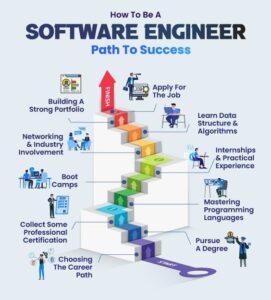
The top software engineering careers in Nigeria are specialized roles involved in designing, developing, testing, deploying and maintaining software.
Some of the major paths include:
- Full-stack software development
- Frontend engineering
- Backend engineering
- Mobile application development
- Cloud engineering
- DevOps engineering
- AI and machine learning engineering
- Software security engineering
- Data-focused software engineering
- Software architecture
Software engineering is broader than simply writing code. Software development can involve requirements analysis, design, implementation, testing, deployment and maintenance.
This means aspiring software engineers should develop problem-solving, communication, testing and system-design skills alongside programming ability.
Top Software Engineering Careers in Nigeria
Full-stack development is one of the broadest software engineering careers in Nigeria.
Full-stack developers work on both the frontend and backend of applications. Depending on the project, they may build interfaces, APIs, databases, authentication systems and deployment workflows.
Common technologies include:
- HTML
- CSS
- JavaScript
- TypeScript
- React
- Node.js
- Python
- SQL
- Git
- GitHub
- REST APIs
A beginner could start with a simple website and gradually progress to a complete application containing authentication, a database, backend APIs and a professional user interface.
Full-stack development can be useful for people interested in startups, freelance development, product development and broad software engineering responsibilities.
2. Frontend Software Engineer
Frontend engineering focuses on the part of an application users interact with directly.
Frontend engineers may develop:
- Websites
- Web applications
- Dashboards
- E-commerce interfaces
- Administrative systems
- Interactive forms
Core technologies include HTML, CSS and JavaScript, followed by frameworks such as React.
However, becoming a strong frontend engineer involves more than learning a framework. Developers should understand responsive design, accessibility, performance, browser behavior, application architecture and API integration.
For someone looking at top software engineering careers in Nigeria, frontend engineering can be an entry point into the wider software development field.
3. Backend Software Engineer
Backend engineers develop the server-side components that power applications.
They can be responsible for:
- Business logic
- APIs
- Databases
- Authentication
- Server-side processing
- Application security
- Data management
Popular technologies include Python, Java, JavaScript/Node.js, PHP and C#.
Backend engineers should understand databases, APIs, data structures, algorithms, security and system architecture.
For example, when a user logs into an online banking or e-commerce application, backend systems may authenticate the user, retrieve information from databases and process application requests.
Mobile development is another important software engineering career path.
Mobile developers create applications for smartphones and tablets, including applications used for:
- Banking
- Education
- E-commerce
- Transportation
- Communication
- Entertainment
- Business services
Developers can specialize in Android, iOS or cross-platform development.
Technologies can include Kotlin, Swift, Flutter and React Native.
A beginner can start with a simple mobile application before progressing to applications involving APIs, databases, authentication and cloud services.
Cloud engineering is an increasingly important specialization for software professionals.
Cloud engineers work with computing infrastructure that allows applications and services to be deployed, managed and scaled.
Important areas include:
- Cloud computing
- Virtual machines
- Storage
- Networking
- Databases
- Containers
- Identity management
- Monitoring
- Infrastructure automation
Software engineers who understand cloud environments can contribute to the deployment and operation of applications beyond the local development environment.
DevOps engineering focuses on improving software development and delivery processes.
A DevOps engineer may help development teams automate:
- Software testing
- Builds
- Deployments
- Infrastructure
- Monitoring
- Application releases
Important skills include:
- Linux
- Git
- CI/CD
- Docker
- Kubernetes
- Cloud platforms
- Infrastructure as code
- Automation
For example, a development team can create a CI/CD pipeline that automatically tests new code and prepares approved changes for deployment.
Artificial intelligence and machine learning provide another direction for software engineers.
AI engineers can develop or integrate systems that process information, generate predictions, automate tasks or provide intelligent features.
Relevant skills include:
- Python
- Mathematics
- Statistics
- Machine learning
- Data processing
- APIs
- Model evaluation
- Cloud computing
- AI development tools
AI can be applied to many Nigerian business and technology problems, including customer support, education, financial services, business automation and information systems.
A software engineer interested in AI should still develop strong programming and software development fundamentals.
8. Software Security Engineer
Software security is an important specialization because applications increasingly handle sensitive business and personal information.
Security-focused software engineers may work on:
- Secure application design
- Authentication
- Authorization
- Secure coding
- Vulnerability identification
- Security testing
- Data protection
Developers in this area need a strong understanding of how applications work and how security weaknesses can emerge during development.
Security knowledge is also useful for developers who do not specialize exclusively in cybersecurity.
9. Data-Focused Software Engineer
Data-focused software engineering combines programming with data processing and infrastructure.
These engineers may build systems for:
- Collecting data
- Processing data
- Moving data between systems
- Managing databases
- Building data pipelines
- Supporting analytics applications
Useful skills include Python, SQL, databases, APIs, cloud platforms and data-processing technologies.
This can be an interesting career path for people who enjoy programming while also working with large datasets and information systems.
10. Software Architect
Software architecture is a more advanced direction within the software engineering profession.
Software architects and experienced engineers may make decisions concerning:
- Application architecture
- Scalability
- Performance
- Security
- Technology selection
- System integration
- Engineering standards
This is normally a progression that comes after substantial practical software development experience.
A beginner should therefore focus first on learning how to build and maintain software before worrying about becoming a software architect.
Software is used across many sectors of the Nigerian economy.
Potential areas of application include:
- Financial technology
- Banking
- Telecommunications
- E-commerce
- Education
- Healthcare
- Logistics
- Energy
- Professional services
- Government technology
- Media
- Agriculture
This creates different environments in which software engineers can apply their skills.
For example, a developer might build an inventory management platform for a local business, while another engineer could work on financial technology infrastructure or an international software product.
The top software engineering careers in Nigeria therefore should not be viewed as a single narrow profession. They represent multiple technical directions with different responsibilities and learning requirements.
Skills Needed for the Top Software Engineering Careers in Nigeria
Regardless of specialization, aspiring software engineers should develop several foundational skills.
Programming Fundamentals
Learn:
- Variables
- Data types
- Conditions
- Loops
- Functions
- Objects
- Arrays
- Error handling
- Modules
The goal is to understand programming concepts rather than memorize syntax.
Data Structures and Algorithms
Learn how common data structures work and how algorithms solve computational problems.
Examples include:
- Arrays
- Lists
- Stacks
- Queues
- Hash tables
- Trees
- Searching
- Sorting
These concepts become particularly important for technical interviews and more advanced engineering work.
Databases
Software engineers frequently interact with databases.
Learn:
- SQL
- Tables
- Relationships
- Queries
- Indexes
- Transactions
- Database design
You can later explore NoSQL databases when your projects require them.
Git and Version Control
Git helps developers track changes and collaborate on software projects.
Learn how to:
- Create repositories
- Commit changes
- Create branches
- Merge code
- Resolve conflicts
- Collaborate through GitHub
APIs
Understanding APIs is essential for modern application development.
Learn about:
- HTTP
- Requests
- Responses
- JSON
- REST APIs
- Authentication
- API errors
Testing and Debugging
Professional software engineering requires developers to test their work and investigate problems.
Learn:
- Debugging
- Unit testing
- Integration testing
- Error handling
- Code review
Communication
Software engineers frequently collaborate with designers, product managers, business teams and other developers.
Communication, documentation and teamwork can therefore be important parts of a successful software engineering career.
How to Choose Among the Top Software Engineering Careers in Nigeria
Choosing a specialization can be difficult when you are new to technology.
A simple approach is to explore your interests.
If You Enjoy Building Interfaces
Consider frontend development.
If You Enjoy Logic and Databases
Consider backend engineering.
If You Want to Build Complete Applications
Consider full-stack development.
If You Like Smartphones
Explore mobile development.
If You Like Infrastructure
Explore cloud engineering or DevOps.
If You Enjoy AI and Data
Explore AI, machine learning or data-focused engineering.
If You Are Interested in Protecting Applications
Explore software security.
You do not need to make a permanent decision at the beginning of your learning journey. Software engineering skills often overlap, and engineers can change specializations as they gain experience.
People with software engineering skills can pursue different types of professional opportunities.
Potential roles include:
- Junior Software Developer
- Junior Software Engineer
- Frontend Developer
- Backend Developer
- Full-Stack Developer
- Mobile Developer
- Cloud Engineer
- DevOps Engineer
- AI Engineer
- Machine Learning Engineer
- Software Security Engineer
- Senior Software Engineer
- Software Architect
Software development also involves different professional roles beyond programming, including testing, documentation, product management and user support.
Software Engineering Opportunities in Port Harcourt
For learners in Port Harcourt, software engineering skills can be applied to local businesses and organizations as well as remote and international opportunities.
Port Harcourt’s business environment includes industries such as energy, professional services, education, commerce and logistics.
A developer can potentially use software skills to solve problems such as:
- Inventory management
- Business websites
- Booking systems
- School management
- Customer management
- E-commerce
- Financial tracking
- Logistics management
This is one reason practical project experience is valuable.
Instead of simply saying that you know JavaScript or Python, a portfolio can demonstrate what you have actually built with those technologies.
A beginner can follow a structured learning process.
1. Learn Programming
Choose a suitable programming language and learn the fundamentals.
2. Learn Development Tools
Learn Git, GitHub, code editors and basic command-line usage.
3. Learn Databases and APIs
Understand how applications store information and communicate with other systems.
4.Choose a Specialization
After learning the fundamentals, explore one of the major software engineering careers in Nigeria.
5. Build Real Projects
Move beyond tutorials.
Build applications that solve realistic problems.
6. Create a Portfolio
Document your projects and explain:
- The problem
- Your solution
- Technologies used
- Your contribution
- Challenges
- How you solved them
7. Prepare for Interviews
Practice technical questions, project explanations and behavioral interviews.
8. Start Applying
Look for internships, junior positions, freelance opportunities and other relevant professional experiences.
How Potenmunia Tech School Approaches Software Engineering Training
Potenmunia Tech School approaches software engineering education with an emphasis on practical application and career preparation.
Rather than relying entirely on lecture-based learning, the training approach emphasizes hands-on sessions and project development.
Learners can receive one-on-one instruction with a dedicated personal instructor, allowing them to receive individualized feedback and guidance. Learners who prefer collaborative environments can also use cohort-based learning.
As learners develop their technical abilities, practical projects can contribute to a professional portfolio.
Potenmunia also incorporates career preparation through CV and portfolio development, interview preparation and job application support. These areas connect technical education with the practical steps involved in pursuing software engineering opportunities.
The approach is designed around developing skills that learners can apply to real-world software problems rather than focusing only on completing theoretical lessons.
A portfolio can be particularly useful when you are starting your career.
Instead of creating random projects, choose projects that demonstrate different technical abilities.
For example:
1. Business Website
Demonstrates:
- HTML
- CSS
- JavaScript
- Responsive design
2. Database Application
Demonstrates:
- Backend programming
- SQL
- APIs
- Authentication
3. Full-Stack Application
Demonstrates:
- Frontend
- Backend
- Database
- API integration
- Deployment
4. AI-Powered Application
Demonstrates:
- Programming
- APIs
- AI integration
- User interface
- Software architecture
These projects can give you practical examples to discuss during interviews.
AI and the Future of Software Engineering Careers in Nigeria
AI is changing how software developers work.
Modern developers can use AI tools to assist with:
- Code generation
- Debugging
- Documentation
- Testing
- Learning unfamiliar technologies
- Prototyping
However, developers still need fundamental software engineering knowledge.
A developer should be able to inspect generated code, identify problems, test functionality and make informed architectural decisions.
This means learning AI tools alongside programming fundamentals can be more useful than depending entirely on automatically generated code.
Common Mistakes When Starting a Software Engineering Career
Learning Too Many Languages
Start with one language and develop strong fundamentals.
Watching Tutorials Without Building
Learning should eventually result in independent projects.
Ignoring Git
Version control is an important professional development skill.
Focusing Only on Certificates
Certificates can demonstrate learning, but projects demonstrate practical application.
Copying Portfolio Projects
Only include projects you understand and can explain.
Trying to Master Everything
Software engineering is a large field. Choose a direction and gradually expand your knowledge.
Software engineering can develop into several different professional directions.
A possible progression is:
Beginner → Junior Developer → Software Engineer → Mid-Level Engineer → Senior Engineer → Lead/Staff Engineer → Principal Engineer or Engineering Leadership
Other paths can include:
- Software architecture
- Cloud engineering
- DevOps
- AI engineering
- Security engineering
- Technical consulting
- Product development
- Entrepreneurship
- Engineering management
There is no single career progression that every engineer must follow.
Frequently Asked Questions About the Top Software Engineering Careers in Nigeria
What are the top software engineering careers in Nigeria?
Major career paths include full-stack development, frontend engineering, backend engineering, mobile development, cloud engineering, DevOps, AI and machine learning engineering, software security, data-focused engineering and software architecture.
Which software engineering career should a beginner choose?
Start with your interests. Beginners can first learn general programming and software development fundamentals before choosing a specialization.
Can I become a software engineer without a computer science degree?
A computer science or software engineering degree is one route into the profession, but people can also develop software skills through structured training, self-directed learning, practical projects and professional experience.
What programming language should I learn first?
Python and JavaScript are common starting choices, but the appropriate language depends on your career goals and the type of software you want to build.
Are software engineering jobs available in Port Harcourt?
Software skills can be applied across businesses and industries in Port Harcourt, while remote work and freelance arrangements can also allow developers to work with organizations outside their immediate location.
How can I prepare for a software engineering interview?
Study programming fundamentals, data structures and algorithms, practice coding problems, understand your projects thoroughly and prepare for behavioral questions.
Do I need to know AI to become a software engineer?
AI knowledge can be useful, but it should not replace fundamental programming, software design, testing and problem-solving skills.
How can I get software engineering experience as a beginner?
Build practical projects, contribute to appropriate open-source projects, pursue internships or entry-level opportunities and create a portfolio demonstrating your abilities.
Conclusion
The top software engineering careers in Nigeria cover a wide range of technical specializations. From frontend and backend engineering to full-stack development, mobile applications, cloud, DevOps, AI and security, aspiring developers have multiple directions they can explore.
The best starting point is not to attempt everything simultaneously. Build strong programming fundamentals, learn software development tools, create practical projects and gradually specialize.
For learners in Port Harcourt, structured practical training can provide an environment for developing technical skills, building projects, preparing a portfolio and becoming familiar with professional software development practices.
Whether your goal is local employment, remote work, freelancing, entrepreneurship or long-term technical specialization, the foundation remains the same: learn, build, test, improve and keep developing your skills.
For additional background reading on software engineering and related concepts, you can explore Wikipedia.
If you are searching for the best data engineering courses in Port Harcourt, it is important to look beyond course titles and certificates. A useful data engineering program should teach you how to work with databases, SQL, Python, data pipelines, ETL/ELT processes, cloud platforms, and real-world data systems.
Data engineering focuses on building systems that collect, store, process, and deliver data for analytics, applications, and machine learning.
For learners in Port Harcourt and across Nigeria, choosing among the best data engineering courses in Port Harcourt should therefore involve looking at practical training, instructor support, projects, portfolio development, and career preparation.
This guide explains what to look for in data engineering courses in Port Harcourt, the technical skills to learn, project ideas to consider, and how to choose a program that matches your career goals.
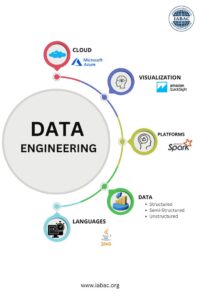
Data engineering involves designing and maintaining the systems that allow organizations to collect, store, transform and make data available for use.
A data engineer may work with databases, APIs, cloud platforms, data warehouses and automated pipelines. The resulting data can then be used by analysts, data scientists, business intelligence teams and machine learning systems.
In simple terms, think of data engineering as building the infrastructure that helps useful data move from its original source to the people and applications that need it.
For example:
Business applications → Data collection → Data pipeline → Transformation → Data warehouse → Analytics
Understanding this workflow is an important part of evaluating the best data engineering courses in Port Harcourt.
Why Are Data Engineering Courses Important in Port Harcourt?
Businesses increasingly depend on digital information for operations, reporting and decision-making.
Organizations may generate data from:
- Websites
- Mobile applications
- Customer transactions
- Financial systems
- Business management software
- Sensors and connected devices
- Online platforms
- Internal databases
As these sources grow, organizations need systems that can collect, organize and process information reliably.
This creates opportunities for people who develop practical data engineering skills.
For learners in Port Harcourt, studying data engineering can also provide skills that are useful beyond the local technology market. Many data engineering tools and concepts are used across international technology organizations and remote teams.
What Makes the Best Data Engineering Courses in Port Harcourt?
The phrase best data engineering courses in Port Harcourt can mean different things to different learners.
Instead of choosing a course based only on advertising claims, examine what the program actually teaches and what you will be able to build after completing it.
Here are important factors to consider.
SQL is a fundamental skill for working with relational databases and many modern data platforms.
A good data engineering course should cover:
- SELECT statements
- Filtering
- Sorting
- Aggregation
- Joins
- Subqueries
- Common table expressions
- Window functions
- Database relationships
- Query optimization
Students should ideally apply SQL to realistic datasets rather than only completing simple syntax exercises.
Python is widely used for automation, data processing and building data workflows.
A practical course can introduce:
- Python fundamentals
- Functions
- Data structures
- File processing
- APIs
- Error handling
- Automation
- Database connections
- Data transformation
The objective is not simply to learn Python. It is to understand how Python can solve data engineering problems.
3. Databases
Database knowledge is essential for data engineers.
A course should introduce concepts such as:
- Relational databases
- Tables
- Keys
- Relationships
- Indexes
- Schemas
- Database design
- NoSQL concepts
- Data warehouses
- Data lakes
Learners should understand not only how to query data but also how data can be organized and stored efficiently.
4. ETL and ELT
ETL means Extract, Transform and Load.
For example:
- Extract customer information from a source.
- Transform and clean the information.
- Load the result into a target database or warehouse.
ELT changes the order by loading the data before performing transformations.
Understanding ETL and ELT is an important part of modern data engineering education. IBM also identifies ETL and ELT as important approaches to data integration.
5. Data Pipelines
Data pipelines automate the movement of information between systems.
For example:
Sales system → Extraction → Transformation → Data warehouse → Business dashboard
Learners should understand how pipelines are created, scheduled, monitored and maintained.
Modern data systems frequently use cloud infrastructure.
Depending on the program, learners may encounter:
- Amazon Web Services
- Microsoft Azure
- Google Cloud
- Cloud storage
- Cloud databases
- Cloud data warehouses
- Compute services
- Identity and access management
A good beginner course does not necessarily need to teach every cloud provider. Understanding the fundamental concepts is more important.
Best Data Engineering Courses in Port Harcourt for Beginners
If you are completely new to data engineering, avoid choosing a program simply because it advertises advanced technologies.
A beginner-friendly pathway should progress logically.
1. Programming
Start with Python fundamentals and programming logic.
2. SQL
Learn how to query and manipulate structured data.
3. Databases
Understand how relational databases store and organize information.
4. Data Transformation
Learn how raw information can be cleaned and transformed.
5. ETL and Data Pipelines
Build simple workflows that move information between systems.
6. Data Warehousing
Learn how organizations organize data for analytics.
7. Cloud
Explore cloud-based data infrastructure.
8. Portfolio Projects
Combine your skills in realistic projects.
This progression can make the learning experience easier to manage than trying to master every advanced data technology immediately.
Best Data Engineering Courses in Port Harcourt for Professionals
Professionals may require a different learning path.
For example, someone who already works as a data analyst may have strong SQL and visualization skills but need more experience with:
- Python
- Data pipelines
- Cloud platforms
- Data warehouses
- Workflow orchestration
- Data architecture
A software developer may already understand Python or another programming language but need deeper knowledge of databases, distributed processing and data infrastructure.
Before selecting among the best data engineering courses in Port Harcourt, identify the skills you already possess and the skills you need to develop.
Important Data Engineering Tools to Learn
Different organizations use different technology stacks, but learners should understand the purpose of major categories of data engineering tools.
| Area |
Technologies to Explore |
| Programming |
Python |
| Querying |
SQL |
| Databases |
PostgreSQL, MySQL |
| Data processing |
Pandas, PySpark |
| Big data |
Apache Spark |
| Workflow orchestration |
Apache Airflow |
| Version control |
Git and GitHub |
| Containers |
Docker |
| Cloud |
AWS, Azure, Google Cloud |
| Warehousing |
BigQuery, Snowflake, Redshift |
| Transformation |
dbt |
| Streaming |
Apache Kafka |
Do not choose a course simply because it lists many technologies. The important question is whether learners actually understand how these tools fit into a working data system.
One of the best ways to evaluate the best data engineering courses in Port Harcourt is to examine the projects included in the curriculum.
Nigerian Sales Data Pipeline
A learner could build a pipeline that collects sales records, validates the information, transforms it and stores the results in a database.
E-Commerce Data Warehouse
A project could contain:
- Customers
- Products
- Orders
- Payments
- Deliveries
The learner could then design the database and write SQL queries for analysis.
API Data Pipeline
Students could retrieve data from an API, process it with Python and load it into a database.
Automated ETL Project
A more advanced project could automatically:
- Collect data.
- Validate the data.
- Clean the data.
- Transform the data.
- Store the data.
- Record errors.
- Run on a schedule.
These projects can demonstrate practical competence more clearly than a certificate alone.
Data Engineering Certification vs Practical Skills
Certification can be useful, but completing a course does not automatically mean someone can design and maintain a production data system.
When comparing the best data engineering courses in Port Harcourt, examine whether students receive practical experience with:
- SQL
- Python
- Databases
- ETL/ELT
- Data pipelines
- Cloud technologies
- Version control
- Data modeling
- Real-world projects
A portfolio can provide tangible evidence of what you have learned.
Potenmunia Tech School provides practical technology training in Port Harcourt with an emphasis on applying technical concepts through hands-on learning.
For learners studying data engineering, practical sessions can help connect concepts such as SQL, Python, databases and data pipelines to actual projects.
One feature of Potenmunia’s approach is one-on-one learning with a dedicated personal instructor. This gives learners an opportunity to receive individualized feedback instead of relying entirely on a one-size-fits-all classroom approach.
The learning approach can also incorporate:
- Practical projects
- Portfolio development
- Mentorship
- Interview preparation
- CV support
- Job application guidance
- AI and emerging technology exposure
This is particularly relevant for learners who want their data engineering education to lead toward practical career preparation rather than focusing exclusively on completing a syllabus.
How to Choose Among the Best Data Engineering Courses in Port Harcourt
Before enrolling, use this checklist.
Curriculum
Check whether the program covers:
- Python
- SQL
- Databases
- Data modeling
- ETL/ELT
- Data pipelines
- Data warehousing
- Cloud fundamentals
Practical Learning
Ask:
- Are projects included?
- Will I build a portfolio?
- Are exercises based on realistic problems?
- Will I work with actual datasets?
Instructor Support
Consider:
- How much feedback do learners receive?
- Is one-on-one support available?
- Can the instructor explain difficult technical concepts?
- Is mentorship part of the learning experience?
Career Preparation
Look for:
- Interview preparation
- CV development
- Portfolio guidance
- Job application support
- Career mentorship
Learning Format
Compare whether you prefer:
- One-on-one learning
- Cohort learning
- A combination of both
- Flexible or structured sessions
The right choice should match your current experience and career objectives.
Data Engineering Career Opportunities
Learning data engineering can prepare students for different technology roles.
Data Engineer
Data engineers build and maintain systems that collect, transform, store and deliver data.
Cloud Data Engineer
Cloud data engineers work with cloud infrastructure and data services.
Analytics Engineer
Analytics engineers often work between data engineering and analytics, transforming raw data into reliable datasets for analysis.
Big Data Engineer
Big data engineers work with systems designed to process large volumes of information.
Data Platform Engineer
Data platform engineers can work on infrastructure that supports data teams and applications.
Job responsibilities differ between organizations, so learners should examine individual job descriptions when planning their career.
Data Engineering vs Data Analytics
Data engineering and data analytics are closely connected but have different primary responsibilities.
Data engineering focuses heavily on building the systems and pipelines that make data available.
Data analytics focuses on examining data to identify patterns, answer questions and support decisions.
For example, a data engineer might build a pipeline that moves sales data into a warehouse.
A data analyst might then use that prepared dataset to investigate sales performance.
Understanding this difference can help learners decide whether data engineering matches their interests.
Data Engineering and Artificial Intelligence
Data engineering is also closely connected to artificial intelligence.
AI systems require data that can be collected, processed, stored and made available to downstream systems. Data engineers can contribute by building pipelines, preparing datasets and maintaining infrastructure.
For learners interested in AI, studying data engineering can therefore provide useful foundational knowledge.
If you want to learn data engineering in Port Harcourt, consider the following progression:
Step 1: Learn Python.
Step 2: Develop strong SQL skills.
Step 3: Learn relational databases.
Step 4: Study data modeling.
Step 5: Learn data cleaning and transformation.
Step 6: Build ETL and ELT workflows.
Step 7: Build data pipelines.
Step 8: Learn Git and version control.
Step 9: Study data warehousing.
Step 10: Learn cloud data engineering fundamentals.
Step 11: Build several portfolio projects.
Step 12: Practice technical interviews and project explanations.
This roadmap can be adjusted according to your existing knowledge.
Common Mistakes When Choosing Data Engineering Courses
Choosing Based Only on the Certificate
A certificate can document course completion, but practical ability still matters.
Learning Too Many Tools at Once
Focus on understanding core concepts before adding more technologies.
Ignoring SQL
SQL is an important part of working with databases and data platforms.
Avoiding Projects
Projects allow learners to combine multiple technical skills.
Skipping Programming Fundamentals
A strong programming foundation can make more advanced automation and pipeline work easier to understand.
Not Building a Portfolio
A portfolio gives employers and potential clients something concrete to evaluate.
How Much Do Data Engineering Courses in Port Harcourt Cost?
Course fees can vary significantly depending on the training format, duration, curriculum, instructor support and facilities provided.
Rather than choosing a program based exclusively on price, compare what is included.
Ask whether the fee covers:
- Practical sessions
- Instructor support
- Projects
- Mentorship
- Portfolio development
- Interview preparation
- Learning resources
- Career support
This gives you a more meaningful basis for comparing best data engineering courses in Port Harcourt.
How Long Does It Take to Learn Data Engineering?
There is no single timeframe that applies to everyone.
A beginner needs time to develop programming, SQL and database fundamentals before moving into more advanced areas.
Someone with an existing background in software development, analytics or databases may progress through some topics more quickly.
The more useful question is:
What practical skills and projects will I have completed by the end of the program?
This shifts attention from simply completing a course to developing actual competence.
Conclusion on the Best Data Engineering Courses in Port Harcourt
Choosing among the best data engineering courses in Port Harcourt should involve more than looking at certificates, advertisements or lists of technologies.
Look for a program that develops practical knowledge of Python, SQL, databases, data modeling, ETL/ELT, pipelines, data warehouses and cloud technologies.
Also consider whether learners receive individualized instruction, mentorship, practical projects, portfolio support and career preparation.
For anyone interested in understanding the broader discipline, Wikipedia’s overview of data engineering provides additional background, while technical resources from established technology organizations can help you explore individual tools and concepts.
The most valuable outcome of your training should be the ability to explain what you have learned and demonstrate what you can build.
If you are exploring data engineering training in Port Harcourt, take time to compare curricula, practical projects, instructor support and career-development opportunities before choosing a program.
Frequently Asked Questions
What are the best data engineering courses in Port Harcourt?
The right course depends on your experience and career goals. Look for practical training covering Python, SQL, databases, ETL/ELT, data pipelines, data warehousing and cloud technologies.
Can beginners take data engineering courses in Port Harcourt?
Yes. Beginners can start with Python, SQL and database fundamentals before progressing into data pipelines, warehousing and cloud technologies.
What should I learn before data engineering?
Basic programming and database concepts are helpful. Beginners can start with Python and SQL and gradually move into more specialized data engineering topics.
Is Python important for data engineering?
Yes. Python is commonly used for automation, data processing, APIs and pipeline development.
Is SQL necessary for data engineering?
SQL is an important skill because data engineers frequently work with relational databases, warehouses and systems that support SQL querying.
Can I learn data engineering without a computer science degree?
A computer science degree can provide useful foundations, but learners can also develop data engineering skills through structured training, practical projects and consistent technical practice.
What projects should I build as a beginner data engineer?
Good beginner projects include ETL pipelines, API-to-database workflows, sales data pipelines, data warehouses and automated data-processing systems.
Is data engineering useful for AI?
Yes. Data engineering helps provide the infrastructure and data workflows needed by analytics, machine learning and AI systems.
Where can I study data engineering in Port Harcourt?
When evaluating data engineering training in Port Harcourt, compare the curriculum, practical projects, instructor support, mentorship, portfolio development and career preparation offered by each institution.
Are data engineering courses useful for remote careers?
The technical skills used in data engineering are applicable across many organizations and technology environments, including teams that operate remotely. However, individual job requirements vary.
Machine Learning for Beginners is a practical starting point for anyone who wants to understand how computers can learn from data, identify patterns, and make predictions. Although machine learning is an important part of modern artificial intelligence, beginners do not need to start with complicated mathematics, advanced programming, or complex neural networks.
If you are searching for Machine Learning for Beginners, the most important thing to understand is that machine learning is a gradual learning process. You can start with basic programming, learn how data works, understand simple algorithms, and then progress toward more advanced artificial intelligence applications.
For a student, graduate, professional, entrepreneur, or aspiring technology specialist in Port Harcourt or elsewhere in Nigeria, learning machine learning can provide a useful foundation for exploring data science, artificial intelligence, and other technology fields.
This Machine Learning for Beginners guide explains what machine learning means, how it works, the major types of machine learning, what beginners should learn first, useful tools, practical projects, career opportunities, and how to develop machine learning skills through hands-on practice.

Machine learning is a field of artificial intelligence in which computer systems learn patterns from data and use those patterns to make predictions, classifications or decisions.
A traditional computer program generally follows instructions written by a programmer.
Machine learning works differently.
Instead of writing a separate rule for every possible situation, a developer can provide data and an appropriate learning algorithm. The algorithm can identify patterns in the data and produce a model that can be used with new information.
For a beginner, this can be simplified as:
Data → Algorithm → Training → Model → Prediction
According to Wikipedia, machine learning focuses on algorithms that can learn from data and generalise their behaviour to previously unseen data. You can read more about the subject on Wikipedia’s Machine Learning page.
A Simple Machine Learning Example
Imagine a business has several years of sales records.
The data may contain:
- Product name
- Product category
- Price
- Number of units sold
- Date
- Location
- Promotion information
A machine learning model could learn relationships between these variables and sales.
The business could then use the model to help estimate future demand.
This is one of the easiest ways for Machine Learning for Beginners students to understand the concept: the computer learns from examples rather than relying entirely on manually written rules.
Why Should Beginners Learn Machine Learning?
There are several reasons people become interested in Machine Learning for Beginners training.
Machine learning is connected to:
- Artificial intelligence
- Data science
- Data analytics
- Software development
- Business intelligence
- Automation
- Predictive analytics
- Computer vision
- Natural language processing
Machine learning is also increasingly relevant to how modern software applications process and interpret data.
For beginners, however, the goal should not simply be to learn a fashionable technology.
The goal should be to develop the ability to solve problems using data and computational methods.
Understanding the machine learning workflow is one of the most important parts of Machine Learning for Beginners education.
A typical project can involve several stages.
1. Define the Problem
Before collecting data or selecting an algorithm, identify the problem you want to solve.
For example:
Can historical sales data help us estimate next month’s sales?
This is more useful than simply saying:
I want to use machine learning.
A clear problem determines what data you need and how you should evaluate your model.
2. Collect Data
Machine learning requires data.
Data may come from:
- Databases
- Websites
- Business systems
- Surveys
- Sensors
- Mobile applications
- Public datasets
- Company records
The type and quality of data depend on the problem.
3. Clean the Data
Real-world datasets often contain problems.
For example:
- Missing information
- Duplicate records
- Incorrect values
- Different date formats
- Spelling inconsistencies
- Unnecessary columns
Data cleaning is therefore a major part of practical Machine Learning for Beginners training.
4. Explore the Data
Before building a model, examine the dataset.
Ask questions such as:
- What variables are available?
- Which variables appear important?
- Are there unusual values?
- Are some variables related?
- Is the dataset balanced?
- Are there missing values?
Data visualisation can help reveal patterns that are difficult to see in raw tables.
5. Prepare Features
Features are pieces of information used by a machine learning model.
For example, a house-price model might use:
- Number of bedrooms
- Property size
- Location
- Property age
- Number of bathrooms
The target might be the property’s price.
Understanding features and targets is a fundamental concept for Machine Learning for Beginners.
6. Select a Machine Learning Algorithm
Different problems require different approaches.
For example:
- Regression can be used to predict numerical values.
- Classification can be used to predict categories.
- Clustering can help identify groups in data.
Scikit-learn provides tools for classification, regression, clustering, preprocessing, model selection and model evaluation.
7. Train the Model
Training means allowing the algorithm to learn patterns from the training data.
The model adjusts its internal parameters according to the learning method being used.
8. Test the Model
A machine learning model should be evaluated using data that was not used to train it.
This helps determine whether the model can generalise to new examples.
9. Evaluate the Results
The evaluation method depends on the type of problem.
For classification, you might examine:
- Accuracy
- Precision
- Recall
- F1 score
- Confusion matrix
For regression, you might use measures such as:
- Mean absolute error
- Mean squared error
- Root mean squared error
- R²
10. Improve the Model
Machine learning is often an iterative process.
You may need to:
- Improve data quality
- Select better features
- Try another algorithm
- Adjust parameters
- Collect additional data
- Address overfitting
- Re-evaluate the model
This is why Machine Learning for Beginners should be approached as a process of experimentation and learning rather than simply memorising algorithms.
One of the most important topics in Machine Learning for Beginners is understanding the major types of machine learning.
Supervised Learning
Supervised learning uses labelled examples.
The model receives input data together with known outcomes.
For example, suppose you have historical property data containing property characteristics and known selling prices.
The model can learn the relationship between the characteristics and the prices.
Two common supervised learning tasks are:
- Regression
- Classification
Regression
Regression is used when the target is a numerical value.
Examples include:
- Predicting sales
- Estimating property prices
- Forecasting demand
- Estimating delivery times
Classification
Classification is used when the model needs to assign observations to categories.
Examples include:
- Spam or not spam
- Customer churn or no churn
- Approved or not approved
- Category A, B or C
Unsupervised Learning
Unsupervised learning works with data without predefined target labels.
The objective may be to discover structures or groups within the data.
A common example is customer segmentation.
Suppose a business has thousands of customers.
A clustering algorithm could help identify groups of customers with similar purchasing patterns.
Scikit-learn describes clustering as the automatic grouping of similar objects into sets and provides several clustering algorithms.
Reinforcement Learning
Reinforcement learning involves an agent interacting with an environment and learning from feedback.
The agent receives rewards or penalties and attempts to improve its behaviour over time.
Reinforcement learning is more advanced than what most people need at the beginning of their Machine Learning for Beginners journey, so it is usually better to understand supervised and unsupervised learning first.
Machine Learning for Beginners: What Should You Learn First?
If you are starting Machine Learning for Beginners, you do not need to learn everything at once.
A structured learning path is much easier to manage.
Start With Computer Fundamentals
Understand:
- Files and folders
- Operating systems
- Basic software concepts
- Internet fundamentals
- Basic troubleshooting
- How programming environments work
If you already have these skills, you can move quickly to programming.
Python is an important language for data science and machine learning.
For Machine Learning for Beginners, focus first on:
- Variables
- Strings
- Numbers
- Lists
- Dictionaries
- Conditional statements
- Loops
- Functions
- Modules
- Error handling
- Basic object-oriented programming
You do not need to become an advanced Python developer before beginning machine learning.
However, you should be comfortable enough with Python to read and write basic programs.
Learn NumPy
NumPy is widely used for numerical computing in Python.
You can use it to work with arrays and numerical operations.
Understanding NumPy makes many data science concepts easier to follow.
Learn Pandas
Pandas is particularly useful for working with structured data.
For Machine Learning for Beginners, Pandas can help you:
- Import datasets
- Examine data
- Select columns
- Filter records
- Handle missing values
- Group data
- Transform data
- Prepare datasets
Learn Data Visualisation
Learn how to communicate information visually.
Useful tools include:
- Matplotlib
- Seaborn
- Plotly
You should understand charts such as:
- Bar charts
- Line charts
- Histograms
- Scatter plots
- Box plots
Learn Basic Statistics
Statistics provides an important foundation for machine learning.
Start with:
- Mean
- Median
- Mode
- Range
- Variance
- Standard deviation
- Probability
- Correlation
- Distributions
As you progress, you can study more advanced statistical concepts.
SQL is valuable when working with data stored in relational databases.
A beginner should understand:
- SELECT
- WHERE
- ORDER BY
- GROUP BY
- JOIN
- Aggregate functions
- Subqueries
Combining SQL, Python and machine learning can provide a strong technical foundation.
Machine Learning Algorithms Beginners Should Know
You do not need to memorise every algorithm.
Start with the fundamentals.
Linear Regression
Linear regression can be used to model relationships between variables and predict numerical outcomes.
A simple example is estimating sales based on historical business information.
Logistic Regression
Despite its name, logistic regression is commonly used for classification tasks.
It can be used to estimate the probability of an observation belonging to a class.
Decision Trees
Decision trees make predictions through a sequence of decision rules.
They are useful for understanding how classification and regression can be performed through branching decisions.
Random Forests
Random forests combine multiple decision trees to create an ensemble model.
They are widely used for both classification and regression tasks.
K-Nearest Neighbours
K-nearest neighbours makes predictions based on nearby observations in the feature space.
It can be useful as an introductory algorithm because the basic idea is relatively intuitive.
K-Means Clustering
K-means clustering is a popular unsupervised learning technique used to divide observations into groups.
For example, it could be used to explore customer segments.
Support Vector Machines
Support vector machines can be used for classification and regression.
They become more understandable once a learner has developed a stronger foundation in machine learning concepts.
A beginner does not need hundreds of software tools.
A practical starting toolkit could include:
Python
Used for programming and machine learning development.
Jupyter Notebook
Useful for combining code, explanations, results and visualisations in an interactive environment.
NumPy
Useful for numerical computing.
Pandas
Useful for data manipulation and analysis.
Matplotlib
Useful for creating visualisations.
Scikit-learn
Scikit-learn provides many traditional machine learning algorithms as well as tools for preprocessing, model evaluation and model selection.
Git and GitHub
Version-control tools can help you organise projects and share your work.
For Machine Learning for Beginners, the important thing is not to install every tool available. Learn a small set properly and expand your toolkit when your projects require it.
Practical Machine Learning Projects for Beginners
Projects are one of the most effective ways to turn Machine Learning for Beginners theory into practical skills.
1. House Price Prediction
Use information such as:
- Property size
- Number of rooms
- Location
- Property age
Build a model that predicts a numerical price.
This introduces regression.
2. Customer Classification
Use customer information to predict whether a customer belongs to a particular category.
This introduces classification.
3. Customer Segmentation
Use purchasing behaviour to group customers.
This introduces clustering.
4. Sales Forecasting
Analyse historical sales information and build a model that attempts to estimate future sales.
This can help learners understand how machine learning can connect to business problems.
5. Student Performance Analysis
Use an appropriate educational dataset to investigate patterns related to student outcomes.
The emphasis should be on responsible interpretation rather than treating predictions as certain outcomes.
Machine Learning for Beginners in Nigeria
Machine learning education can be particularly interesting when learners connect technical concepts to Nigerian problems.
Nigeria has businesses and organisations working across many sectors, including:
- Banking
- Telecommunications
- Agriculture
- Logistics
- Retail
- Education
- Energy
- Healthcare
- Financial technology
These sectors can generate large amounts of data.
For example, a learner could build a project around:
Retail: Predicting product demand.
Agriculture: Analysing crop or weather-related datasets.
Logistics: Studying delivery patterns.
Education: Exploring student-performance datasets.
Business: Segmenting customers based on purchasing behaviour.
The purpose of these projects is not necessarily to build a production system immediately. They provide a practical environment for learning how data, algorithms and decision-making fit together.
Machine Learning for Beginners in Port Harcourt
For learners in Port Harcourt, the same principles apply.
Whether you are a university student, recent graduate, professional or someone changing careers, start by developing a strong foundation.
A practical local learning path could look like:
Python → Data Analysis → Statistics → Machine Learning → Projects → Portfolio
Rather than focusing only on certificates, learners should also consider what they can actually demonstrate.
For example, after completing a beginner machine learning programme, you should ideally be able to explain:
- What problem your project solves
- Where the data came from
- How you cleaned the data
- Which algorithm you selected
- Why you selected it
- How you evaluated the model
- What the results mean
- What limitations the project has
That ability to explain your work is valuable.
How Potenmunia Tech School Approaches Machine Learning
Potenmunia Tech School approaches technology education with an emphasis on practical learning and career preparation.
For Machine Learning for Beginners, a practical approach means learners should not spend all their time listening to theory. They should have opportunities to work with data, practise programming, experiment with machine learning techniques and build projects.
The approach can include:
100% Practical, Hands-On Learning
Learners practise concepts through exercises and projects rather than relying exclusively on lectures.
Real-World Projects and Capstone Experience
Projects give learners an opportunity to connect machine learning concepts to realistic problems.
Portfolio Building
A completed project can be documented and added to a portfolio to demonstrate practical ability.
Mentorship
Guidance can help beginners understand difficult concepts, troubleshoot problems and develop better learning habits.
Career and Job Readiness
Machine learning skills can be developed alongside broader professional skills, helping learners understand how technical knowledge can translate into workplace opportunities.
AI Integration and Future Skills
Machine learning sits within the broader artificial intelligence ecosystem. Learners can gradually explore modern AI concepts after developing foundational skills.
Innovation and Entrepreneurship
Machine learning can also be approached as a problem-solving tool. Learners can explore how data and AI can contribute to products, services and technology-based solutions.
For anyone researching Machine Learning for Beginners in Port Harcourt, the key question should not only be where to study. Ask what you will actually practise and what evidence of your learning you will have when the programme ends.
Common Mistakes in Machine Learning for Beginners
1. Starting With Advanced AI
Many beginners immediately want to learn deep learning, generative AI or neural networks.
These are interesting fields, but fundamentals matter.
Start with Python, data and basic machine learning.
2. Ignoring Data Cleaning
A sophisticated algorithm cannot automatically fix every data-quality problem.
Learn how to inspect and prepare data properly.
3. Memorising Algorithms
Knowing the names of 30 algorithms is less useful than understanding when to use five appropriate ones.
4. Copying Tutorials
Tutorials are useful for learning.
However, after following a tutorial, modify the project or create your own project so you can demonstrate independent understanding.
5. Building Projects Without Explaining Them
A portfolio should not simply contain code.
Explain the problem, methodology, results and limitations.
6. Ignoring Model Evaluation
A prediction is not automatically reliable.
Learn how to select appropriate evaluation metrics and interpret the results.
7. Expecting Instant Results
Machine learning combines several disciplines.
Progress takes consistent practice.
Machine Learning for Beginners: A Step-by-Step Roadmap
Here is a practical roadmap for someone starting from the beginning.
1. Learn Python
Understand basic programming and write small programs.
2. Learn Data Analysis
Work with datasets using Pandas and NumPy.
3. Learn Visualisation
Use charts to identify and communicate patterns.
4. Learn Statistics
Understand the statistical concepts behind data and models.
5. Learn Machine Learning Fundamentals
Study:
- Regression
- Classification
- Clustering
- Feature engineering
- Training and testing
- Model evaluation
- Overfitting
- Underfitting
6. Build Beginner Projects
Start with small projects and gradually increase their complexity.
7. Build a Portfolio
Document your strongest projects.
8. Learn Deployment
Once you understand the fundamentals, explore how models can be integrated into applications.
9. Explore Advanced Machine Learning
You can then move toward:
- Deep learning
- Neural networks
- Natural language processing
- Computer vision
- Recommendation systems
- Generative AI
- MLOps
What Should a Machine Learning Beginner Put in a Portfolio?
A beginner does not need 50 projects.
Start with three to five well-documented projects.
A portfolio might include:
- One data analysis project
- One regression project
- One classification project
- One clustering project
- One larger capstone project
For each project, explain:
- The problem
- The dataset
- Data preparation
- Features
- Algorithm
- Evaluation method
- Results
- Limitations
- Possible improvements
This makes the portfolio easier for another person to understand.
How Long Does Machine Learning for Beginners Take?
There is no universal timeline.
Your learning speed depends on your previous experience, available study time and consistency.
Someone who already knows Python and statistics may move faster than someone who is completely new to programming.
Instead of asking:
How many days will it take?
Ask:
Can I understand and demonstrate the skills required at each stage?
A useful progression is:
Programming fundamentals → Data skills → Statistics → Machine learning → Projects → Portfolio → Advanced topics
Is Machine Learning Difficult for Beginners?
Machine learning can be challenging, but it is learnable when broken into smaller topics.
The difficulty usually comes from having to combine several areas:
- Programming
- Statistics
- Mathematics
- Data analysis
- Algorithms
- Problem-solving
You do not need to master all of these before starting.
Begin with Python and basic data analysis. Then gradually introduce machine learning.
The goal of Machine Learning for Beginners is to build understanding step by step.
Machine learning and data science overlap, but they are not exactly the same.
Data science can involve:
- Data collection
- Data cleaning
- Statistical analysis
- Data visualisation
- Business analysis
- Machine learning
- Communication of insights
Machine learning focuses more specifically on algorithms and systems that learn patterns from data.
Someone interested in Machine Learning for Beginners may therefore benefit from learning data science fundamentals first.
Artificial intelligence is the broader field concerned with creating systems capable of performing tasks associated with intelligent behaviour.
Machine learning is one important approach within AI.
A simplified relationship is:
Artificial Intelligence → Machine Learning → Deep Learning
This is an oversimplification because AI includes approaches that are not machine learning, but it provides a useful starting point for beginners.
Why Practical Experience Matters
Reading about machine learning is useful.
Watching tutorials is useful.
Taking notes is useful.
But practical experience brings these pieces together.
Suppose you learn about classification.
You might understand the definition after reading it.
But building a classification project forces you to answer practical questions:
- What is the target?
- What are the features?
- Is the data clean?
- Which algorithm should I try?
- How should I split the data?
- Which metric should I use?
- Why did the model make these predictions?
This is where Machine Learning for Beginners becomes a real technical skill rather than simply a collection of definitions.
Conclusion on Machine Learning for Beginners
Machine Learning for Beginners is not about becoming an artificial intelligence expert overnight.
It is about building a solid foundation.
Start with Python. Learn how data works. Understand statistics. Practise data analysis. Study fundamental machine learning algorithms. Build projects. Evaluate your models. Document your work. Then gradually move toward more advanced areas.
For learners in Port Harcourt and Nigeria, there is also an opportunity to apply machine learning to problems that are relevant to local businesses, organisations and communities.
If you are considering structured training, look for a programme that gives you opportunities to practise, build projects, receive mentorship and develop a portfolio.
Potenmunia Tech School in Port Harcourt provides a practical technology-learning environment where learners can develop technical competence through hands-on work, projects, mentorship and career-focused preparation.
You do not have to understand everything before you begin.
Start with the fundamentals, practise consistently and let each project teach you something new.
Frequently Asked Questions About Machine Learning for Beginners
What is Machine Learning for Beginners?
Machine Learning for Beginners is the study of basic machine learning concepts, programming skills, data preparation, algorithms and practical projects designed for people who are new to the field.
Can a complete beginner learn machine learning?
Yes. A complete beginner can learn machine learning by starting with programming and data fundamentals and gradually progressing toward machine learning algorithms and projects.
Do I need Python for machine learning?
Python is not the only programming language used for machine learning, but it is a very practical starting point because of its extensive ecosystem for data analysis and machine learning.
Do I need mathematics for Machine Learning for Beginners?
Basic mathematics and statistics are useful when starting. More advanced machine learning eventually requires deeper knowledge of areas such as probability, linear algebra and calculus.
What should I learn before machine learning?
A useful foundation includes Python programming, basic statistics, data analysis and data visualisation.
What machine learning algorithms should beginners learn?
Start with fundamental algorithms such as linear regression, logistic regression, decision trees, random forests, k-nearest neighbours and k-means clustering.
What is the best way to learn machine learning?
Combine theory with practice. Learn a concept, apply it to a dataset, build a small project and explain what you discovered.
Can I learn machine learning in Port Harcourt?
Yes. Learners in Port Harcourt can use self-study, online resources, structured training and project-based learning to develop machine learning skills.
What machine learning projects can beginners build?
Beginners can build projects involving sales prediction, customer segmentation, classification, house-price prediction, demand forecasting and other suitable datasets.
Is machine learning the same as AI?
No. Artificial intelligence is a broader field, while machine learning is one approach used within artificial intelligence.
Is machine learning the same as data science?
No. Data science covers a broader collection of activities involving data, including analysis, statistics, visualisation and sometimes machine learning.
Can machine learning skills lead to a technology career?
Machine learning knowledge can contribute to career paths such as data science, machine learning engineering, AI engineering, data analysis and other technology roles. The skills required vary by position.
What tools should Machine Learning for Beginners students learn?
A useful starting toolkit includes Python, NumPy, Pandas, Matplotlib, Jupyter Notebook and Scikit-learn. Scikit-learn provides tools for several common machine learning workflows, including classification, regression, clustering, preprocessing and model evaluation.