
You want to learn cloud computing in Port Harcourt in 2026. You want to get job in cloud, remote work, or start freelance. You search Cloud Computing Training in P.H.
Many beginners choose wrong training. They watch only videos. They get certificate without practical labs. They cannot deploy real cloud projects. They cannot find job.
This guide explains Cloud Computing Training in P.H in simple English. You will learn what Cloud Computing Training in P.H means, why Cloud Computing Training in P.H is important in 2026 in Port Harcourt, 8 courses inside Cloud Computing Training in P.H, certifications after Cloud Computing Training in P.H, skills you gain from Cloud Computing Training in P.H, career opportunities after Cloud Computing Training in P.H, salary, and how Potenmunia Tech School teaches Cloud Computing Training in P.H with 100 percent practical labs and one-on-one dedicated instructor.
For general background on cloud computing, see: https://en.wikipedia.org/wiki/Cloud_computing
Table of Contents
- What is Cloud Computing Training in P.H?
- Why Cloud Computing Training in P.H is Best in 2026 for Port Harcourt Beginners and Professionals
- 8 Courses Inside Cloud Computing Training in P.H Explained
- Certifications You Can Prepare For After Cloud Computing Training in P.H
- Skills You Gain From Cloud Computing Training in P.H
- Career Opportunities After Cloud Computing Training in P.H
- How Potenmunia Tech School Teaches Cloud Computing Training in P.H Practically
- Table: Cloud Computing Training in P.H Compared by Courses and Career
- How to Choose Right Cloud Computing Training in P.H for Your Level
- Frequently Asked Questions About Cloud Computing Training in P.H

What is Cloud Computing Training in P.H?
Cloud Computing Training in P.H means structured training that teaches you how to use cloud platforms like AWS, Azure, Google Cloud to store data, run applications, and manage servers without buying physical hardware.
Good Cloud Computing Training in P.H teaches cloud basics, Linux basics, networking basics, virtual machines, storage, databases, security in cloud, deployment, and cost management with hands-on labs.
At Potenmunia Tech School in Port Harcourt, Cloud Computing Training in P.H is 100 percent practical and session based with dedicated personal instructor who mentors you throughout your journey.
Why Cloud Computing Training in P.H is Best in 2026 for Port Harcourt Beginners and Professionals
Why is Cloud Computing Training in P.H best in 2026?
First, businesses in Port Harcourt and Lagos are moving to cloud. Shops use cloud POS. Schools use cloud storage. Oil and gas companies use cloud for data. Banks use cloud for apps.
Second, cloud jobs are high demand in Nigeria and remote. Companies need cloud support engineers, cloud administrators, DevOps beginners, cloud security beginners.
Third, cloud skills pay well. Entry cloud support roles in Port Harcourt pay N200k to N500k with practical portfolio from Cloud Computing Training in P.H. Remote cloud roles pay $1000 to $4000 monthly.
Fourth, you can start with zero experience. Good Cloud Computing Training in P.H starts from networking and Linux basics, then moves to cloud basics, then to real deployment labs.
That is why Cloud Computing Training in P.H is one of most valuable trainings in 2026 for beginners and professionals in Port Harcourt.
8 Courses Inside Cloud Computing Training in P.H Explained
Here are 8 courses inside Cloud Computing Training in P.H at Potenmunia Tech School. Arranged from foundation to advanced. For beginners and professionals.
1. Cloud Computing Foundation Course – First Module in Cloud Computing Training in P.H
What it is: Introduction to cloud computing. What is cloud, types of cloud like public, private, hybrid, service models like IaaS, PaaS, SaaS, benefits of cloud for businesses in Port Harcourt.
Why it matters: Foundation for all Cloud Computing Training in P.H. You must understand what cloud is before you use it.
What you learn at Potenmunia: You learn cloud foundation with simple diagrams for small business in Port Harcourt. You compare on-premise vs cloud. Dedicated instructor explains in simple English and checks lab one-on-one.
2. Networking and Linux Basics for Cloud – Essential Module in this cloud program
What it is: Basics of IP address, ports, DNS, HTTP, how internet works, and Linux terminal basics like ls, cd, cat, chmod.
Why it matters: Cloud runs on networking and Linux. If you do not understand IP and Linux basics, you cannot manage cloud servers. This is essential module in this cloud program.
What you learn at Potenmunia: Hands-on labs from day one. You practice networking commands and Linux commands every session with one-on-one guidance.
3. Virtual Machines and Compute Services Course – Core Module in this cloud program
What it is: How to create and manage virtual machines in cloud, like EC2 in AWS, Virtual Machines in Azure, Compute Engine in GCP. How to choose size, OS, and configure.
Why it matters: Virtual machines are heart of cloud computing. This is core practical module in this cloud program.
What you learn at Potenmunia: You create virtual machines in lab account that mirrors small business setup in Port Harcourt. You practice start, stop, secure, and connect via SSH. You write simple deployment report.
4. Cloud Storage and Database Services Course – Practical Module in this cloud program
What it is: How to use cloud storage like S3 in AWS, Blob in Azure, and cloud databases like RDS.
Why it matters: Businesses in Port Harcourt need to store files, backups, and customer data in cloud safely. This is practical module in this cloud program that employers ask for.
What you learn at Potenmunia: You create storage buckets in lab, set permissions, upload files, enable backup. You create simple cloud database for small business in Port Harcourt lab. Instructor reviews one-on-one.
5. Cloud Security and Identity Management Course – Protective Module in this cloud program
What it is: How to secure cloud with IAM, strong passwords, 2FA, firewall rules, security groups, and how to prevent data leaks.
Why it matters: Weak security is number one reason cloud accounts get hacked. Businesses need someone who can secure cloud. This is protective module in this cloud program.
What you learn at Potenmunia: You practice IAM in lab. You create users with limited permissions, enable 2FA, configure security groups for shop and office in Port Harcourt. You create security checklist.
6. Cloud Deployment and Website Hosting Course – High Demand Module in this cloud program
What it is: How to deploy website and app in cloud. How to host WordPress site for small business in Port Harcourt on cloud, how to deploy static site.
Why it matters: Many businesses in Port Harcourt want website hosted in cloud for speed and uptime. If you can deploy website in cloud ethically and securely, you get many clients. This is high demand module in this cloud program.
What you learn at Potenmunia: You deploy website in lab cloud account, not real business. You learn how domain connects to cloud, how SSL works, how to make site secure. You build portfolio with website hosting project.
7. Cost Management and Monitoring Course – Business Module in this cloud program
What it is: How to monitor cloud usage and control cost. How to use billing dashboard, alerts, and optimize resources.
Why it matters: Businesses fear cloud bill shock. If you can manage cost and explain bill in simple English, you are valuable. This is business module in this cloud program.
What you learn at Potenmunia: You practice cost monitoring in lab. You set budget alerts, you learn how to choose right size to save money for business in Port Harcourt. You write cost report in simple English.
8. Capstone Project and Job Readiness Course – Final Module in this cloud program
What it is: Final course that combines all previous courses into capstone project that proves you are job-ready.
Why it matters: Portfolio is what gets you hired. Capstone shows you can deploy secure cloud project for small business. This is most important module in this cloud program for job readiness.
What you learn at Potenmunia: Compulsory capstone. You are given lab small business scenario that mirrors real business in Port Harcourt. You design cloud architecture, create virtual machines, storage, database, secure it, deploy website, set cost alerts, and present professional report with portfolio proof. You get CV and portfolio building support, structured interview preparation, and job application support.
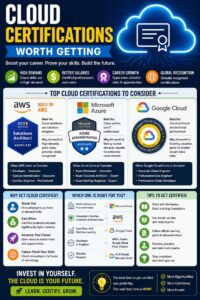
Certifications You Can Prepare For After Cloud Computing Training in P.H
After Cloud Computing Training in P.H at Potenmunia Tech School with practical labs and portfolio, you can prepare for global certifications:
AWS Certified Cloud Practitioner: Entry level certification that proves you understand AWS cloud basics. Foundation from Cloud Computing Training in P.H helps.
Microsoft Azure Fundamentals AZ-900: Entry level Azure certification for beginners. Networking and cloud foundation from Cloud Computing Training in P.H helps.
Google Cloud Digital Leader: Entry level Google Cloud certification. Cloud foundation from Cloud Computing Training in P.H helps.
CompTIA Cloud Essentials+: Vendor neutral cloud certification for beginners.
At Potenmunia Tech School, Cloud Computing Training in P.H gives you practical foundation, then you add certification preparation with mentorship from dedicated instructor.
Skills You Gain From Cloud Computing Training in P.H
After Cloud Computing Training in P.H at Potenmunia Tech School, you gain:
Cloud Foundation Skills: You understand IaaS, PaaS, SaaS, public, private, hybrid cloud.
Networking and Linux Skills: IP, ports, DNS, HTTP, Linux terminal basics essential for Cloud Computing Training in P.H.
Compute Skills: Create and manage virtual machines in AWS, Azure, or GCP.
Storage and Database Skills: Create buckets, set permissions, backup, create cloud database.
Security Skills: IAM, 2FA, security groups, firewall rules for cloud.
Deployment Skills: Host website and app in cloud for small business in Port Harcourt.
Cost Management Skills: Monitor usage, set alerts, optimize cost and write simple report.
Portfolio and Report Writing Skills: Write professional cloud deployment report that business owner understands. This skill gets you hired after Cloud Computing Training in P.H.
Problem Solving Skills: Combine all modules into capstone project that proves you are job-ready.
Career Opportunities After Cloud Computing Training in P.H
After Cloud Computing Training in P.H at Potenmunia Tech School with portfolio, you can apply for:
Cloud Support Engineer: You support businesses using cloud. You troubleshoot virtual machines, storage, permissions. High demand after Cloud Computing Training in P.H.
Cloud Administrator Junior: You manage cloud accounts for companies in Port Harcourt and Lagos.
IT Support with Cloud Skills: You support businesses in Port Harcourt with cloud storage, backup, and website hosting.
Freelance Cloud Consultant: You help small businesses in Port Harcourt move website and files to cloud, secure it, and manage cost.
DevOps Beginner / Deployment Support: You help deploy apps in cloud with basic CI/CD understanding after Cloud Computing Training in P.H.
Remote Cloud Jobs: You can work remotely for foreign companies while living in Port Harcourt. Portfolio from Cloud Computing Training in P.H helps you get remote roles.

How Potenmunia Tech School Teaches Cloud Computing Training in P.H Practically
Many schools teach theory and give certificate only. Potenmunia Tech School teaches Cloud Computing Training in P.H practically.
At Potenmunia Tech School in Port Harcourt:
100 percent practical and session based learning. Every session you do lab in cloud console.
One-on-one learning with dedicated personal instructor. Not large crowded class.
Both one-on-one and cohort learning options.
Real world projects and capstone experience that mirror real problems businesses in Port Harcourt face.
Mentorship ecosystem throughout your journey.
Career and job readiness focus. CV and portfolio building support, structured interview preparation, job application support, innovation and entrepreneurship orientation.
You build portfolio of 8 to 10 professional cloud projects that prove you can do jobs after Cloud Computing Training in P.H.
Table: Cloud Computing Training in P.H Compared by Courses and Career
|
Module at Potenmunia |
Best For |
Key Skills |
Career Use After Training |
|---|---|---|---|
|
Cloud Foundation |
Absolute beginners |
IaaS, PaaS, SaaS, cloud types |
Foundation for this cloud program |
|
Networking and Linux Basics |
Beginners wanting cloud environment |
IP, DNS, Linux terminal |
Core for this cloud program |
|
Virtual Machines and Compute |
Cloud compute beginners |
EC2, VM creation, SSH |
Cloud Support Engineer |
|
Cloud Storage and Database |
Storage and backup beginners |
S3, Blob, RDS basics |
Cloud Administrator |
|
Cloud Security and IAM |
Security focused beginners |
IAM, 2FA, security groups |
Cloud Security Beginner |
|
Deployment and Website Hosting |
Website hosting beginners |
WordPress on cloud, SSL |
Freelance Cloud Consultant |
|
Cost Management and Monitoring |
Business focused beginners |
Billing dashboard, alerts |
Cost Optimization Support |
|
Capstone and Job Readiness |
Job readiness for all beginners |
Combined cloud labs plus portfolio |
Job ready for all cloud paths |
How to Choose Right Cloud Computing Training in P.H for Your Level
If you are absolute beginner with zero experience, choose program that starts with networking and Linux foundation, gives one-on-one dedicated instructor, teaches in simple English, then moves to cloud foundation and virtual machines. Potenmunia Tech School does this for Cloud Computing Training in P.H.
If you are IT professional, like IT support, network admin, web developer who wants to add cloud skills, choose Cloud Computing Training in P.H that offers storage, security, deployment, and capstone portfolio. Potenmunia Tech School offers this for professionals with practical labs.
If you want job in bank or oil company, choose Cloud Computing Training in P.H that offers security, cost management, and capstone portfolio. Potenmunia offers all.
If you want freelance with small businesses in Port Harcourt, choose Cloud Computing Training in P.H that offers website hosting and storage labs relevant to small businesses. Potenmunia offers this.
Best approach: Visit Potenmunia Tech School in Port Harcourt, see lab, meet instructor, ask for capstone demo and portfolio samples before enrolling for Cloud Computing Training in P.H.
Salary Growth After Cloud Computing Training in P.H
Month 0 to 6 after Cloud Computing Training in P.H: Junior roles N200k to N500k in Port Harcourt with practical portfolio.
Year 1 to 2: Mid level N500k to N900k in Lagos and Port Harcourt.
Remote: $1000 to $4000 monthly depending on skills and portfolio from Cloud Computing Training in P.H.
Best way to increase salary is portfolio plus global certification like AWS Cloud Practitioner and Azure Fundamentals after practical training at Potenmunia Tech School for Cloud Computing Training in P.H.
Frequently Asked Questions About Cloud Computing Training in P.H
What is Cloud Computing Training in P.H for beginners?
Cloud Computing Training in P.H for beginners is structured training that teaches cloud basics, networking, Linux, virtual machines, storage, security, deployment, cost management, and capstone project with practical labs and one-on-one instructor at Potenmunia Tech School in Port Harcourt.
Do I need coding to start Cloud Computing Training in P.H?
No, you do not need coding to start Cloud Computing Training in P.H. You need networking and Linux basics. At Potenmunia, instructor teaches from scratch in simple English. Coding basics can come later.
How long does it take to complete Cloud Computing Training in P.H in Port Harcourt?
With practical training at Potenmunia Tech School, you can become competent and job ready from Cloud Computing Training in P.H within 3 to 4 months of session based labs, real projects, capstone, and mentorship.
Will I get job after Cloud Computing Training in P.H at Potenmunia Tech School?
Potenmunia gives CV and portfolio building support, structured interview preparation, job application support, and capstone project that you can show employers in Port Harcourt and Lagos. Portfolio plus Cloud Computing Training in P.H makes you job ready.
Why is Potenmunia Tech School best for Cloud Computing Training in P.H in Port Harcourt?
Because Potenmunia offers 100 percent practical and session based learning, one-on-one learning with dedicated personal instructor, real world projects and capstone that mirrors problems businesses in Port Harcourt face, mentorship throughout your journey, career and job readiness focus.
Final Words
If you want Cloud Computing Training in P.H that takes you from zero to job-ready as beginner or upgrades you as professional in 2026, your search ends at Potenmunia Tech School in Port Harcourt.
We teach Cloud Computing Training in P.H practically with one-on-one dedicated instructor, real world projects, capstone, portfolio building, interview preparation, and job application support.
We build competence not just certificates. That is why we are regarded as best tech school in Port Harcourt for Cloud Computing Training in P.H.
Ready to start your journey with Cloud Computing Training in P.H?
Visit Potenmunia Tech School in Port Harcourt today and enrol. Your cloud career starts with practical skills, not just certificate.
Extra Tips to Succeed After Cloud Computing Training in P.H
Tip 1: Practice daily. Do cloud labs at Potenmunia Tech School.
Tip 2: Build portfolio as you learn. Every lab report goes to portfolio with screenshots and simple English.
Tip 3: Explain cloud bill in simple English. Business owners in Port Harcourt are not technical. Simple explanation builds trust.
Tip 4: Get mentorship. Ask your dedicated instructor questions.
Tip 5: Focus on one career path first. Start with cloud support engineer or freelance consultant, then add more.
Tip 6: Prepare for interview with support at Potenmunia Tech School.
Tip 7: Stay updated. Cloud changes fast. Practice new labs at Potenmunia Tech School.
With these tips, you can build successful career after Cloud Computing Training in P.H while living in Port Harcourt.
Why Port Harcourt Businesses Need Cloud in 2026
Port Harcourt is oil and gas hub. Many businesses use digital systems. Small shops use POS and inventory in cloud. Schools use cloud storage for results. Offices use cloud email and backup.
Cloud helps them save money on hardware, get uptime, backup data, and work from anywhere.
They need local talent who understands Port Harcourt business context and can deploy secure cloud with simple English report. That is why practical training with real world projects that mirror Port Harcourt businesses is critical at Potenmunia Tech School.
Final Checklist for Choosing Cloud Training
Before you enrol, check this list for your chosen training:
Does school offer 100 percent practical labs every session? Potenmunia does.
Do you get one-on-one dedicated instructor who checks labs? Potenmunia does.
Do you build real portfolio of cloud projects? Potenmunia gives 8 to 10 projects.
Do you get CV building, interview preparation, job support? Potenmunia gives all.
Do projects mirror real problems businesses in Port Harcourt face? Potenmunia labs do.
If school meets all, enrol. Your career from zero to job-ready starts with right practical program and mentorship.
You want to start a career in cybersecurity in Nigeria. You hear cybersecurity pays well. You want to know which jobs exist in Nigeria, what skills you need, and how much you can earn in Lagos, Port Harcourt, and remote roles while living in Nigeria.
Many beginners are confused. They think cybersecurity is only hacking. It is not. Real jobs include monitoring, analysis, compliance, training, and consulting. Businesses in Nigeria need all these roles.
This detailed guide explains top cybersecurity careers in Nigeria in simple English. Short sentences. Very educative. You will learn 10 real jobs that exist in Nigeria, skills needed for each job, salary potential in Nigeria and Port Harcourt, and how to prepare practically at Potenmunia Tech School in Port Harcourt with one-on-one dedicated instructor.
For general background on what cybersecurity means, read: https://en.wikipedia.org/wiki/Cybersecurity

Table of Contents
- What is a Cybersecurity Career?
- Why top cybersecurity careers in Nigeria Are Growing Fast Now
- 10 top cybersecurity careers in Nigeria Explained in Detail
- How Potenmunia Tech School Prepares You for top cybersecurity careers in Nigeria
- Table: top cybersecurity careers in Nigeria Compared by Skills and Salary
- Salary Potential for top cybersecurity careers in Nigeria in Nigeria
- How to Start Your Path to top cybersecurity careers in Nigeria
- Frequently Asked Questions About top cybersecurity careers in Nigeria
What is a Cybersecurity Career?
Cybersecurity career means job that protects computers, networks, and data from hackers. You help businesses in Port Harcourt stay safe. You stop data theft. You stop website hacking. You train staff.
Cybersecurity career is not only hacking. It includes monitoring, analysis, compliance, training, and consulting. In Nigeria, businesses need all these roles. So career opportunities are wide and growing.
At Potenmunia Tech School in Port Harcourt, we teach you practical skills with real labs, not just theory. You get mentorship throughout your journey. You build portfolio that employers can see. So you become job ready for real career, not just certificate ready.

Why top cybersecurity careers in Nigeria Are Growing Fast Now
Why are top cybersecurity careers in Nigeria growing fast in Nigeria now? There are four reasons.
First, businesses in Port Harcourt and Lagos now have websites. Shops use POS. Companies use cloud and email. Banks face phishing daily. Oil companies need SOC teams. Small businesses lose WordPress sites daily to hackers.
Second, Nigeria has many cyber threats. Phishing messages are common. Business email compromise is common. Fake bank alerts are common. Companies lose money daily.
Third, law and compliance is growing. Companies must protect customer data. So they need people who can create policies and audit.
Fourth, remote work is growing. You can live in Port Harcourt and work for US or UK company. So top cybersecurity careers in Nigeria include both local jobs and remote jobs that pay in dollars.
Demand for skilled people is high. Supply of people with practical portfolio is low. That is why salary is good and competition is less than web development or graphics design.
If you learn practical skills with portfolio at Potenmunia Tech School, you can fill this gap and win big.
SOC Analyst – Entry Level
SOC means Security Operations Center. SOC analyst monitors security alerts daily. You watch logs. You detect suspicious activity. You respond fast. What you do daily: Check SIEM alerts, analyze suspicious login, report incident, escalate threat. Skills: networking foundation, Linux basics, vulnerability assessment, Nmap scanning, Wireshark basics, report writing, analytical thinking. Why good for beginners: SOC analyst is first line of defense. Many companies in Lagos and Port Harcourt hire junior SOC analysts. Salary: Entry N150k to N400k in Port Harcourt and Lagos. Remote SOC can pay $800 to $2000 monthly. How Potenmunia prepares: At Potenmunia Tech School, you do SOC labs with real logs that mirror small business and bank logs in Port Harcourt. Dedicated instructor mentors you one-on-one. You build portfolio of incident analysis reports. You learn to write professional report in simple English that business owner understands.
Ethical Hacker / Penetration Tester Junior
Ethical hacker tests systems with permission to find weakness before criminal hackers do. What you do daily: Scan networks ethically in safe lab, test websites ethically in lab, find vulnerabilities, write professional report with recommendations. Skills: networking, Linux, Nmap, Burp Suite basics, web application security like SQL injection and XSS in lab environment, password security, report writing. Why good: Companies in Nigeria want to know where they are weak before real hackers find it. If you can test and explain clearly, you are valuable. Salary: N200k to N600k locally. Freelance tests can pay per project N100k to N500k. Remote can earn $1000 to $3000 monthly. How Potenmunia prepares: At Potenmunia Tech School you practice ethical hacking in safe isolated lab, not on real businesses. You learn to think like attacker but act like protector. You build portfolio of ethical hacking reports.
Cybersecurity Analyst
Cybersecurity analyst is general defender. You analyze threats and protect systems daily. What you do daily: Analyze vulnerabilities, recommend fixes, monitor threats, help with security policies, train junior staff. Skills: networking, Linux, vulnerability assessment, risk analysis, report writing, problem solving. Salary: N180k to N500k in Nigeria. This role is stable and exists in many companies including banks and oil service companies in Port Harcourt. How Potenmunia prepares: At Potenmunia Tech School, you learn analyst skills with real world projects that mirror problems businesses in Port Harcourt face. You get CV and portfolio building support, interview prep, and job application support.
Information Security Analyst
Information security analyst protects company information. You create policies and ensure compliance. What you do daily: Create security policies, ensure staff follow rules, manage risk, handle data protection, audit access. Skills: networking basics, risk assessment, compliance basics, documentation, communication. Salary: N200k to N550k in Nigeria. Companies with sensitive data need this role. How Potenmunia prepares: At Potenmunia Tech School, you learn policy writing and risk analysis with practical templates. Your dedicated instructor reviews your policies one-on-one.
Cloud Security Analyst
Cloud security is fast growing area. Many companies in Nigeria now move to Google Cloud, AWS, and Microsoft 365. They need security for cloud. What you do daily: Secure cloud accounts, manage identity and access, monitor cloud threats, configure security settings, write cloud security report. Skills: networking, cloud basics, identity and access management, Microsoft security fundamentals track taught at Potenmunia Tech School. Salary: N250k to N700k locally, higher remotely. Cloud is high value skill globally and remote roles pay in dollars. How Potenmunia prepares: At Potenmunia Tech School, you learn cloud security fundamentals with practical labs and one-on-one mentorship and real world projects.
Network Security Engineer
Network security engineer is technical role. You secure networks and configure firewalls. What you do daily: Configure firewall rules, secure routers and switches, monitor network traffic with Wireshark, analyze threats, document network. Skills: deep networking, Wireshark, Nmap, vulnerability assessment, Linux basics. Salary: N250k to N650k in Nigeria. Oil companies and banks in Port Harcourt pay well for this skill because network is critical. How Potenmunia prepares: At Potenmunia Tech School, you practice network security in lab that mirrors office network in Port Harcourt. You get hands-on firewall configuration labs.
GRC Analyst – Governance Risk Compliance
GRC means Governance, Risk, Compliance. You help company follow regulations, assess risks, create compliance reports, audit policies. What you do daily: Assess risk, write compliance reports, audit access logs, create governance policies. Skills: report writing, risk analysis, policy writing, problem solving mindset, communication. Salary: N200k to N600k. Less competitive but growing fast in Nigeria because many companies now need compliance. How Potenmunia prepares: At Potenmunia Tech School, you learn GRC with practical case studies from Port Harcourt businesses. You learn to write simple policies business owners can understand.
Digital Forensics Analyst
Digital forensics analyst investigates after cyber attack. You find what happened, how hacker entered, and what data was stolen. What you do daily: Analyze logs, recover deleted files in lab, trace attack path, write forensic report for management. Skills: Linux, problem solving, analytical thinking, documentation, attention to detail. Salary: N200k to N600k locally. Specialized role with good growth in Nigeria as attacks increase. How Potenmunia prepares: At Potenmunia Tech School, you practice forensics in safe lab environment. You learn how to document findings professionally. Your instructor mentors you one-on-one.
Security Awareness Trainer / Consultant
Security awareness trainer trains staff in Port Harcourt businesses to avoid phishing and scams. This is local opportunity many people ignore but pays well. What you do daily: Train staff how to spot phishing messages, create awareness materials in simple English and Pidgin, test staff with simulated phishing in ethical way, write training report. Skills: wireless security basics, social engineering understanding, password security, report writing, good communication. Salary: N120k to N350k plus training fees per session. Good entry role. You can start freelance with small businesses in Port Harcourt. How Potenmunia prepares: At Potenmunia Tech School, you learn how to create awareness training that fits Nigeria context. You build portfolio of training materials.
Freelance Cybersecurity Consultant
Freelance consultant helps many small businesses secure WordPress sites, secure WiFi, train staff, write simple security policies. You work with many clients, not one company. What you do daily: Visit small businesses, audit website security, secure WiFi, train staff, write simple report. Skills: All best cybersecurity skills combined, especially web security, networking, Nmap, vulnerability assessment, report writing, capstone project skills from Potenmunia Tech School. Salary: Project based. Can earn N300k to N1M monthly if you have portfolio and 4 to 5 retainer clients in Port Harcourt. This path needs entrepreneurial mindset taught at Potenmunia Tech School. You also get innovation and entrepreneurship orientation.
How Potenmunia Tech School Prepares You for top cybersecurity careers in Nigeria
At Potenmunia Tech School in Port Harcourt, we prepare you practically for top cybersecurity careers in Nigeria, not just with certificate.
Our method:
100 percent practical and session based learning. Every session you do lab. Not just lecture. You practice networking, Linux, Nmap, vulnerability assessment, web security, wireless security every class.
One-on-one learning with dedicated personal instructor. You are not left in large crowded class. Your instructor knows your name, your level, your gaps. He checks your labs, corrects you, mentors you throughout your journey.
Both one-on-one and cohort learning options with same practical standard.
Real world projects and capstone experience that mirror real problems businesses in Port Harcourt face. You work on lab small business network that mimics real business in Port Harcourt.
Mentorship ecosystem throughout your journey. Learning does not end in classroom. You get guidance, direction, support.
Career and job readiness focus. You get CV and portfolio building support, structured interview preparation, job application support, innovation and entrepreneurship orientation.
You build portfolio of 8 to 10 professional reports that prove you can do jobs listed. This portfolio is what gets you hired.
Table: top cybersecurity careers in Nigeria Compared by Skills and Salary
This table helps you compare top cybersecurity careers in Nigeria quickly – all practical tracks prepared at Potenmunia Tech School in Port Harcourt with one-on-one mentorship and portfolio support.
|
Career Role at Potenmunia Track |
Best For |
Key Skills at Potenmunia |
Salary Range Nigeria |
Remote Potential |
|---|---|---|---|---|
|
SOC Analyst Track |
Beginners who like monitoring |
Networking, Linux, Nmap, Wireshark, Report Writing |
N150k to N400k |
High – $800 to $2000 |
|
Ethical Hacker Junior Track |
Beginners who love hacking |
Networking, Linux, Nmap, Burp Suite, Web Security |
N200k to N600k |
Very High |
|
Cybersecurity Analyst Track |
General defender |
Networking, Linux, Vulnerability Assessment |
N180k to N500k |
High |
|
Information Security Analyst Track |
Policy and data protection |
Networking, Risk Assessment, Compliance |
N200k to N550k |
High |
|
Cloud Security Analyst Track |
Cloud career |
Networking, Cloud Basics, Identity Management |
N250k to N700k |
Very High |
|
Network Security Engineer Track |
Technical network protection |
Deep Networking, Wireshark, Nmap |
N250k to N650k |
High |
|
GRC Analyst Track |
Governance Risk Compliance |
Report Writing, Risk Analysis, Policy Writing |
N200k to N600k |
High |
|
Digital Forensics Analyst Track |
Investigation after attack |
Linux, Problem Solving, Documentation |
N200k to N600k |
Medium High |
|
Security Awareness Trainer Track |
Training locally |
Wireless Security, Social Engineering |
N120k to N350k plus fees |
Medium |
|
Freelance Consultant Track |
Entrepreneurial flexible |
All skills combined plus capstone |
N300k to N1M project based |
Very High |
Salary Potential for top cybersecurity careers in Nigeria in Nigeria
Many beginners ask about salary for top cybersecurity careers in Nigeria.
Entry level in Port Harcourt with practical portfolio from Potenmunia Tech School can be N120k to N250k monthly as IT Support with security or Junior Analyst. This is starting point for top cybersecurity careers in Nigeria.
Mid level after 1 to 2 years and portfolio can be N300k to N600k monthly in Lagos and Port Harcourt companies, banks, and oil service companies.
Remote roles for top cybersecurity careers in Nigeria can pay $800 to $3000 monthly depending on role and proof of skills. Cloud security and ethical hacking remote roles pay highest among top cybersecurity careers in Nigeria.
Best way to increase salary is portfolio plus global certification preparation done after practical training at Potenmunia Tech School. Employers pay for proof of work, not paper only.

How to Start Your Path to top cybersecurity careers in Nigeria
How do you start your path to top cybersecurity careers in Nigeria at Potenmunia Tech School?
Step 1: Start with foundation. Networking and Linux basics. Your dedicated instructor at Potenmunia Tech School teaches you from zero in simple English.
Step 2: Learn vulnerability assessment and Nmap scanning in safe lab. You scan lab network, not real business.
Step 3: Learn web application security and wireless security in lab that mirrors small business in Port Harcourt.
Step 4: Learn report writing and problem solving. Every lab ends with professional report. Instructor reviews one-on-one.
Step 5: Do capstone project. You test complete small business network ethically, find vulnerabilities, secure it, and present professional report with portfolio proof.
Step 6: Get CV and portfolio building support, interview preparation, job application support at Potenmunia Tech School.
This step by step path makes you job ready for top cybersecurity careers in Nigeria and helps you win big in your career.
Frequently Asked Questions About top cybersecurity careers in Nigeria
What are best top cybersecurity careers in Nigeria for beginners with no experience?
Best for beginners are SOC analyst, security awareness trainer, cybersecurity analyst junior, and freelance website security consultant. These need networking and Linux foundation first.
How long does it take to enter top cybersecurity careers in Nigeria in Port Harcourt?
With practical training at Potenmunia Tech School, you can become competent and job ready for entry level roles within 3 to 4 months of session based labs, real projects, capstone, and mentorship.
Do I need degree to enter top cybersecurity careers in Nigeria?
No. Companies in Port Harcourt hire based on practical skills and portfolio, not degree. If you can show portfolio of labs and reports from Potenmunia Tech School, you can get job in these cybersecurity careers in Nigeria.
Why is Potenmunia Tech School best for these cybersecurity careers in Nigeria?
Because Potenmunia Tech School offers 100 percent practical and session based learning, one-on-one learning with dedicated personal instructor, real world projects and capstone experience that mirrors problems businesses in Port Harcourt face, mentorship throughout your journey, career and job readiness focus, not certificate alone. That is why many choose Potenmunia for these cybersecurity careers in Nigeria.
Can I work remotely while living in Port Harcourt?
Yes. If you have portfolio plus practical skills, you can apply for remote SOC analyst and ethical hacker junior roles. Many Potenmunia learners work remotely after building portfolio for these cybersecurity careers in Nigeria.
Final Words
These career opportunities offer real chance for beginners in Nigeria in 2026. From SOC analyst to ethical hacker to cloud security to freelance consultant, there are many paths in these cybersecurity careers in Nigeria.
Choose one path. Learn practical skills with one-on-one mentorship at Potenmunia Tech School. Build portfolio. Then add global certification preparation if you want.
Your cybersecurity career starts with practical skills, not just certificate.
Extra Tips to Succeed in Cybersecurity Career in Port Harcourt
Learning skills is first step. But to succeed, you need right mindset.
Tip 1: Practice every day. At Potenmunia Tech School, you get daily labs. Do them. Do not skip.
Tip 2: Build portfolio as you learn. Every lab report goes to portfolio. Take screenshots. Write clear explanation.
Tip 3: Learn to explain in simple English. Business owners in Port Harcourt are not technical. If you can explain vulnerability in simple English, they will trust you.
Tip 4: Join community. At Potenmunia Tech School, you get cohort and mentorship. Ask questions. Help others.
Tip 5: Stay updated. Cybersecurity changes fast. Follow news, learn new tools, practice new labs at Potenmunia Tech School.
Tip 6: Focus on one career path first. Do not try to learn all 10 jobs at once. Start with SOC analyst or security awareness trainer, build portfolio, then add more skills.
Tip 7: Prepare for interview. At Potenmunia Tech School, you get structured interview preparation. You learn how to answer technical questions and how to present portfolio.
With these tips, you can build successful career in Port Harcourt and beyond while working with one-on-one dedicated instructor who guides you.