If you are considering a career in technology, understanding AI vs Data Science vs Data Analytics is an important first step. These three fields are closely connected, but they solve different problems and require different combinations of technical skills.
Artificial Intelligence (AI) focuses on creating systems that can perform tasks associated with human intelligence. Data Science focuses on using statistics, programming, machine learning and domain knowledge to extract insights and build predictive solutions. Data Analytics focuses on examining data to understand what happened, identify patterns and support better decisions.
The confusion is understandable because the fields overlap. A data scientist may use artificial intelligence and machine learning. A data analyst may use Python and statistical techniques. An AI professional may need large datasets prepared by data scientists and analysts.
So, when comparing AI vs Data Science vs Data Analytics, the question should not simply be “Which one is better?” A more useful question is:
What does each field do, what skills does it require, and which one matches my interests and career goals?
This guide explains the differences in simple terms, with practical examples for beginners, students, professionals and aspiring technology workers in Nigeria.
AI vs Data Science vs Data Analytics: The Quick Answer
Here is the simplest way to distinguish the three:
Artificial Intelligence: Builds systems that can perform tasks that normally require human-like intelligence.
Data Science: Uses data, programming, statistics and machine learning to discover patterns, make predictions and solve complex problems.
Data Analytics: Examines existing data to discover insights, explain trends and support business decisions.
For example, imagine a Nigerian online retailer with thousands of customer transactions.
A data analyst might answer:
Which products sold the most last month?
A data scientist might ask:
Which customers are most likely to purchase again?
An AI professional might build:
A system that automatically recommends products to customers.
These responsibilities can overlap, but the primary objectives are different.
IBM similarly describes data science as a multidisciplinary field involving mathematics, statistics, programming, AI and machine learning, while data analytics focuses on examining datasets to extract value and answer specific questions.
Data Science is a multidisciplinary field that combines areas such as mathematics, statistics, programming, data analysis and machine learning to extract useful knowledge from data.
According to IBM, data science can involve collecting and managing structured and unstructured data, analyzing it, developing models and communicating insights.
A data scientist may therefore work across several stages of a project.
The Data Science Process
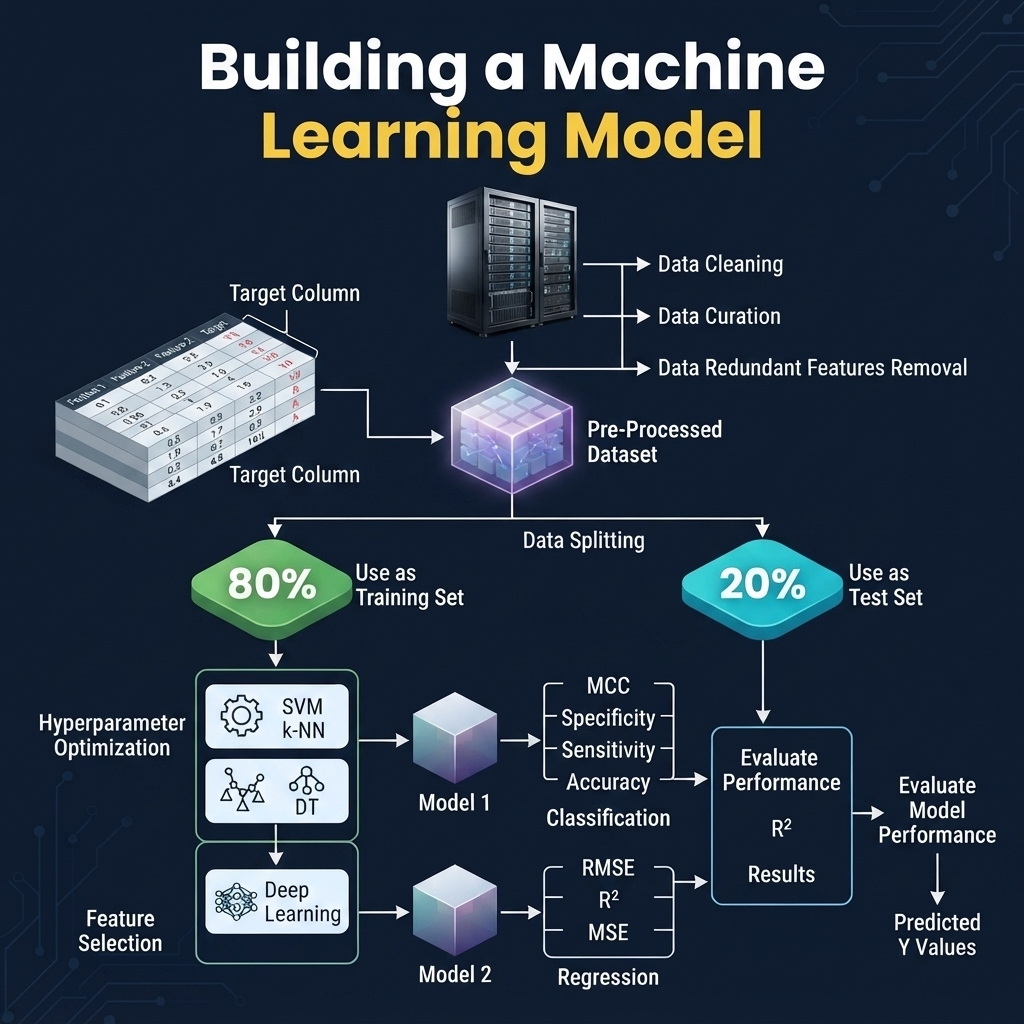
A simplified data science workflow can look like this:
Problem → Data → Cleaning → Exploration → Modeling → Evaluation → Communication
For example, a company may want to predict future product demand.
The data scientist could:
Define the business problem.
Collect historical data.
Clean the dataset.
Explore relationships and patterns.
Select useful variables.
Train a machine learning model.
Evaluate the model.
Communicate the findings.
Help deploy or improve the solution.
Data science therefore involves considerably more than simply analyzing a spreadsheet.
Common Data Science Tools
Data scientists commonly work with technologies such as:
Python
R
SQL
Pandas
NumPy
Matplotlib
Scikit-learn
Jupyter
Machine learning frameworks
Databases
Cloud technologies
Python is particularly useful because it has a large ecosystem for data analysis and machine learning.
What Is Data Analytics?
Data Analytics focuses on examining data to answer questions, identify trends and support decision-making.
A data analyst might receive sales records, customer information, financial records or operational data.
The analyst then transforms the raw information into something useful.
A simplified process is:
Collect → Clean → Analyze → Visualize → Explain
For example, a business in Port Harcourt could have five years of sales records.
A data analyst might determine:
Monthly revenue
Best-selling products
Customer purchasing patterns
Sales by location
Changes in expenses
Performance against targets
The findings could then be presented using reports or dashboards.
Types of Data Analytics
Data analytics is often discussed in four broad categories.
1. Descriptive Analytics
Descriptive analytics asks:
What happened?
Example:
A company discovers that its revenue increased during the previous quarter.
2. Diagnostic Analytics
Diagnostic analytics asks:
Why did it happen?
The analyst investigates the factors that contributed to the increase.
3. Predictive Analytics
Predictive analytics asks:
What might happen next?
Statistical and machine-learning techniques can be used to estimate possible future outcomes.
4. Prescriptive Analytics
Prescriptive analytics asks:
What should we do?
The analysis may help recommend actions based on expected outcomes.
These categories demonstrate why data analytics can extend beyond simply creating charts. IBM identifies descriptive, diagnostic, predictive and prescriptive analytics as major approaches to understanding data and supporting decisions.
AI vs Data Science vs Data Analytics: Detailed Comparison
Understanding the differences becomes easier when the three fields are compared side by side.
Area
Artificial Intelligence
Data Science
Data Analytics
Main purpose
Build intelligent systems
Extract insights and develop predictive solutions
Understand data and support decisions
Main question
How can a system perform this intelligently?
What can data tell us or predict?
What happened and why?
Programming
Usually important
Very important
Useful depending on role
Statistics
Important
Very important
Important
Machine learning
Major area
Common
Sometimes used
Data visualization
Sometimes
Common
Very common
Excel
Not usually central
Sometimes
Very common
SQL
Often useful
Very common
Very common
Python
Common
Very common
Increasingly common
Business reporting
Less central
Sometimes
Very important
Predictive modeling
Common
Major focus
Sometimes
Automation
Major focus
Common
Possible
Career entry
Often technically demanding
Technically demanding
Can be more accessible for beginners
This table should not be treated as a rigid rule.
Technology organizations structure their teams differently, and job descriptions can overlap.
AI vs Data Science vs Data Analytics: Skills Comparison
One of the biggest differences between these fields is the combination of skills required.
A data science learner should consider developing:
Python
SQL
Statistics
Probability
Data cleaning
Exploratory data analysis
Data visualization
Machine learning
Feature engineering
Model evaluation
Business understanding
Communication
A data scientist needs to understand both the technical side of data and the problem that the organization is trying to solve.
Skills for Data Analytics
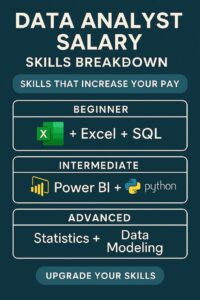
A beginner data analyst can develop skills in:
Microsoft Excel
SQL
Data cleaning
Basic statistics
Data visualization
Power BI
Tableau
Reporting
Business intelligence
Communication
Python can be added as the learner progresses.
This makes data analytics a potentially useful starting point for people who want to enter the data field before progressing into more advanced areas.
AI vs Data Science vs Data Analytics: Tools
The tools used in each field also overlap.
Artificial Intelligence Tools
Depending on specialization, AI professionals may work with:
Python
PyTorch
TensorFlow
Machine learning libraries
Natural language processing tools
Computer vision libraries
Cloud AI services
Data Science Tools
Common data science tools include:
Python
R
SQL
Pandas
NumPy
Scikit-learn
Jupyter
Matplotlib
Machine learning frameworks
Data Analytics Tools
Common data analytics tools include:
Excel
SQL
Power BI
Tableau
Google Sheets
Python
R
The important point is that tools do not define the career by themselves.
Knowing Power BI does not automatically make someone a data scientist, just as knowing Python does not automatically make someone an AI engineer.
The role depends on what problems the person is solving and how they apply their skills.
AI vs Data Science vs Data Analytics Using a Real-World Example
Consider a fictional Nigerian delivery company operating in Port Harcourt.
The company has thousands of delivery records.
It wants to improve its operations.
What Would a Data Analyst Do?
The data analyst could investigate:
Number of deliveries
Average delivery time
Revenue
Delivery delays
Performance by location
Weekly trends
They might create a Power BI dashboard for management.
What Would a Data Scientist Do?
The data scientist could use historical information to develop a model that predicts:
Delivery demand
Potential delays
Customer behavior
Expected delivery times
What Would an AI Professional Do?
An AI specialist could help create an intelligent system that:
Automatically categorizes customer requests
Recommends delivery options
Processes customer messages
Detects patterns in operational data
Automates parts of customer support
The same company may need all three types of expertise.
This is why AI vs Data Science vs Data Analytics should not be viewed as three completely isolated careers.
How AI, Data Science and Data Analytics Are Connected
The three areas form part of a larger technology ecosystem.
A simplified relationship might look like:
Raw Data → Data Analytics → Data Science → Machine Learning → AI Applications
But in real-world projects, the relationship is more circular.
Data analysts can discover problems that data scientists investigate.
Data scientists can create models that AI engineers deploy.
AI systems generate new data that analysts and data scientists can study.
AI can also enhance analytics. For example, AI-powered analytics systems can process large and varied datasets and help identify patterns, predictions or recommendations.
This means that learning one field can provide useful foundations for another.
Is AI Part of Data Science?
AI and data science overlap heavily, but they are not identical.
Data science uses AI and machine learning techniques in many projects, but data science also includes activities such as:
Data collection
Data cleaning
Statistical analysis
Data visualization
Experimentation
Business analysis
Communication
AI has a broader goal of creating intelligent systems and applications.
Therefore:
AI can be used in data science, but data science is not simply another name for AI.
Is Data Analytics Part of Data Science?
Data analytics and data science overlap significantly.
A data scientist may perform exploratory data analysis before building a machine learning model.
A data analyst may focus primarily on reporting, visualization and answering business questions.
IBM describes data analytics as a task that can sit within the broader data science ecosystem, while noting that the two concepts are distinct.
The practical difference often comes down to the complexity of the problems, the techniques being used and the responsibilities of the role.
AI vs Data Science vs Data Analytics: Which Is Easier to Learn?
There is no universal answer because learners have different backgrounds.
However, many beginners find introductory data analytics easier to approach because they can begin with tools such as Excel, SQL and Power BI before moving into programming and advanced mathematics.
Data science generally requires stronger programming and statistical knowledge.
Advanced AI can require additional knowledge of mathematics, machine learning, software engineering and specialized areas such as deep learning.
A possible progression is:
Beginner Data Analytics → Advanced Analytics → Python → Data Science → Machine Learning → AI
This is only one possible route.
A learner with a programming background may choose to start with Python and move directly toward machine learning.
AI vs Data Science vs Data Analytics: Which Career Should You Choose?
Instead of choosing based on popularity, consider what type of work you enjoy.
Choose Data Analytics If You Like:
Working with spreadsheets
Creating dashboards
Finding trends
Business questions
Reporting
Presenting insights
Working with numbers
You may enjoy roles such as data analyst or business intelligence analyst.
For learners in Port Harcourt, the learning environment can make a significant difference.
Potenmunia Tech School approaches technology training with an emphasis on practical, hands-on learning rather than treating technology as purely theoretical.
For AI, data science and data analytics, this means learners can focus on understanding concepts and applying them to practical problems.
The approach includes areas such as:
Hands-On Learning
Learners practise the tools and workflows rather than only reading about them.
Real-World Projects
Projects can help students understand how technology skills are applied to realistic business and technology problems.
Portfolio Development
Students can work toward projects that demonstrate their capabilities to potential employers, clients or collaborators.
Mentorship
Guidance can help learners understand difficult concepts, improve their projects and develop better learning habits.
Career Preparation
Learning can extend beyond technical tools to include job-readiness, communication and practical career preparation.
AI Integration
AI concepts can be introduced alongside modern technology skills so that learners understand how AI interacts with data, software and business processes.
Innovation and Entrepreneurship
Technology skills can also be applied to building solutions, products and business ideas rather than focusing exclusively on traditional employment.
This approach is particularly valuable for learners who want to move from “I have studied this technology” to “I can use this technology to solve a problem.”
AI vs Data Science vs Data Analytics: A Beginner’s Decision Checklist
Before choosing a course, ask yourself:
Do I enjoy business questions and dashboards?
Consider Data Analytics.
Do I enjoy programming and statistics?
Consider Data Science.
Do I enjoy machine learning and intelligent applications?
Consider AI.
Do I want to start with a more accessible data skill?
Data Analytics can be a practical starting point.
Do I eventually want to work with machine learning?
Data Science can provide a strong foundation.
Do I want to build intelligent applications?
AI and machine learning may be a suitable direction.
Remember that these paths are not permanent boxes. You can move from one area to another as your skills develop.
Common Misconceptions About AI vs Data Science vs Data Analytics
“AI, Data Science and Data Analytics Are the Same Thing”
They are not.
They overlap, but they have different primary objectives.
“You Need to Be a Mathematics Expert Before Learning Data Analytics”
Not necessarily.
Beginners can start with basic statistics and gradually develop their mathematical knowledge.
“Knowing Python Makes You a Data Scientist”
No.
Python is a tool. Data science requires understanding data, statistics, problem-solving, modeling and domain context.
“Data Analytics Is Just Excel”
Excel is an important analytics tool, but data analytics can also involve SQL, Power BI, Python, databases, statistics and other technologies.
“AI Is Only for Big Technology Companies”
AI techniques can be applied to many types of organizations, from education and finance to retail, logistics and healthcare.
Readers who want to explore these subjects from a general reference perspective can also consult Wikipedia’s articles on data science, artificial intelligence and related fields.
For a more technical explanation of the relationship between data science and analytics, IBM provides additional educational material explaining how the disciplines overlap and differ.
Frequently Asked Questions About AI vs Data Science vs Data Analytics
What is the main difference between AI, Data Science and Data Analytics?
AI focuses on intelligent systems, data science focuses on extracting insights and developing predictive models from data, while data analytics focuses on examining data and communicating insights for decision-making.
Which is better: AI or Data Science?
Neither is universally better. AI is appropriate for people interested in intelligent systems and machine learning, while data science is broader in its use of data, statistics, programming and predictive modeling.
Which is better: Data Science or Data Analytics?
It depends on your goals. Data analytics can suit people interested in business intelligence, reporting and dashboards. Data science may suit people who want deeper programming, statistics and machine learning work.
Can a data analyst become a data scientist?
Yes. A data analyst can build on existing skills by learning Python, statistics, machine learning, data modeling and other data science concepts.
Can a data scientist become an AI engineer?
Yes. A data scientist with strong programming and machine learning knowledge can develop additional software engineering and AI deployment skills.
Should I learn Excel before Python?
For someone starting in data analytics, Excel can be a useful first tool. However, learners interested specifically in data science or AI may choose to begin Python earlier.
Is SQL important for AI and Data Science?
SQL is highly useful because many organizations store important information in databases. Even professionals who specialize in machine learning may need to retrieve and prepare data using SQL.
Is Power BI useful for Data Science?
Power BI is primarily a business intelligence and visualization tool. It can still be useful to data scientists when communicating results or creating business-facing reports.
Can I learn Data Analytics before AI?
Yes. Data analytics can help you develop foundations in data cleaning, statistics, visualization and problem-solving before progressing into machine learning and AI.
Which field is best for beginners?
For many beginners, data analytics can provide an approachable entry point because tools such as Excel, SQL and Power BI allow learners to work with data before progressing into more advanced programming and machine learning.
However, the best starting point depends on your interests and background.
Conclusion on AI vs Data Science vs Data Analytics
The difference between AI vs Data Science vs Data Analytics becomes much clearer when you focus on the problem each field solves.
Data Analytics helps organizations understand data and make informed decisions.
Data Science combines data, statistics, programming and machine learning to discover patterns, make predictions and solve more complex problems.
Artificial Intelligence focuses on creating systems capable of performing tasks associated with intelligent behavior.
They are different, but they are strongly connected.
A learner might start with data analytics, move into Python and statistics, progress into data science and eventually specialize in machine learning or AI.
Another learner might already have programming experience and move directly toward machine learning and AI.
There is no single correct route.
What matters most is building a strong foundation, practising consistently, creating projects and learning how to apply technology to real problems.
For learners in Port Harcourt and across Nigeria, the growing importance of data and AI makes these skills worth exploring carefully. Rather than chasing a technology because it sounds popular, choose a learning path that matches your interests and then develop genuine competence in it.
If you are considering formal technology training, Potenmunia Tech School provides a practical environment in Port Harcourt where learners can develop technology skills through hands-on practice, projects, portfolio building, mentorship, AI integration and career preparation.
The ultimate goal is not simply to say that you have learned AI, data science or data analytics.
The goal is to become capable of using what you have learned to understand data, solve problems and create useful solutions.
How to Get an AI Job in Nigeria: Skills, Portfolio and Job Search Strategy
If you live in Port Harcourt and you want to get an AI job in Nigeria, you have probably asked what you really need to get hired. Is it a degree, a certificate, or something else? Many people search for AI jobs in Nigeria because they want a clear answer on what skills employers want, how to build a portfolio that convinces hiring managers, and how to search for jobs in Port Harcourt, Lagos, and remote roles.
This guide explains in simple, practical English how to move from beginner to job ready, with original examples from Nigerian businesses, so you can understand what works and what does not.
What Does Getting an AI Job in Nigeria Really Require
Getting an AI job in Nigeria does not mean you must build complex robots from scratch. For most businesses in Port Harcourt, getting an AI job means showing you can use AI tools to solve real problems.
For example, a fashion brand in GRA receives 200 WhatsApp messages daily like “Price?”, “How much be the bag?”, and “Abeg wetin be delivery to Eliozu?”. A business owner does not need a PhD researcher. They need someone who can set up a chatbot that understands all these variations and replies instantly with price and delivery fee.
Similarly, a logistics company in Trans Amadi may need someone who can analyze delivery records in Excel and predict which deliveries may be late. A supermarket in Peter Odili may need someone who can automatically tag 500 product photos by color.
So when employers post AI jobs in Nigeria, they are looking for practical problem solvers who can use Python, AI automation, and simple machine learning to save time and increase sales.
Why Many Beginners Struggle to Get AI Jobs in Nigeria
Many beginners struggle to get AI jobs in Nigeria because they focus on the wrong things.
One reason is focusing only on certificates without building a portfolio. Employers in Port Harcourt and Lagos do not hire based on certificates alone. They want to see what you have built on GitHub.
Another reason is learning theory without working with Nigerian data. If you only practice with American movie reviews, your model may fail when a customer in Mile One types in Pidgin or uses abbreviations like “Tf no go”.
A third reason is lack of job search strategy. Many beginners only apply on one job site and give up quickly. Getting an AI job in Nigeria often requires a mix of portfolio, LinkedIn presence, direct outreach to businesses in Garrison and Trans Amadi, and freelance platforms.
The 7 Powerful Skills Employers Want for AI Jobs in Nigeria
If you want to get AI jobs in Nigeria in 2026, these seven skills are what employers are looking for:
Python and data handling
Python is the main language used because it is simple and has many libraries for AI tasks. Employers expect you to know how to clean data with Pandas, create simple charts with Matplotlib, and handle Excel files. For example, cleaning sales records from a shop in Mile One that has missing prices and duplicate entries.
Prompt engineering and AI automation
This is one of the most demanded skills for AI jobs in Nigeria. Prompt engineering is learning how to give clear instructions to tools like ChatGPT and Meta AI to get useful results. Automation is about connecting tools like Zapier and ManyChat to automate WhatsApp replies. For a business in Eliozu, you could build a system that replies instantly with delivery fees.
Machine learning fundamentals
Employers want people who can build simple prediction models using Scikit Learn. For example, predicting which customers may stop buying or which products may sell more next month for a retail shop in Peter Odili. You should understand training and testing data and how to check if your model is accurate.
Natural language processing for customer operations
Many AI jobs in Nigeria involve text. Natural language processing helps computers understand customer messages that contain slang, Pidgin, emojis, and abbreviations. Employers look for people who can build text classifiers that sort messages into complaints, price inquiries, and orders, and sentiment analysis that detects if a customer review is positive or negative.
Computer vision basics
For retail and logistics businesses, basic computer vision is useful. This includes using OpenCV to automatically tag product photos or count customers entering a shop through CCTV analysis. Even basic knowledge of image classification helps you stand out for fashion businesses in GRA.
Data storytelling and business thinking
Employers do not just want technical skills. They want people who can explain how an AI solution helps the business. Can you show how automating customer replies will save five hours daily for a business in Trans Amadi? Can you explain your project results in simple English to a non technical owner in Garrison? This skill often determines who gets hired.
Portfolio building and communication
For AI jobs in Nigeria, your portfolio is your proof. Employers want to see GitHub repositories with clear README files that explain what problem you solved, what tools you used, and what results you achieved. For example, “Built a WhatsApp intent classifier for a fashion brand in GRA that sorts 200 daily messages with 92 percent accuracy and reduces response time from 30 minutes to instant.” Being able to communicate this on LinkedIn is essential.
How to Build a Portfolio That Gets You Hired for AI Jobs in Nigeria
A portfolio is what gets you interviews for AI jobs in Nigeria. Here is a practical checklist to build one that employers in Port Harcourt and Lagos respect.
Start with three to five projects using real Nigerian data. Project one could be a customer message classifier for a fashion store in GRA. Use real anonymized WhatsApp inquiries that include variations like “How much?”, “Price?”, and “Abeg how much be delivery?”. Show accuracy and how it saves time.
Project two could be a sentiment analysis tool for customer reviews for a restaurant in Peter Odili. Show how you cleaned the data and what insights you found.
Project three could be a simple sales prediction model for a supermarket in Mile One using past sales data to predict next month sales.
Project four could be an image tagging system for a fashion business that automatically tags 500 product photos by color and style.
For each project, document on GitHub with a clear title, problem statement, data used, tools used like Python, Pandas, Scikit Learn, OpenCV, and results. Add screenshots and a short video demo if possible. Share your projects on LinkedIn with simple explanations of how they help businesses in Port Harcourt.
Job Search Strategy That Works in Port Harcourt, Lagos, and Remote
Getting AI jobs in Nigeria requires a smart job search strategy, not just applying randomly;
For Port Harcourt, reach out directly to businesses in GRA, Trans Amadi, and Peter Odili. Offer a small free audit, such as reviewing their WhatsApp customer support and showing how a simple chatbot can save time. Many businesses hire freelancers after seeing a small demo.
For Lagos, apply for junior AI assistant, data assistant, and automation specialist roles on LinkedIn, Jobberman, and company websites in Yaba and Lekki. Tailor your CV to show portfolio links, not just certificates.
For remote roles, build a strong LinkedIn presence. Post weekly about your projects, what you learned, and how you solved a problem for a Nigerian business. Apply on Wellfound, Upwork, and LinkedIn for remote AI support and automation roles. Many engineers in Port Harcourt earn $800 to $2,500 monthly remotely with a portfolio of three to five projects.
Also, attend local tech meetups in Port Harcourt and online communities. Referrals often lead to jobs faster than cold applications.
How Potenmunia Tech School Prepares You for AI Jobs - Detailed Approach
Potenmunia Tech School is a practical, career focused technology training school in Port Harcourt, Nigeria. Its approach to preparing learners for AI jobs in Nigeria is different from theory heavy programs, and it is built around competence and real world application.
100% practical, hands-on learning: This means learners do not just watch slides. From the first week, you open your laptop and work. For example, in a class on natural language processing, you will take real anonymized customer messages from a business in Mile One, clean them, and build a classifier that sorts them into price inquiry, complaint, and order. Instructors guide you step by step as you type code and test it, so you learn by doing, not by memorizing.
Real-world projects and capstone experience: Every module ends with a project that solves a real problem for a local business scenario. For instance, building a WhatsApp auto reply system for a store in Garrison that answers delivery fees to Eliozu, Choba, and GRA instantly, or building a product tagging system for a fashion brand in GRA. At the end of training, you complete a capstone project where you combine skills, such as building a customer support assistant that uses your own business FAQ document. This capstone becomes a key portfolio piece for AI jobs in Nigeria.
Portfolio building: Potenmunia Tech School does not leave portfolio building to chance. Learners are taught how to structure a GitHub repository with a clear README, problem statement, tools used, and results with screenshots. For example, you are guided to write “Built a sales prediction model for a supermarket in Peter Odili using 12 months of sales data with 88 percent accuracy, helping the owner predict stock needs.” This guidance helps your portfolio stand out to employers in Port Harcourt and Lagos.
Career and job-readiness support: This goes beyond technical training. Learners receive guidance on how to write a CV that highlights portfolio projects instead of just listing courses, how to write a LinkedIn profile that shows you solve business problems, how to prepare for interviews with common questions for AI jobs in Nigeria, and how to find freelance clients. For example, you learn how to reach out to businesses in Trans Amadi with a short, helpful message and a small demo, which often leads to paid work.
AI integration and future skills: The curriculum is updated to include how AI connects with automation tools that businesses use daily, such as Zapier, ManyChat, and Google Sheets. Learners understand how to integrate a large language model with a business price list or FAQ document, so the chatbot answers based on real business data, not generic answers. This future focused approach prepares you for how AI jobs in Nigeria are evolving in 2026.
Mentorship: Mentorship means you are not learning alone. Instructors review your code during practical sessions, give feedback on your portfolio, and answer questions in a support community after class. For example, if your text classifier is not accurate because it fails to understand Pidgin variations like “How much be the bag?”, a mentor will guide you on how to add more examples and clean the data better. This continuous feedback helps you improve faster than watching recorded videos alone.
Innovation and entrepreneurship: Learners are encouraged to think beyond getting a job and to see how AI can be used to start a service. For example, after learning automation, you could offer AI customer support setup as a service to five fashion businesses in GRA for a monthly retainer. The school provides guidance on how to package your skills as a service, price it, and communicate value to non technical business owners in Port Harcourt. This entrepreneurial mindset helps you create opportunities even while searching for full time AI jobs in Nigeria.
Common Mistakes That Stop Beginners From Getting AI Jobs
Many beginners fail to get AI jobs in Nigeria because of avoidable mistakes. One is learning only theory and never building projects with Nigerian data. Another is having a GitHub profile with no README or explanation, so employers cannot understand what you built. A third is applying for senior roles without a portfolio, instead of starting with freelance or internship roles in Port Harcourt that build experience.
Avoid these by focusing on practical projects, clear documentation, and a consistent job search strategy that includes direct outreach and LinkedIn presence.
FAQs
Do I need a computer science degree to get AI jobs in Nigeria? No. Many professionals in Port Harcourt and Lagos got AI jobs in Nigeria with practical training and a strong portfolio. What matters most is your ability to solve business problems with AI tools. A degree can help for some corporate roles, but portfolio and practical skills are more important for entry level and freelance opportunities.
How long does it take to get an AI job in Nigeria as a beginner? With consistent practice of two hours daily, you can learn automation and prompt engineering in four to six weeks and start freelancing for small businesses in Port Harcourt. Building a solid portfolio of three to five projects and becoming job ready for AI jobs in Nigeria usually takes three to four months.
Can I get AI jobs in Port Harcourt without a powerful laptop? Yes. You can use Google Colab, which gives you free access to powerful computers through your browser to train simple models. Potenmunia Tech School also provides a computer lab for learners who need it during training, so you can practice even with a basic laptop.
What should I include in my portfolio for AI jobs in Nigeria? Include three to five projects with real Nigerian business examples, such as a customer message classifier for a fashion store in GRA, sentiment analysis for a restaurant in Peter Odili, and sales prediction for a supermarket in Mile One. For each project, include problem statement, data used, tools used, results, and screenshots on GitHub.
What is the best job search strategy for AI jobs in Nigeria? Use a mix of approaches. Apply for junior roles on LinkedIn and Jobberman, reach out directly to businesses in GRA and Trans Amadi with a small free audit and demo, build a LinkedIn presence posting about your projects weekly, and apply for remote freelance roles on Upwork and Wellfound. Referrals from tech meetups in Port Harcourt also help.
Final Thoughts
Getting AI jobs in Nigeria is not about having the most certificates. It is about having the right skills, a portfolio that shows you can solve real problems for businesses in Port Harcourt and beyond, and a job search strategy that combines local outreach, LinkedIn presence, and freelance platforms.
With hands on practice, mentorship, and a clear roadmap, what once seemed distant becomes a practical path to getting hired.
If you would like to start this journey with guidance, consider attending a practical, beginner friendly session at Potenmunia Tech School where you can build your first AI project that sorts customer messages for a real business example in Port Harcourt and learn how to present it as a portfolio piece for AI jobs in Nigeria.
If you work in Port Harcourt, Nigeria or aside, whether in retail, logistics, customer service, or as a young graduate looking for opportunities, you have probably noticed that work is changing quickly. Many people search for AI skills in Nigeria because they want to know what they need to learn in 2026 to stay relevant for the future of work.
This guide explains in simple, practical English what the future of work means in the Nigerian context, the seven powerful AI skills you need to learn in 2026, and how to apply them to real businesses in Port Harcourt and across Nigeria.
What Does Future of Work Mean in Nigeria in 2026
Future of work in Nigeria in 2026 does not mean robots will replace everyone. It means how we work is changing because of artificial intelligence tools that help businesses work faster and smarter.
For example, a fashion business in GRA that used to reply to 200 WhatsApp messages manually now uses a chatbot that replies instantly with price and delivery fee. A logistics company in Trans Amadi that used to guess which deliveries may be late now uses data to predict delays. A supermarket in Peter Odili that used to tag 500 product photos manually now uses AI to tag them by color and style in minutes.
So future of work means using AI skills in Nigeria to automate repetitive tasks, analyze data for better decisions, and improve customer experience. People who learn these skills will have more opportunities, whether in full time jobs, freelance work, or entrepreneurship.
Why AI Skills in Nigeria Matter for the Future of Work
AI skills in Nigeria matter because employers in Port Harcourt, Lagos, and remote companies are looking for people who can use AI to solve real business problems.
In 2026, employers do not just want people who can type fast or use Excel. They want people who can set up automation that replies to customer inquiries on WhatsApp at 11pm, analyze sales data to predict what products will sell next month, and create content for Instagram faster using AI tools.
For example, a business in Garrison may need someone who can build a system that understands different ways customers ask for price, like “How much be the bag?”, “Price?”, and “Abeg wetin be delivery to Eliozu?” and replies with the correct information. Someone with AI skills in Nigeria can build this and help the business save five hours daily.
Learning these skills helps you stay relevant for the future of work, whether you want to work in Port Harcourt, Lagos, or remotely for international clients.
7 Powerful AI Skills You Need to Learn in 2026 for the Future of Work
Here are the seven powerful AI skills you need to learn in 2026 for the future of work in Nigeria.
1. Prompt engineering and AI automation
This is the most immediately useful skill for AI skills in Nigeria in 2026. Prompt engineering is learning how to give clear instructions to tools like ChatGPT, Claude, and Meta AI to get useful results. AI automation is about connecting tools like Zapier and ManyChat to automate tasks.
For example, you can build a WhatsApp automation for a store in Mile One that replies with price list when someone types “Price”, or a system that automatically follows up with customers who did not complete payment. This skill can help you start freelancing quickly for small businesses in Port Harcourt.
2. Python and data handling
Python is the main language used for AI because it is simple and has many helpful libraries. You should learn how to clean data with Pandas, create simple charts with Matplotlib, and handle Excel files. For example, cleaning sales records from a shop in Mile One that has missing prices and duplicate entries, so the data can be used for analysis.
3. Machine learning for business decisions
Machine learning is about teaching computers to learn from data and make predictions. For the future of work, you should learn how to build simple models with Scikit Learn that predict sales for a supermarket in Peter Odili, predict which customers may stop buying, or forecast demand for products in a fashion store in GRA.
4. Natural language processing for customer operations
Many jobs in the future of work involve working with text. Natural language processing helps computers understand customer messages that contain slang, Pidgin, emojis, and abbreviations. For AI skills in Nigeria, you should learn how to build text classifiers that sort messages into complaints, price inquiries, and orders, and sentiment analysis that detects if a customer review is positive or negative for a restaurant in GRA.
5. Computer vision for retail and logistics
Computer vision helps computers understand images and video. For businesses in Port Harcourt, this skill is useful for automatically tagging 500 product photos by color and style for a fashion brand in GRA, counting customers entering a shop through CCTV analysis, or reading number plates for a logistics company in Trans Amadi. Even basic knowledge of OpenCV and image classification is valuable.
6. Data storytelling and business thinking
For the future of work, technical skills alone are not enough. You need to explain how AI helps the business in simple English. Can you show how automating customer replies will save five hours daily for a business in Trans Amadi? Can you create a simple chart that shows which products sell more in Eliozu versus Choba? Employers in Port Harcourt and Lagos value people who can connect AI work to business value.
7. Portfolio building and continuous learning
For AI skills in Nigeria in 2026, your portfolio is your proof. You should learn how to document your projects on GitHub with clear README files that explain what problem you solved, what tools you used, and what results you achieved. For example, “Built a WhatsApp intent classifier for a fashion brand in GRA that sorts 200 daily messages with 92 percent accuracy and reduces response time from 30 minutes to instant.” Continuous learning is also important because AI tools change quickly, and employers want people who can adapt.
How These AI Skills Apply to Real Businesses in Port Harcourt
Understanding AI skills in Nigeria is easier when you see how they apply to real businesses in Port Harcourt.
In retail and fashion in GRA, prompt engineering and computer vision help generate product descriptions for 200 items quickly and tag product photos automatically, so customers can find items faster on Instagram.
In logistics in Trans Amadi, Python and machine learning help predict late deliveries and sort customer complaints about “My transfer no go” or “I never see alert” into urgent categories.
In service businesses in Peter Odili and Garrison, natural language processing helps build chatbots that answer delivery fee questions for Eliozu, Choba, and GRA instantly, even at night.
These practical applications show that AI skills in Nigeria for the future of work are not abstract. They solve daily operational problems for businesses around you.
A Practical Roadmap to Learn AI Skills in Nigeria in 2026
If you want to learn AI skills in Nigeria for the future of work in 2026, here is a practical roadmap you can follow.
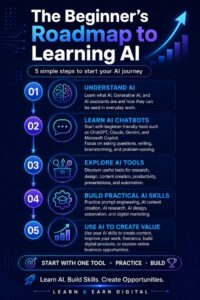
Step one, learn Python basics and data handling for two to three weeks. Focus on cleaning Excel data and creating simple charts.
Step two, learn prompt engineering and AI automation for two weeks. Practice automating WhatsApp replies and generating content for a real business example in Port Harcourt.
Step three, learn machine learning fundamentals. Build simple models with Scikit Learn that predict sales or sort customer messages for a shop in Mile One.
Step four, choose one specialization based on your interest. If you enjoy working with text and customer operations, focus on natural language processing. If you enjoy working with images, focus on computer vision.
Step five, build three to five real projects with Nigerian data, such as a sentiment analysis tool for a restaurant in GRA or a product tagging system for a fashion store in Mile One.
Step six, build a portfolio on GitHub and LinkedIn. Document each project with the problem you solved, tools you used, and results achieved.
Step seven, practice continuous learning and job search. Follow AI trends, post about your projects weekly on LinkedIn, and reach out to businesses in Port Harcourt with small demos.
How Potenmunia Tech School Builds Your Future AI Career
Potenmunia Tech Schoolis a practical, career focused technology training school in Port Harcourt, Nigeria. Its curriculum is designed around competence, practical execution, and real world application, ensuring learners master high demand AI skills in Nigeria to thrive in the future of work.
100% Practical, Hands-on Learning: Education is built around active execution from day one. Instead of passive lecture slides, learners work on laptops solving actual business challenges. For example, in a prompt engineering module, students write and refine prompts to generate tailored catalog copy for a fashion brand in GRA, testing iterations live to optimize accuracy. Instructors provide real time guidance as you code, building immediate practical confidence.
Real-World Projects and Capstone Experience: Every module concludes with an applied project addressing local commercial needs. Students build automated WhatsApp customer assistants for retailers in Garrison or predictive sales models for supermarkets along Peter Odili Road using multi-month transaction datasets. The program culminates in a comprehensive capstone project where learners combine multiple AI skills in Nigeria, such as deploying custom knowledge base assistants that categorize and respond to incoming customer inquiries.
Professional Portfolio Building: The school provides structured guidance on presenting proof of work for employers across Port Harcourt, Lagos, and global remote markets. Learners construct clean GitHub repositories complete with structured problem statements, dataset references, and project execution workflows using Python, Pandas, Scikit Learn, and OpenCV. Case studies are formatted to demonstrate measurable business impact, positioning graduates effectively for the future of work.
Career Development and Job Readiness: Career preparation extends into strategic positioning and client acquisition. Training covers resume optimization, LinkedIn profile structuring focused on business outcomes, technical interview preparation, and direct client outreach strategies. Learners practice sending targeted demonstration prototypes to commercial hubs like Trans Amadi, turning practical projects into paid freelance retainers.
Modern AI Integration and Enterprise Tools: The curriculum integrates advanced artificial intelligence architectures with everyday business platforms like Zapier, ManyChat, Google Sheets, and the WhatsApp Business API. Learners master connecting AI skills in Nigeria with enterprise data sources, enabling custom language models to deliver precise, context-aware business solutions necessary for the future of work.
Dedicated Technical Mentorship: Mentors evaluate code quality during live sessions, conduct detailed portfolio reviews, and provide ongoing technical guidance via an active post-class support community. For instance, when a text classification model struggles with local language variations or Pidgin phrasing, instructors guide learners through dataset augmentation and text preprocessing adjustments to achieve high model accuracy.
Innovation and Entrepreneurship: Students are empowered to leverage technical knowledge for direct service creation. Beyond traditional employment paths, learners receive framework models on packaging AI automation as a service, setting retainer pricing, and pitching value propositions to non technical business owners across Nigeria. This entrepreneurial focus prepares graduates to build sustainable income streams and lead innovation in the future of work.
Common Mistakes That Stop Beginners From Learning Future Work Skills
Many beginners fail to learn AI skills in Nigeria for the future of work because of avoidable mistakes. One is focusing only on theory and certificates without building projects with Nigerian data. Another is trying to learn every AI tool at once, instead of mastering Python and one specialization like automation or natural language processing first. A third is having a GitHub profile with no clear README, so employers cannot understand what you built.
Avoid these by focusing on practical projects, clear documentation, and consistent learning with real business examples from Port Harcourt.
FAQs
Do I need a computer science degree to learn AI skills in Nigeria for the future of work?
No. Many professionals in Port Harcourt and Lagos learned AI skills in Nigeria through practical training and a portfolio of projects. What matters most is your ability to solve business problems with AI tools. A degree can help for some corporate roles, but practical skills and portfolio are more important for most jobs and freelance work in 2026.
How long does it take to learn AI skills in Nigeria for the future of work?
With consistent practice of two hours daily, you can learn prompt engineering and automation in four to six weeks and start freelancing for small businesses in Port Harcourt. Building a solid foundation with machine learning and a portfolio of three to five projects usually takes three to four months.
Can I learn AI skills in Port Harcourt without a powerful laptop?
Yes. You can use Google Colab, which gives you free access to powerful computers through your browser to train simple models. Potenmunia Tech School also provides a computer lab for learners who need it during training, so you can practice even with a basic laptop.
What is the most important AI skill to learn in 2026 for the future of work in Nigeria?
Prompt engineering and AI automation is the most immediately useful skill because many businesses in Port Harcourt need help automating WhatsApp and Instagram customer support. Python and data handling is also essential as a foundation. After that, specialize in natural language processing or computer vision based on your interest.
How can AI skills in Nigeria help my small business in Port Harcourt?
AI skills in Nigeria can help you automate customer replies on WhatsApp instantly, generate product descriptions for your fashion store in GRA, analyze sales data to predict what products will sell more, and tag product photos automatically. For example, a supermarket in Peter Odili can use computer vision to detect when a product is out of stock on the shelf without manual checking.
Final Thoughts
The future of work in Nigeria in 2026 is not about replacing people, but about working smarter with AI. Learning AI skills in Nigeria, such as prompt engineering and automation, Python and data handling, machine learning,natural language processing, computer vision, data storytelling, and portfolio building, will help you stay relevant whether you want a full time job, freelance work, or to grow your own business in Port Harcourt.
Focus on practical projects with Nigerian data, document your work clearly on GitHub and LinkedIn, and practice continuous learning as AI tools evolve.
With hands on practice, mentorship, and a clear roadmap, what once seemed complex becomes a practical set of skills you can use to support businesses and open new opportunities for the future of work.
If you would like to start this journey with guidance, consider attending a practical, beginner friendly session at Potenmunia Tech School where you can build your first AI automation project for a real business example in Port Harcourt and learn how to present it as a portfolio piece for AI skills in Nigeria for the future of work.
If you are planning to become a data analyst, two tools will probably appear near the beginning of your learning journey: Microsoft Excel and Microsoft Power BI.
That creates an important question:
Excel vs Power BI which should a beginner data analyst learn first?
For most people starting from zero, Excel is the better first tool to learn, followed by Power BI.
But the answer is more nuanced than simply saying Excel is easier or Power BI is more advanced.
Excel and Power BI overlap in some areas, but they are designed around different workflows. Excel is particularly flexible for spreadsheet-based calculations, ad-hoc analysis, data exploration and working directly with individual records. Power BI is designed more specifically for business intelligence, data modeling, interactive reports, dashboards and sharing insights.
Microsoft itself presents Excel and Power BI as complementary technologies rather than tools that must compete with each other. Excel can gather, shape, analyze and visualize data, while Power BI extends those capabilities into broader business intelligence and interactive reporting workflows.
So if you are a beginner in Port Harcourt, Lagos, Abuja or anywhere else in Nigeria, the better question may not be:
“Should I learn Excel or Power BI?”
It may be:
“How can I learn Excel and Power BI in the right order so that each tool strengthens my data analytics skills?”
This guide explains the difference.
Excel vs Power BI: The Quick Answer
Here is the short version:
If you want to…
Consider starting with
Learn basic data analysis
Excel
Understand spreadsheets
Excel
Learn formulas and calculations
Excel
Perform quick analysis
Excel
Work with individual records
Excel
Create PivotTables
Excel
Build interactive dashboards
Power BI
Combine multiple data sources
Power BI
Build reusable business reports
Power BI
Learn data modeling
Power BI
Create interactive visualizations
Power BI
Share business intelligence reports
Power BI
Build a modern analytics portfolio
Both
For a complete beginner, a practical sequence is:
Data fundamentals → Excel → Power BI → SQL → Portfolio projects
You do not have to become an Excel expert before touching Power BI. However, learning the fundamentals of data analysis in Excel can make your transition into Power BI considerably easier.
Microsoft Excel is a spreadsheet application used for organizing, calculating, analyzing and presenting information.
A typical Excel worksheet consists of rows and columns containing data.
For example, imagine a fictional electronics business in Port Harcourt with thousands of sales records.
The dataset might contain:
Date
Product
Branch
Quantity
Price
Revenue
Jan 5
Laptop
Port Harcourt
2
₦450,000
₦900,000
Jan 6
Monitor
Port Harcourt
5
₦120,000
₦600,000
Jan 8
Keyboard
Aba
10
₦25,000
₦250,000
A beginner can use Excel to calculate revenue, filter transactions, identify top-selling products and examine trends.
Excel also supports capabilities such as Power Query, PivotTables, charts and data models. Microsoft documentation notes that Excel can import and shape data with Power Query and create relationships between tables through its data-modeling capabilities.
That means Excel is much more than a calculator.
It can be a useful introductory environment for learning how analysts work with data.
What Is Power BI?
Power BI is Microsoft’s business analytics and business intelligence platform.
Its purpose is to help users connect to data, prepare and model it, create interactive reports and communicate insights.
Microsoft describes Power BI as a platform for connecting, visualizing and sharing data across an organization. Power BI Desktop is particularly focused on data modeling and report creation, while the Power BI service supports sharing and collaboration.
Wikipedia similarly describes Microsoft Power BI as an interactive data visualization and business intelligence product developed by Microsoft.
For a beginner, the important distinction is this:
Excel puts you inside a spreadsheet.
Power BI puts you inside a business intelligence environment.
That difference becomes particularly important as reporting requirements become more complex.
Excel vs Power BI: What Is the Biggest Difference?
The biggest difference is not simply the appearance of the software.
It is how you work with information.
Excel is built around the spreadsheet.
Power BI is built around data models, reports and interactive business intelligence.
Suppose a manager asks:
“What were our sales last month?”
In Excel, you might open a workbook, filter the data and calculate the result.
That can be perfectly appropriate.
Now imagine the manager asks:
“Show me sales for every branch, product category and month, let me filter by customer type, compare this year with last year and make the report available to the management team.”
This is where Power BI becomes particularly useful.
Power BI is designed to connect to data sources, prepare and model information, create interactive visuals and share reports.
Power BI includes Power Query for importing, transforming and preparing data.
This becomes particularly useful when you repeatedly perform similar transformation steps.
Microsoft identifies Power Query as a core part of preparing data in Power BI and also makes Power Query available in Excel.
Winner: It depends on the workflow.
For simple, one-off cleaning, Excel can be very convenient.
For repeatable transformation workflows feeding reports, Power BI’s approach can be particularly powerful.
Excel vs Power BI for Formulas
Formulas are one of Excel’s strongest areas.
Beginners can learn functions such as:
SUM
AVERAGE
COUNT
IF
SUMIF
SUMIFS
COUNTIF
COUNTIFS
XLOOKUP
INDEX
MATCH
For example:
=SUMIFS(Revenue, Branch, "Port Harcourt")
could be used to calculate revenue according to specified criteria, depending on how the workbook is structured.
Excel formulas are valuable because they teach beginners an important analytical habit:
Tell the computer exactly what calculation you want to perform.
Power BI uses a different calculation language called DAX (Data Analysis Expressions).
DAX is powerful, but beginners may find it less intuitive than ordinary spreadsheet formulas because calculations are closely connected to the data model and filter context.
Winner for learning formulas: Excel
Winner for advanced analytical modeling: Power BI
Excel vs Power BI for PivotTables and Pivot Analysis
PivotTables are one of the most useful Excel features for beginners learning data analysis.
Imagine you have 20,000 sales transactions.
Instead of manually adding everything, you can create a PivotTable to examine:
Revenue by product
Revenue by branch
Revenue by month
Quantity sold by category
Salesperson performance
This is an excellent way to learn how to ask questions of a dataset.
Power BI provides similar analytical capabilities through interactive visuals, filtering and data models.
However, the experience is different.
Excel is particularly comfortable for quick exploratory analysis.
Power BI is particularly strong when the analysis needs to become a reusable interactive report.
Winner for quick pivot-style exploration: Excel
Winner for interactive reporting: Power BI
Excel vs Power BI for Dashboards
This is one of the areas where the difference becomes obvious.
Excel can absolutely create dashboards.
You can combine:
Charts
PivotTables
Slicers
Conditional formatting
KPI indicators
Tables
A well-designed Excel dashboard can be very useful.
But Power BI was built around interactive business intelligence reporting.
Power BI allows users to create reports with interactive visuals, filters and drill-down experiences. Microsoft describes its business analyst capabilities around connecting and preparing data, visualizing it and publishing and sharing insights.
Example
An Excel dashboard might show:
Monthly Revenue: ₦25 million
Top Product: Laptop
Best Branch: Port Harcourt
A Power BI report could allow a manager to click:
Port Harcourt → Electronics → Laptop
and immediately explore the corresponding data.
That interactivity is one of Power BI’s major strengths.
Winner for interactive dashboards: Power BI
Excel vs Power BI for Data Visualization
Excel has many visualization options.
You can create:
Bar charts
Column charts
Line charts
Pie charts
Area charts
Scatter plots
PivotCharts
These are enough for many everyday analytical tasks.
Power BI is more focused on interactive data storytelling.
It can combine multiple visuals into a report and allow users to interact with them.
For example, selecting a particular branch in one visual can affect other visuals on the report page.
The goal is not merely to make charts attractive.
The goal is to make the information easier to explore.
Winner for basic visualization: Excel
Winner for interactive business intelligence visualization: Power BI
Excel vs Power BI for Large Datasets
This question needs some care.
It is tempting to say:
“Excel is for small data and Power BI is for large data.”
That is too simplistic.
Excel has powerful data capabilities and can work with substantial datasets depending on the workflow, version, model and available resources.
Power BI, however, is designed around data models and business intelligence workflows that can be better suited to larger, recurring analytical environments.
The important distinction is not simply the number of rows.
Ask:
How frequently does the data change?
How many sources are involved?
Does the data need to be refreshed?
How many people need the report?
Do users need interactive filtering?
Is a reusable data model required?
Does the organization need centralized reporting?
As these requirements increase, Power BI becomes increasingly attractive.
Winner for complex business intelligence workflows: Power BI
Excel vs Power BI for Multiple Data Sources
Suppose a company has:
Excel sales records
Customer data in a database
Inventory information in another system
Marketing information in a CSV file
An analyst may need to combine these sources.
Excel can connect to external data sources and use Power Query and data-modeling features.
Power BI is also designed to connect to multiple sources and build models from them. Microsoft states that Power BI Desktop can connect to more than 100 data sources.
Winner for a broader BI environment: Power BI
But again, Excel remains useful and can be part of the same workflow.
Power BI becomes more useful when an organization needs:
Interactive reports
Reusable dashboards
Multiple data sources
Centralized reporting
Data refresh
Role-based access
Business intelligence across teams
Microsoft’s documentation specifically describes Power BI’s workflow as connecting and preparing data, modeling it, building reports, exploring insights and sharing them.
Winner for recurring interactive business reporting: Power BI
Excel vs Power BI for Collaboration
Excel files can be shared and collaborated on, particularly through Microsoft 365.
However, Power BI has a dedicated service designed around publishing, sharing and collaborating on reports and dashboards.
This distinction matters when many people need access to the same business information.
For example, imagine a Nigerian company with teams in:
Port Harcourt
Lagos
Abuja
Ibadan
A centralized Power BI reporting environment can provide a common way to explore approved reports and data.
That is different from sending multiple Excel files around through email.
Microsoft also supports integration between Excel and Power BI, allowing users to analyze Power BI data using Excel tools such as PivotTables and charts.
Winner for centralized BI collaboration: Power BI
Excel vs Power BI for Career Development
If you are learning data analytics because you want to build a career, you should understand both tools.
Excel remains an important business productivity and analysis skill.
Power BI can add business intelligence and dashboard-development capabilities.
But employers do not hire people simply because they know software.
They need people who can solve problems.
For example:
A company does not necessarily need someone who can merely create a Power BI pie chart.
It needs someone who can determine:
Why are sales declining?
Which customer segment is affected?
Which products are responsible?
What changed compared with the previous period?
What action should management consider?
The software is the means.
Analytical thinking is the underlying skill.
Excel vs Power BI: Which One Is Easier?
For most beginners:
Excel is easier to start.
Power BI generally has more concepts to understand before you can use it confidently.
But “easier” does not mean “better.”
A tool can be easy to learn and still not be the right tool for a particular problem.
These workflows overlap, but they are not identical.
Excel vs Power BI: Which One Is More Powerful?
This is another question without a simple winner.
Excel is extremely flexible.
You can use it for:
Budgeting
Financial models
Data analysis
Calculations
Inventory
Planning
Reporting
Ad-hoc investigations
Power BI is powerful in a different direction.
It is particularly designed for:
Data modeling
Interactive reporting
Business intelligence
Dashboarding
Data visualization
Data exploration
Sharing insights
Therefore:
Excel is more flexible as a general spreadsheet environment.
Power BI is more specialized for modern business intelligence and interactive analytics.
Excel vs Power BI: Do You Need Both?
For someone pursuing data analytics, learning both is often a sensible goal.
The tools can work together rather than compete.
Microsoft explicitly promotes Excel and Power BI together, including the ability to move Excel queries, data models and reports into Power BI and analyze Power BI data through Excel.
Once you are comfortable with Excel and Power BI, SQL becomes an important next skill.
SQL allows analysts to work with data stored in relational databases.
7. Build a Portfolio
Your portfolio could contain:
Excel analysis
Power BI dashboards
SQL projects
Data-cleaning projects
Business case studies
Written explanations of your findings
The portfolio should demonstrate what you can actually do.
A Practical Excel vs Power BI Example for Port Harcourt
Imagine a fictional logistics company operating in Port Harcourt.
The company wants to understand delivery performance.
Its dataset contains:
Delivery date
Customer location
Driver
Vehicle
Delivery status
Delivery time
Distance
Delivery cost
What could Excel do?
An analyst could use Excel to:
Clean the records
Calculate average delivery time
Calculate delivery costs
Filter delayed deliveries
Create PivotTables
Identify problematic locations
Create charts
What could Power BI do?
The analyst could then build an interactive report showing:
Total deliveries
On-time delivery percentage
Average delivery time
Delivery cost
Performance by location
Performance by driver
Monthly trend
A manager could filter the report to investigate a particular area.
This is where the difference between spreadsheet analysis and business intelligence becomes clearer.
Excel vs Power BI: Common Mistakes Beginners Make
1. Learning software without learning analysis
You can watch dozens of Excel tutorials and still struggle to answer a business question.
Learn to ask questions of the data.
2. Thinking dashboards equal data analysis
A colorful dashboard does not automatically represent good analysis.
A useful dashboard should help the intended audience understand something.
3. Jumping into DAX too early
DAX is valuable, but beginners should first understand data relationships, measures and analytical concepts.
4. Ignoring data cleaning
Poor-quality input can produce misleading output.
5. Building projects that are too artificial
Use realistic business questions.
A project should have a reason for existing.
6. Learning Excel and Power BI separately
Look for connections between the two.
The skills can reinforce each other.
Excel vs Power BI: Which Should You Put in Your Portfolio?
Ideally, both.
A strong beginner portfolio could include a project demonstrating Excel skills and another demonstrating Power BI skills.
For example:
1. Excel Sales Analysis
Show:
Data cleaning
Formulas
PivotTables
Charts
Business findings
2. Power BI Business Dashboard
Show:
Data transformation
Data modeling
DAX measures
Interactive visuals
Dashboard design
Business recommendations
Then explain the decisions you made.
That is much stronger than simply uploading screenshots.
How Potenmunia Tech School Approaches Data Analytics
For learners interested in developing these skills in Port Harcourt and Nigeria, the learning environment matters.
Potenmunia Tech School approaches technology education with an emphasis on practical, hands-on learning rather than treating software knowledge as the final goal.
In a data analytics learning journey, this can mean moving beyond demonstrations and practising the full process:
Problem → Data → Cleaning → Analysis → Visualization → Insight → Recommendation
Projects can give learners opportunities to work with realistic scenarios and develop portfolio evidence.
For example, instead of simply learning how to create a Power BI chart, a learner might be asked to analyze a fictional company’s sales performance, determine what is happening in the data and present the findings through a dashboard.
That approach connects technical learning with real-world application.
Potenmunia also places emphasis on portfolio development, mentorship and career/job-readiness, while incorporating areas such as AI integration, innovation and entrepreneurship into its broader technology-training approach.
For someone considering data analytics as a career, these areas matter because technical knowledge is only one part of becoming useful professionally.
You also need to demonstrate that you can apply what you know.
Excel vs Power BI Conclusion
So, after comparing Excel vs Power BI across learning difficulty, data cleaning, formulas, visualization, dashboards, reporting, data modeling and career development, which should a beginner learn first?
Start with Excel if you are completely new.
Excel can help you develop fundamental analytical skills in a relatively accessible environment.
Learn how to:
Clean data
Calculate metrics
Use formulas
Create PivotTables
Analyze trends
Build basic visualizations
Then move to Power BI.
Power BI can extend those skills into:
Data modeling
Interactive dashboards
Business intelligence
Advanced visualization
Reusable reporting
Multi-source analysis
Eventually, learn both.
The strongest approach is not:
Excel vs Power BI
It is:
Excel + Power BI + SQL + analytical thinking + communication + real-world projects
That combination gives a beginner a much stronger foundation for developing into a capable data analyst.
And remember: learning software is not the destination.
The destination is being able to look at a messy dataset, understand the question behind it, analyze the information correctly and explain what the numbers mean.
That is the real skill.
Frequently Asked Questions About Excel vs Power BI
Is Excel better than Power BI?
Not universally.
Excel is better suited to some tasks, particularly spreadsheet-based calculations, quick analysis and ad-hoc work.
Power BI is better suited to many interactive business intelligence, data modeling and dashboarding tasks.
The right choice depends on the problem.
Should I learn Excel before Power BI?
For a complete beginner, learning Excel first is generally a sensible approach.
However, someone who already understands spreadsheets and data analysis can begin Power BI earlier.
Can Power BI replace Excel?
No.
Power BI and Excel have overlapping capabilities but different strengths.
Microsoft supports integration between the two, allowing users to analyze Power BI data through Excel and use Excel data and models with Power BI.
Is Power BI harder than Excel?
For many beginners, yes.
Power BI introduces concepts such as data modeling, relationships, Power Query and DAX.
However, prior Excel experience can make the transition easier.
Which is better for dashboards: Excel or Power BI?
Both can create dashboards, but Power BI is generally the stronger choice when you need highly interactive business intelligence reports, reusable models and broader sharing capabilities.
Can I get a data analyst job with Excel alone?
Excel can be useful for entry-level analytical work, but aspiring data analysts should consider developing a broader toolkit.
SQL, Power BI, statistics, visualization and communication can complement Excel.
Is Power BI only for large companies?
No.
The underlying concepts can be useful for organizations of different sizes.
The question is whether the organization’s reporting and analysis requirements justify using a business intelligence platform.
Do I need SQL if I know Excel and Power BI?
SQL is an important skill to consider because many organizations store data in databases.
Excel and Power BI can help you analyze information, while SQL can help you retrieve and manipulate data from relational databases.
Is Excel still relevant for data analysts?
Yes.
Excel remains useful for calculations, quick analysis, spreadsheet workflows and ad-hoc exploration. Microsoft also provides ways to connect Excel with Power BI data.
Where can I learn data analytics in Port Harcourt?
Learners can consider structured technology training alongside independent study and practical projects.
If evaluating a training school, look for evidence of hands-on practice, realistic projects, portfolio development, mentorship and career preparation—not simply the number of software packages included in the curriculum. Wikipedia
Data Analyst Salary in Nigeria is one of the most searched questions by students, graduates, career switchers and professionals considering a career in technology.
The answer, however, is not one fixed figure.
A data analyst in Nigeria may earn considerably different amounts depending on experience, technical skills, industry, employer, location, qualifications, portfolio quality and whether the role is with a local employer or an international company.
Current 2026 salary sources illustrate just how wide the market can be. One salary database reports a median total compensation of about ₦16.27 million per year, while another 2026 salary guide places typical monthly earnings broadly between ₦150,000 and ₦350,000, with senior and specialist positions potentially reaching much higher levels. Other published estimates are higher still.
This variation is important.
Someone searching for data analyst salary in Nigeria per month should not assume that one number represents every analyst in the country.
Instead, it is more useful to understand the different career levels, industries, skills and employment arrangements that influence compensation.
This guide explains how much data analysts may earn in Nigeria, what they actually do, which skills employers look for, how salaries can develop with experience, and what someone in Port Harcourt can do to prepare for a career in data analytics.
Data analysis is the process of examining, cleaning, transforming and modelling data to discover useful information and support decision-making.
In simple terms, a data analyst takes information that may be difficult to understand and turns it into insights that people and organisations can use.
For example, a company may have thousands of sales transactions.
The raw data might contain:
Customer names or IDs
Products purchased
Prices
Dates
Locations
Quantities
Payment methods
Sales representatives
A data analyst can clean the information, identify patterns, calculate important metrics and create visualisations that help management understand what is happening.
The final question is usually not simply:
“What does the data say?”
It is:
“What does the data mean, and what should we do about it?”
That distinction is central to professional data analytics.
Who Is a Data Analyst?
A data analyst is a professional who works with data to help organisations understand performance, identify trends, answer business questions and make evidence-based decisions.
Wikipedia’s explanation of the analyst profession describes a data analyst as someone who retrieves, organises and analyses information to help an organisation achieve its goals.
A Nigerian data analyst might work with:
Sales data
Banking transactions
Customer information
Marketing campaigns
Financial records
Inventory
Telecommunications data
Oil and gas operations
Logistics information
Healthcare records
Website traffic
Mobile-app activity
The tools may change from company to company, but the underlying purpose remains similar: turn data into useful information.
Data Analyst Salary in Nigeria: How Much Do Data Analysts Earn?
There is no official single salary that applies to every data analyst in Nigeria.
Current salary sources provide different estimates because they use different methodologies, datasets and definitions of compensation.
For example, Levels.fyi currently reports median total compensation of about ₦16.27 million annually for data analysts in Nigeria.
Other 2026 Nigerian salary guides estimate:
Entry-level: approximately ₦120,000–₦250,000 per month
Mid-level: approximately ₦250,000–₦450,000 per month
Senior: approximately ₦400,000–₦650,000+ per month
Lead/managerial: approximately ₦600,000–₦950,000+ per month
These should be viewed as indicative market ranges rather than guaranteed salaries.
Another 2026 source gives a broader range, with some senior positions reaching ₦800,000 or more per month.
The differences demonstrate an important point:
There is no single “average data analyst salary in Nigeria.”
Salary can change substantially according to the circumstances surrounding the job.
Data Analyst Salary in Nigeria Per Month
For someone specifically searching for data analyst salary in Nigeria per month, a practical way to understand the market is through career levels.
Career level
Indicative monthly range
Beginner / Entry level
₦100,000 – ₦250,000+
Junior Data Analyst
₦200,000 – ₦400,000+
Mid-Level Data Analyst
₦300,000 – ₦550,000+
Senior Data Analyst
₦500,000 – ₦800,000+
Lead / Analytics Manager
₦600,000 – ₦1,000,000+
Specialist / International Remote
Can be considerably higher
These ranges are deliberately broad because Nigerian compensation varies significantly between employers and industries.
A small local business may offer a junior analyst considerably less than a large financial institution or technology company.
Likewise, an experienced analyst with strong SQL, Python, Power BI, cloud and business skills may command more than someone with the same job title but fewer technical capabilities.
Data Analyst Salary in Nigeria Per Year
Monthly salary is only one way of looking at compensation.
For example:
₦150,000/month = ₦1.8 million/year
₦250,000/month = ₦3 million/year
₦400,000/month = ₦4.8 million/year
₦600,000/month = ₦7.2 million/year
₦800,000/month = ₦9.6 million/year
₦1 million/month = ₦12 million/year
However, annual compensation may include more than basic salary.
Depending on the employer, total compensation can include:
Basic salary
Transport allowance
Housing allowance
Bonuses
Health insurance
Pension contributions
Performance incentives
Other benefits
Therefore, when comparing two job offers, it is important to look at the complete compensation package, not just the monthly basic salary.
Entry-Level Data Analyst Salary in Nigeria
One of the most common searches is:
“How much does an entry-level data analyst earn in Nigeria?”
There is no universal answer.
Some current 2026 salary sources put entry-level earnings around ₦120,000–₦250,000 per month, while other datasets and job listings show higher or lower figures depending on the employer.
An entry-level analyst may be responsible for:
Cleaning datasets
Preparing reports
Updating dashboards
Performing basic SQL queries
Working with Excel
Supporting senior analysts
Checking data quality
Producing recurring reports
At this stage, employers are often looking for evidence that a candidate can actually work with data.
That evidence could come from:
Internship experience
Academic projects
Personal projects
A professional training programme
A portfolio
Freelance work
Volunteer projects
A candidate with no professional experience but a strong portfolio can therefore have a better story to tell than a candidate who has only completed theoretical courses.
Junior Data Analyst Salary in Nigeria
The junior stage is where many new professionals begin moving from learning into professional practice.
A junior data analyst may already be comfortable with:
Excel
SQL
Power BI
Data cleaning
Basic statistics
Dashboard development
Current salary guides place many junior roles within approximately the ₦200,000–₦400,000 monthly range, although actual offers can fall outside this range.
The difference between an entry-level candidate and a strong junior analyst is often practical independence.
A junior analyst should increasingly be able to receive a business question and work through the analytical process without needing every step explained.
Mid-Level Data Analyst Salary in Nigeria
At the mid-level, employers usually expect greater independence.
A mid-level analyst may:
Own analytics projects
Design dashboards
Write complex SQL queries
Analyse business performance
Build automated reports
Present findings
Work with managers
Recommend actions
Several 2026 salary guides place mid-level salaries roughly around ₦250,000–₦550,000+ per month, depending on the industry and employer.
The most important transition at this stage is from:
“I can use analytics tools.”
to:
“I can use analytics to solve business problems.”
Senior Data Analyst Salary in Nigeria
Senior analysts usually have several years of professional experience and can take responsibility for complex analytical problems.
A senior data analyst may:
Design analytical approaches
Mentor junior analysts
Build executive dashboards
Work with large datasets
Communicate with senior stakeholders
Define KPIs
Automate analytical processes
Support strategic decisions
Some 2026 Nigerian salary sources place senior data analysts around ₦500,000–₦800,000+ per month, although specialised roles and larger employers can offer different compensation.
At this level, technical skills remain important, but leadership, business understanding and communication become increasingly valuable.
Lead Data Analyst and Analytics Manager Salary in Nigeria
Some experienced analysts eventually move into leadership.
Possible titles include:
Lead Data Analyst
Analytics Lead
Business Intelligence Lead
Analytics Manager
Head of Analytics
Data & Insights Manager
A lead may be responsible not only for their own analysis but also for:
Setting analytical standards
Reviewing other analysts’ work
Managing projects
Working with executives
Defining reporting frameworks
Mentoring team members
Helping determine the organisation’s data strategy
Published 2026 salary guides place some lead and analytics-management roles around ₦600,000–₦1 million or more per month, but compensation varies considerably.
Data Analyst Salary in Nigeria by Industry
Industry can make a substantial difference to earnings.
Data Analyst Salary in Banking and Finance
Banks and financial institutions generate huge amounts of data.
Analysts may work on:
Customer behaviour
Transactions
Loans
Credit
Fraud
Risk
Revenue
Branch performance
Digital banking
Financial institutions can therefore require sophisticated analytical capabilities.
Some salary guides place banking and finance among the stronger-paying sectors for experienced data professionals.
A fintech analyst may need stronger technical skills because technology companies frequently work with large, rapidly changing datasets.
Published 2026 estimates place fintech and technology analytics roles broadly around ₦250,000–₦600,000+ depending on experience and employer.
Data Analyst Salary in Oil and Gas
Oil and gas is particularly relevant to professionals in Port Harcourt and the Niger Delta.
Data analytics can support:
Production
Procurement
Logistics
Supply chains
Financial reporting
Asset management
Operations
Maintenance
Safety
Performance monitoring
Some current salary guides place experienced oil-and-gas data roles among the higher-paying analytics opportunities in Nigeria.
However, the exact compensation depends heavily on the employer, role, technical requirements and whether the position is directly with an operator or through a service company.
Data Analyst Salary in Telecommunications
Telecommunications companies deal with enormous volumes of data.
Analysts may investigate:
Customer churn
Data usage
Subscriber behaviour
Revenue
Network performance
Campaign performance
Product adoption
This makes SQL, statistics, dashboarding and business intelligence particularly valuable.
Data Analyst Salary in E-Commerce and Retail
Retail and e-commerce companies use analytics to understand:
Sales
Customer behaviour
Product performance
Inventory
Pricing
Marketing
Repeat purchases
A small business may only need basic Excel reporting, while a large e-commerce organisation may require SQL, cloud data platforms, Python and advanced analytics.
Data Analyst Salary in Port Harcourt
Port Harcourt has an important place in Nigeria’s technology and business ecosystem, particularly because of its relationship with the energy sector and wider professional-services economy.
A data analyst in Port Harcourt may find opportunities in:
Oil and gas
Oilfield services
Logistics
Banking
Telecommunications
Retail
Education
Healthcare
Professional services
Startups
SMEs
Salary should not be determined by city alone.
An analyst working for a large company in Port Harcourt may earn more than an analyst working for a small company in Lagos.
Likewise, a Port Harcourt-based professional working remotely for an international organisation may operate in a completely different compensation market.
This is one reason developing portable skills is important.
Can a Data Analyst in Port Harcourt Work Remotely?
Yes.
Data analytics is one of the technology fields that can often be performed remotely because much of the work involves:
Databases
Spreadsheets
Business intelligence platforms
Cloud systems
Video meetings
Collaboration tools
Online documentation
Some current salary research also indicates a significant proportion of data-analysis positions support remote or hybrid work.
Remote work does not automatically mean international-level pay, however.
The employer’s location, compensation policy, employment arrangement, taxes and required experience all matter.
What Skills Increase a Data Analyst’s Salary in Nigeria?
A data analyst’s earning potential is strongly influenced by the ability to solve increasingly valuable problems.
SQL is one of the most important technical skills for a data analyst.
You should learn:
SELECT
WHERE
ORDER BY
GROUP BY
JOIN
CASE
Aggregate functions
Subqueries
CTEs
Window functions
A professional who can confidently retrieve and analyse database information has a much stronger foundation than someone who only knows spreadsheet formulas.
It allows an employer to see what you can actually do.
A beginner could build a portfolio containing:
1. Nigerian Retail Sales Analysis
Analyse:
Revenue
Products
Customers
Locations
Monthly performance
Create a Power BI dashboard.
2. Customer Churn Analysis
Use a telecommunications dataset to investigate:
Churn rate
Customer segments
Usage patterns
Contract types
Potential causes of churn
3. SME Financial Dashboard
Analyse:
Revenue
Expenses
Profit
Cash flow
Monthly trends
4. Port Harcourt Business Analysis
Create a fictional dataset representing several branches of a business operating in Port Harcourt.
Analyse:
Branch performance
Product sales
Customer activity
Revenue
Operational costs
This kind of project allows a learner to demonstrate not only technical skills but also local business understanding.
What Should a Data Analyst Portfolio Contain?
A strong project should explain:
The business problem
The dataset
Data-cleaning steps
Analytical methods
Tools used
Visualisations
Findings
Business recommendations
Avoid simply uploading screenshots.
Explain your thinking.
For example:
Weak portfolio statement:
“I created a Power BI dashboard.”
Stronger portfolio statement:
“I analysed 24 months of retail transactions to identify declining product categories, customer purchasing patterns and branch-level revenue trends. The resulting Power BI dashboard allows management to compare performance and investigate monthly changes.”
The second statement communicates business value.
How AI Is Changing Data Analytics
Artificial intelligence is becoming increasingly relevant to data analytics.
AI tools can assist analysts with:
SQL drafting
Formula creation
Data exploration
Documentation
Summarisation
Coding assistance
Report preparation
Identifying analytical questions
But AI does not eliminate the need for analytical judgment.
An analyst still needs to determine:
Whether the data is reliable
Whether the question is appropriate
Whether the analysis is statistically sound
Whether the result makes business sense
Whether an AI-generated result contains an error
Future data professionals therefore need both traditional analytics skills and responsible AI literacy.
Data Analyst Career Path in Nigeria
A possible career progression looks like this:
Data Intern → Junior Data Analyst → Data Analyst → Senior Data Analyst → Lead Analyst → Analytics Manager
However, not everyone follows exactly the same path.
Some analysts move into:
Data Science
Business Intelligence
Data Engineering
Product Analytics
Financial Analytics
Marketing Analytics
Analytics Engineering
Technology Consulting
The skills you develop can influence which direction you take.
How to Increase Your Data Analyst Salary in Nigeria
If you want to increase your earning potential, focus on becoming more useful rather than simply collecting certificates.
1. Strengthen SQL
Move beyond basic SELECT statements.
Learn joins, CTEs, window functions and more complex queries.
2. Master a BI Platform
Become genuinely competent with Power BI, Tableau or another major BI tool.
3. Learn Python
Python can help you automate repetitive work and handle more advanced analytical tasks.
4. Understand Business
Learn how organisations measure:
Revenue
Profit
Customer acquisition
Retention
Conversion
Costs
Productivity
Operational performance
5. Build a Portfolio
Build projects that demonstrate practical problem-solving.
6. Improve Communication
Learn to explain technical findings to non-technical audiences.
7. Learn AI-Assisted Analytics
Use AI to improve productivity while maintaining human oversight.
8. Develop Industry Knowledge
Specialising in an industry can make your analytical skills more valuable.
For example:
Data + Finance
can lead toward financial analytics.
Data + Oil and Gas
can lead toward energy analytics.
Data + Marketing
can lead toward marketing analytics.
Data + Product
can lead toward product analytics.
How Much Can a Data Analyst Earn After Five Years?
There is no guaranteed five-year salary.
A professional with five years of experience could earn very different amounts depending on:
Skills
Industry
Employer
Leadership responsibilities
Specialisation
Location
Remote employment
Portfolio
Negotiation
Some Nigerian 2026 salary guides place senior analysts around ₦500,000–₦800,000+ monthly, while specialist or management positions may go higher.
The important lesson is that years alone do not determine salary.
Five years of repeating the same basic reporting tasks is not necessarily equivalent to five years of progressively more advanced analytical experience.
Data Analyst vs Data Scientist
These roles overlap, but they are not identical.
A data analyst commonly focuses on:
Reporting
Dashboards
Business questions
Trends
Data cleaning
Descriptive and diagnostic analysis
A data scientist may work more extensively with:
Machine learning
Predictive modelling
Statistical modelling
Programming
Advanced experimentation
Data analytics can therefore serve as a foundation for people who later want to move into data science.
Data Analyst vs Business Analyst
A data analyst primarily works with data and quantitative evidence.
A business analyst may focus more heavily on:
Business processes
Requirements
Stakeholder needs
Process improvement
Systems
Organisational change
There can be overlap, and some organisations use these titles differently.
Is Data Analytics a Good Career in Nigeria?
Data analytics can be a useful career path for someone who enjoys:
Technology
Numbers
Problem-solving
Business
Research
Visualisation
Logical thinking
The field also applies across many industries.
However, it should not be approached as a guaranteed shortcut to a high salary.
Success requires learning, practice, continuous development and the ability to demonstrate competence.
How to Become a Data Analyst in Nigeria
A beginner can follow this roadmap.
1. Learn Excel
Understand spreadsheets, formulas, PivotTables and data cleaning.
2. Learn SQL
Practise retrieving and analysing information from databases.
3. Learn Power BI
Create interactive dashboards and reports.
4. Learn Statistics
Understand the concepts needed to interpret data correctly.
5. Learn Python
Add programming and automation capabilities.
6. Build Projects
Work with realistic datasets.
7. Build a Portfolio
Document your projects professionally.
8. Practise Interviews
Prepare to explain both your technical process and your business findings.
9. Apply for Opportunities
Consider:
Internships
Junior data analyst jobs
Reporting roles
Business intelligence roles
Graduate programmes
Freelance projects
10. Continue Learning
Technology and analytics tools continue to evolve.
For learners in Port Harcourt, Potenmunia Tech School approaches technology education with an emphasis on practical, hands-on learning and career preparation.
This is particularly relevant to data analytics because becoming competent requires more than watching lessons about Excel, SQL or Power BI.
Learners need opportunities to practise.
A practical data analytics learning experience can involve:
Working with realistic datasets
Cleaning messy data
Creating dashboards
Writing SQL queries
Analysing business problems
Presenting findings
Building portfolio projects
Receiving mentorship and feedback
Potenmunia Tech School positions its technology training around practical projects, portfolio development, mentorship and career readiness. Its programme offering includes Data Analysis, with physical, online and hybrid learning options.
For a learner in Port Harcourt, this type of approach can help bridge the gap between learning an analytics tool and demonstrating practical competence.
The school’s broader technology approach also incorporates AI and emerging skills, which can help learners understand how traditional analytics workflows are evolving.
The goal should not simply be to complete a course.
The goal should be to leave with something you can demonstrate.
Why Practical Projects Matter
Imagine two candidates applying for a junior data analyst position.
Candidate A says:
“I completed a data analytics course.”
Candidate B says:
“I completed a retail sales analysis project. I cleaned 25,000 records using Excel and Power Query, used SQL to analyse customer and product performance, built a Power BI dashboard and presented three recommendations based on the findings.”
The second candidate has provided evidence.
This is why practical projects, portfolios and real-world problem-solving should be central to analytics training.
A Data Analyst Learning Checklist
Before applying for your first serious analytics role, ask yourself:
Excel
Can I clean messy data?
Can I use PivotTables?
Can I use lookup functions?
Can I build useful charts?
SQL
Can I join tables?
Can I group data?
Can I use aggregate functions?
Can I write intermediate queries?
Can I use CTEs and window functions?
Power BI
Can I import and clean data?
Can I create a data model?
Can I write basic DAX?
Can I build a useful dashboard?
Statistics
Do I understand averages?
Can I interpret percentages?
Do I understand correlation?
Can I identify misleading conclusions?
Business
Can I understand a business question?
Can I identify useful KPIs?
Can I explain why a result matters?
Portfolio
Do I have several completed projects?
Can I explain my methodology?
Can I demonstrate my findings?
Communication
Can I explain technical findings in simple language?
Can I present recommendations to someone without a technical background?
If you can confidently answer these questions, you are moving beyond simply learning software and towards becoming a practical data analyst.
Frequently Asked Questions About Data Analyst Salary in Nigeria
What is the average data analyst salary in Nigeria?
There is no single reliable national average because salary sources use different datasets and definitions. Current 2026 sources report substantially different figures, illustrating how much compensation varies by experience, industry and employer. Levels.fyi currently reports median total compensation of about ₦16.27 million annually, while other Nigerian salary guides report monthly ranges from roughly ₦150,000 for some entry-level positions to ₦700,000 or more for senior and specialist roles.
What is the data analyst salary in Nigeria per month?
A broad 2026 market estimate is approximately ₦100,000–₦250,000+ for beginners, ₦250,000–₦550,000+ for experienced analysts and ₦500,000–₦1 million+ for senior, lead or specialised positions. These are indicative ranges, not guaranteed salaries.
How much does a junior data analyst earn in Nigeria?
Junior analysts may earn approximately ₦200,000–₦400,000 per month, although some entry-level positions pay less and some employers pay more. Experience, technical ability, industry and employer size all matter.
How much does a senior data analyst earn in Nigeria?
Senior data analysts can earn approximately ₦500,000–₦800,000 or more per month in some Nigerian roles. Specialist, management and international positions can have different compensation structures.
Which industry pays data analysts the most in Nigeria?
Financial services, fintech, oil and gas, technology and some multinational organisations can offer relatively strong compensation, particularly for experienced professionals. Actual pay varies by employer and role.
Can I become a data analyst without a Computer Science degree?
Yes. People enter data analytics from Economics, Statistics, Mathematics, Engineering, Accounting, Business, Marketing and many other backgrounds.
Is SQL necessary for a data analyst?
SQL is one of the most useful skills for professional data analysts because many organisations store important information in databases.
Is Power BI necessary?
Not every job requires Power BI specifically, but learning Power BI or another major business-intelligence platform can significantly improve your ability to create professional dashboards.
Does a data analyst need Python?
Not always. Excel, SQL, Power BI and statistics can provide a strong foundation. Python becomes increasingly useful for automation and more advanced analysis.
Can I work as a data analyst from Port Harcourt?
Yes. Opportunities can exist with local companies, national organisations and remote employers. Your physical location does not necessarily limit you to Port Harcourt-based employers.
Can data analysts work remotely?
Yes. Many analytics tasks can be performed remotely, although remote eligibility depends on the employer and position. Some current salary research reports substantial remote/hybrid participation in the field.
How long does it take to become a data analyst?
The answer depends on your starting point, learning schedule and practice. A beginner should focus on building genuine competence rather than trying to finish as quickly as possible.
Does certification guarantee a high data analyst salary?
No. Certification can demonstrate structured learning, but employers also want practical ability, problem-solving, communication and evidence of real projects.
Is data analytics a high-paying career in Nigeria?
It can become a well-paid technology career, particularly as professionals gain experience and develop specialised skills. However, salary is not guaranteed and varies significantly across employers.
Will AI replace data analysts?
AI is automating some analytical tasks, but analysts still need to understand data quality, business context, statistics, validation and decision-making. Learning to work effectively and responsibly with AI can therefore become an important career skill.
Conclusion on Data Analyst Salary in Nigeria
The most important thing to understand about Data Analyst Salary in Nigeria is that the job title alone does not determine what someone earns.
Experience matters.
Industry matters.
Technical skills matter.
Business knowledge matters.
Communication matters.
Portfolio quality matters.
And increasingly, the ability to work effectively with AI and modern data tools matters.
A beginner should therefore avoid thinking:
“I need to learn data analytics so I can earn ₦X.”
A more useful approach is:
“I need to become capable of solving valuable data problems, demonstrating those abilities and continuously increasing the complexity of problems I can solve.”
That mindset creates a stronger foundation for long-term career growth.
For someone in Port Harcourt, the opportunity can extend beyond the local job market. Strong analytics skills can be relevant to energy companies, banks, fintechs, telecoms, retailers, professional-service organisations, startups and remote employers.
If you are beginning your journey, focus on the fundamentals:
Excel → SQL → Power BI → Statistics → Python → Portfolio → Business Communication → AI-assisted Analytics.
And above all, practise.
A data analyst is not valuable simply because they know how to use a tool.
They are valuable because they can take messy information, ask the right questions, find meaningful patterns and help people make better decisions.
For learners in Port Harcourt and aside Port Harcourt, who want structured, practical technology training, Potenmunia Tech School can be explored as one local option for developing those skills through hands-on projects, portfolio building, mentorship and career preparation.
The best next step is not necessarily to chase the highest advertised salary.
It is to build the competence that makes higher-value opportunities possible. wikipedia
Glory
If you are searching for Machine Learning Trainingin Port Harcourt that actually teaches you how to build real models, not just theory, you are in the right place.
In 2026, companies in Trans-Amadi, Onne, Lagos, and abroad are no longer hiring people who only know Excel. They are hiring people who have completed professional Machine Learning Training and can build systems that predict sales, detect fraud, recommend products, and automate decisions.
This detailed professional guide will show you exactly what machine learning means, why it is the highest-paying skill in Nigeria today, what you will learn inside our training, and how you can use it to get high-paying jobs and freelance clients.
Table of Contents
1.What is Machine Learning and Why It Matters in Nigeria?
2.Why Machine Learning Skills Are Most Valuable in 2026
3.What You Learn: 7 Core Modules – Detailed
4.10 Real Models You Will Build
5.Career and Income Opportunities After Training
6.How to Choose Best Training in Port Harcourt
7.Why Potenmunia is the Best Place – 6-Pillar Breakdown
8.Conclusion and FAQs
1. What is Machine Learning Training and Why It Matters?
What is Machine Learning Training and Why It Matters? According to Wikipedia, machine learning is a field of artificial intelligence that enables computers to learn from data and make predictions without being explicitly programmed. Read more here: https://en.wikipedia.org/wiki/Machine_learning
Machine Learning Trainingmeans learning how to teach computers with data. Example: You give computer 1000 pictures of cars and keke, and computer learns to automatically detect car vs keke in new pictures. You give computer 2 years of sales data, and it learns to predict next month sales with 95% accuracy.
This is why banks, oil and gas companies, and tech startups in Nigeria pay machine learning engineers ₦400k – ₦800k monthly starting salary.
2. Why Machine Learning Training is Most Valuable Skill in 2026
Why Machine Learning Training is Most Valuable Skill in 2026 is simple – data is everywhere, but people who can use data to make money are few.
For students in Uniport and RSU Computer Science, Machine Learning Trainingmeans you graduate with portfolio of real models that make employers in Lagos and abroad hire you instantly instead of looking for NYSC PPA.
For professionals in Trans-Amadi and GRA, it means you move from ₦200k admin role to ₦500k data role because you can build fraud detection model for bank, or sales prediction model for FMCG company.
For business owners in Peter Odili and Garrison, it means you build recommendation system that automatically recommends “Customers who bought this bag also bought this shoe” like Jumia, increasing sales by 35% without hiring extra staff.
In 2026, machine learning is the skill with highest freelance rate on Upwork – $40 – $80 per hour – because foreign companies need people who can build models.
3. What You Learn in Machine Learning Training: 7 Core Modules – Detailed
Module
1: Foundation of Machine Learning Training – Python for Data
Foundation of Machine Learning Training – Python for Data is where you master Python from scratch,
even if you never coded before. You learn NumPy, Pandas, and how to clean dirty
Nigerian business data, handle missing values, and prepare data for modeling.
This module alone makes you better than 80% of beginners.
Module
2: Data Visualization and Exploratory Analysis
You learn how to use Matplotlib and Seaborn to
create professional charts that show business insights. You learn how to find
patterns like “Sales drop every Monday” or “Customers from GRA
buy more on weekends” – insights that make MD take decisions.
Module
3: Supervised Learning – Regression Models
In this module of Machine Learning Training, you learn how to predict numbers. You build
house price prediction model for Port Harcourt real estate, sales prediction
model for business in Mile 1, and salary prediction model. You master Linear
Regression, Random Forest, and XGBoost with real datasets.
You learn how to predict categories. You build
fraud detection model for bank transactions, customer churn prediction model
that predicts which customers will leave, and email spam detection model. This
is most profitable area of Machine Learning
Training because banks pay heavily for it.
Module
5: Unsupervised Learning and Recommendation Systems
You learn how to group customers automatically
and build recommendation system like Netflix. Example: You build system for
fashion brand in GRA that automatically recommends “You may also like this
shoe” based on what customer bought before, increasing sales.
Module
6: Model Deployment – Making Your Model Usable
You learn how to take your model from your
laptop and put it on website where business owners in Port Harcourt can use it.
You learn Streamlit to build simple web app in 30 minutes where customer
uploads data and gets prediction instantly. This module separates people who
know theory from people who build products.
Module
7: Portfolio, Monetization, and Client Getting
You build 20+ machine learning models for real
Port Harcourt businesses and learn how to charge businesses ₦200k – ₦500k for building prediction model and how to earn $40 – $80 per
hour on Upwork. We show you how to write proposal that makes foreign clients
hire you. This makes Machine Learning Training an
income skill.
Path 1: High-Paying Job – Banks, Fintech, and Oil and Gas companies in Port Harcourt and Lagos pay ₦400k – ₦800k for Junior ML Engineer and ₦1M+ for Senior.
Path 2: Freelance Specialist – Earn $40 – $80 per hour on Upwork building prediction models for foreign startups. Machine Learning Training is globally recognized high-income skill.
Path 3: Start Data Agency in Port Harcourt – Businesses in Trans-Amadi and GRA pay ₦200k – ₦500k for building one prediction model and monthly retainer for maintenance.
Path 4: Boost Your Own Business – Build sales prediction and recommendation systems that increase your own business sales by 35%.
6. How to Choose Best Machine Learning Training in Port Harcourt
Why Potenmunia is the Top Choice for Machine Learning Training: 6 Core Pillars
Choosing where to learn Machine Learning is the single most important decision you will make on your path to becoming a high-earning data professional. While online courses offer static video lectures, mastering production-level ML requires structured direction, real data environments, and expert accountability. Here is why Potenmunia Tech School stands out as the premier destination for Machine Learning training in Port Harcourt and across Nigeria.
1. 100% Practical, Project-Based Curriculum
Theory alone will not get you hired. At Potenmunia Tech School, you do not just memorize algorithms; you build predictive models from week one. From training regression algorithms on regional real estate metrics to deploying classification models that detect financial fraud for commercial enterprises, every module centers on real-world engineering rather than abstract formulas.
2. Industry-Standard Tech Stack & Tools
You learn using the exact tools, environments, and open-source libraries utilized by top technology companies globally. Your training covers Python, NumPy, Pandas, Scikit-Learn, TensorFlow, and SQL, ensuring you build robust end-to-end data pipelines and deploy scalable models ready for production environments.
3. One-on-One Mentorship & Expert Guidance
Self-learning often leads to roadblocks, poorly optimized code, and lost motivation. Potenmunia bridges this gap by pairing you with experienced machine learning practitioners. You receive direct code reviews, personalized technical feedback, and continuous debugging support to ensure you master complex machine learning concepts fast.
4. Real-World Datasets & Local Market Case Studies
Generic synthetic datasets do not prepare you for dirty, unorganized enterprise data. Potenmunia’s training incorporates real-world local and international datasets. You will work through actual case studies, such as predicting sales trends for retail chains in Port Harcourt or optimizing logistics routes for regional distribution networks.
5. Portfolio Building & GitHub Deployment
Employers hire candidates who can prove their problem-solving ability. Throughout the program, you will build and document a professional GitHub portfolio featuring end-to-end Machine Learning capstones. By graduation, you will have live links to working models, interactive web apps (via Streamlit), and clear documentation to showcase directly to recruiters.
6. Career Readiness & High-Income Positioning
Learning the skill is only half the battle; knowing how to monetize it completes the process. Potenmunia embeds career coaching into the curriculum, covering technical interview prep, resume optimization for ATS filters, LinkedIn profile restructuring, and strategies to land remote global roles or high-paying local contracts.
CONCLUSION
Final Thoughts on Machine Learning Training: Machine learning stands out as one of the most lucrative technical skills in 2026 because almost every business collects data, yet very few know how to turn that data into revenue. Mastering the ability to build models that forecast sales, detect fraud, or deliver personalized product recommendations ensures your skills remain in constant demand. Investing in machine learning training is one of the strategic ways to secure high-paying remote roles, local enterprise jobs, and freelance opportunities.
Ready to build practical models and turn raw data into valuable business insights? Gain hands-on mentorship from industry experts at Potenmunia Tech School. Explore our full course breakdown today to launch your tech journey and get job-ready fast
FAQs
Do I need coding knowledge for Machine Learning Training? No. We teach Python from scratch. If you can use Excel, you can master machine learning in 12 weeks. We teach from zero in simple English with Port Harcourt business examples and real datasets.
How long is Machine Learning Training? Our complete program is 12 weeks including practical projects, portfolio building, and client-getting training. You also get 6 months mentorship support after graduation.
Will I get certificate after training? Yes. You receive professional certificate from Potenmunia Tech School plus portfolio of 20+ prediction models that proves your skill to banks, oil and gas companies, and foreign clients.
AI Jobs in Port Harcourt are the number one reason why smart students, graduates, and business owners are rushing to learn Artificial Intelligence in 2026. The question is no longer if AI will take over jobs, but who will get the new AI Jobs in Port Harcourt that pay high.
If you are asking yourself “Why should I learn Artificial Intelligence in Port Harcourt?” this detailed guide about AI Jobs in Port Harcourt will answer you completely. We will cover who should learn for AI Jobs in Port Harcourt, top career paths for AI Jobs in Port Harcourt, business opportunities with AI Jobs in Port Harcourt, and why Potenmunia Tech School is the best place to start your journey to get AI Jobs in Port Harcourt.
Who Should Learn Artificial Intelligence in Port Harcourt? – 6 Categories
Top 7 Artificial Intelligence Jobs in Port Harcourt You Can Get
Top 5 Business Opportunities with Artificial Intelligence in Port Harcourt
Why Potenmunia Tech School is the Best Place to Learn for These Jobs
Conclusion and FAQs
Why Learn AI in Port Harcourt in 2026?
Learning for AI Jobs in Port Harcourt in 2026 is no longer optional. According to Wikipedia, Artificial Intelligence is rapidly transforming industries from healthcare to finance and education and creating new AI Jobs in Port Harcourt. You can read the full overview here: https://en.wikipedia.org/wiki/Artificial_intelligence
In Port Harcourt, companies in Trans-Amadi, Onne, GRA, and Eliozu are hiring for AI Jobs in Port Harcourt and looking for people who can use AI to reduce costs and increase sales. The city is moving from oil and gas dependence to a digital economy. By learning AI now, you are positioning yourself for top AI Jobs in Port Harcourt that did not even exist two years ago, while others are still waiting for AI Jobs in Port Harcourt.
Who Should Learn Artificial Intelligence in Port Harcourt?
Artificial Intelligence is not only for programmers. Here is who needs this skill most:
1. University Students and Recent Graduates: If you are studying at Uniport, Rivers State University, or just finished NYSC, learning AI gives you a massive advantage. While your mates are submitting CVs with only a degree, you will submit a CV with a degree plus a portfolio of AI projects. This is how you land Artificial Intelligence Jobs in Port Harcourt fast.
2. 9-to-5 Workers and Civil Servants: If you are tired of your current job or want a promotion, AI is your shortcut. Learn how to automate reports, analyze data, and create presentations in minutes. You become the most efficient person in your office and become irreplaceable.
3. Business Owners and Entrepreneurs: If you own a fashion store, restaurant, logistics business, or online store in Port Harcourt, AI can save you at least ₦150,000 monthly. You can automate customer replies on WhatsApp and Instagram, create 30 days of content in one day, and track your sales automatically.
4. Freelancers and Stay-at-Home Mums/Dads: AI allows you to work from home and earn in dollars. You can become an AI Virtual Assistant, Content Automation Specialist, or Chatbot Builder for clients in Lagos, Canada, and the UK without leaving your house in Port Harcourt.
5. Content Creators and Digital Marketers: If you are already creating content, AI will 10x your output. Stop struggling with writer’s block and design. Learn how to produce viral videos, graphics, and captions with AI tools.
6. Job Seekers Looking for High-Paying Remote Jobs: Most Artificial Intelligence Jobs in Port Harcourt today are remote. Companies abroad are looking for skilled AI talents in Nigeria who can work for them remotely. This is your ticket to earning in dollars while living in Port Harcourt.
Top 7 AI Jobs in Port Harcourt You Can Get After Training
After completing your training, here are the real jobs waiting for you:
1. AI-Powered Virtual Assistant: Earn ₦150k – ₦400k monthly helping CEOs and businesses manage emails, schedules, and research using AI tools.
2. Business Automation Specialist: This is the most in-demand role in Port Harcourt. You help SMEs in Trans-Amadi automate their customer service and sales processes using tools like Zapier and Make.com.
3. AI Content Strategist and Manager: Companies pay you to manage their entire social media content using AI. You create one month of content in 2 days.
4. AI Chatbot Developer (No-Code): You build 24/7 customer support chatbots for WhatsApp and Instagram for fashion, beauty, and food businesses without writing a single line of code.
5. AI Data Analyst: You help businesses analyze their sales and customer data using AI to make smart decisions. Every serious business in Port Harcourt needs this.
6. Freelance AI Consultant on Upwork/Fiverr: You offer your AI skills to international clients and earn in dollars. This is one of the fastest-growing Artificial Intelligence Jobs in Port Harcourt for young people.
7. AI-Powered Real Estate and Sales Agent: You use AI to generate leads, write compelling property descriptions, and automate client follow-ups for real estate companies in Port Harcourt.
Top 5 Business Opportunities with Artificial Intelligence in Port Harcourt
If you do not want a job, you can start a business:
1. Start an AI Automation Agency: Set up systems for local businesses and charge monthly retainers. 2. Start an AI Training and Consultancy: After learning, teach other business owners how to use AI. 3. Launch an AI Content Agency: Manage content for 10 businesses using AI tools. 4. Create and Sell AI-Powered Digital Products: Sell prompt packs, automation templates, and content calendars. 5. E-commerce Automation: Use AI to run your own online store on autopilot.
Why Potenmunia Tech School Stand Out Different
To get these Artificial Intelligence Jobs in Port Harcourt, you need more than videos and a certificate. You need competence, portfolio, and mentorship. This is why Potenmunia Tech School is the best place to learn:
1. 100% Practical Training for Real Jobs What we do: We do not teach abstract theory. Every class is built around the actual tasks you will do in these jobs. You will build a real AI customer support chatbot, a real content automation system, and a real data dashboard. You graduate with 3-5 working projects that prove you can do the job, not just talk about it.
2. Career and Income Focus From Day One What we do: From week one, we show you how each skill translates to a specific job title and income. We teach you how to price your services, how to pitch to businesses in GRA and Trans-Amadi, and how to apply for remote Artificial Intelligence Jobs in Port Harcourt on LinkedIn and Upwork.
3. Innovation Mindset That Makes You a Leader What we do: We do not train you to memorize tools. We train you to think like a business problem solver. We teach you how to walk into any business, identify their biggest challenge, and design an AI solution. This mindset is what makes our students become business owners and team leads, not just employees.
4. Future-Ready Curriculum Updated Monthly What we do: The jobs of 2026 require tools like GPT-4o, Claude 3.5 Sonnet, and Make.com. Many schools still teach old tools. Our curriculum is updated monthly to ensure you learn the exact tools employers are asking for in Artificial Intelligence Jobs in Port Harcourt today.
5. Mentorship Ecosystem With Direct Access to Instructors What we do: Getting a job is hard when you are alone. You get direct access to instructors who have gotten these jobs before. We provide weekly mentorship, mock interviews, CV review, and LinkedIn optimization to ensure you are fully ready to apply and get hired for Artificial Intelligence Jobs in Port Harcourt.
6. Real-World Project Experience and Job Connection What we do: You will not build fake school projects. You will work on real business problems from real Port Harcourt businesses. This real-world experience is what you show during interviews. We then teach you how to present this portfolio professionally to land your first job or client.
Conclusion
The opportunity is clear: artificial intelligence jobs in Port Harcourt are growing every single day, and those who build these skills now will lead the market for years to come. Whether you want a high-paying job, a remote dollar-earning career, or a way to scale your business, learning AI is the most strategic investment you can make right now.
Taking that first step is much easier with hands-on, practical guidance from top local training hubs like Potenmunia Tech School.
Ready to take action? Check out our full course breakdown so you can start your tech journey to be job ready today.
FAQs
Can a complete beginner get Artificial Intelligence Jobs in Port Harcourt?
Yes. Our training is 100% no-code and designed for complete beginners. You will learn everything from scratch and build a portfolio that qualifies you for jobs.
How long does it take to be ready for Artificial Intelligence Jobs in Port Harcourt? At Potenmunia Tech School, our complete AI roadmap spans 16 weeks (approx. 3–4 months). Through hands-on, project-based training, you will build a job-ready portfolio in less than four months.
What do I need to get started with the AI training? All you need is a functional laptop, a reliable internet connection, and the willingness to learn. No prior background in programming, math, or computer science is required.
Will I receive a certificate after completing the program? Yes. Upon completing the course and submitting your hands-on capstone projects, you will receive a professional certificate from Potenmunia Tech School that you can feature on your resume and LinkedIn profile.
Are the classes held physically in Port Harcourt or online?We offer physical, online, and hybrid options.You can attend classes at our Port Harcourt training center or participate remotely, depending on your schedule and location.
Generative AI Training in Port Harcourt is the most important creative skill you can learn in 2026. If you have been hearing about people creating professional logos, viral videos, and one month of social media content in one day without a designer, this is what they learned.
This is not just about chatting with ChatGPT. Generative AI Training in Port Harcourt will teach you how to COMMAND Artificial Intelligence to create original images, videos, text, music, and business designs from simple English text. By the end of this guide, you will understand everything about Generative AI, how it works, what you can create, who should learn it, and why Potenmunia Tech School is the best place to learn it in Port Harcourt.
Table of Contents
What is Generative AI? Complete Breakdown for Beginners
How Generative AI Works – Simple Explanation
Types of Generative AI You Will Master in Our Training
Who Should Learn Generative AI Training in Port Harcourt? – 7 Categories
Complete Learning Roadmap: What You Will Learn to Create in 16 Weeks
10 Essential Generative AI Tools You Will Master at Potenmunia
Career and Business Opportunities After Generative AI Training in Port Harcourt
Cost vs Value: Why Generative AI Training is the Best Investment in 2026
Why Potenmunia Tech School is the Best Place to Learn Generative AI Training in Port Harcourt – 6-Pillar Breakdown
Conclusion and FAQs
1. What is Generative AI? Complete Breakdown for Beginners
Generative AI Training in Port Harcourt starts with understanding what Generative AI really is.
According to Wikipedia, Generative Artificial Intelligence is a type of AI system capable of generating text, images, or other media in response to prompts. You can read the full history and technical overview here: https://en.wikipedia.org/wiki/Generative_artificial_intelligence
In simple terms:
Traditional AI ANALYZES data. Generative AI CREATES new data.
For example:
Traditional AI will analyze 10,000 house prices and tell you the average price in Peter Odili Road.
Generative AI will CREATE a brand new 3D design of a house in Peter Odili Road that has never existed before, just from your text description.
That is why Generative AI Training in Port Harcourt is so powerful for creators and business owners.
2. How Generative AI Works – Simple Explanation for Beginners
You do not need coding to understand this. In our Generative AI Training in Port Harcourt, we explain it like this:
Generative AI models are trained on billions of images, videos, and texts from the internet. They learn patterns. When you type a prompt like “Create a professional logo for a luxury fashion brand in Port Harcourt with gold and black colors, minimalist style”, the AI does not copy from the internet. It generates a completely new, original logo based on the patterns it learned.
The key to getting good results is not the tool, but how you talk to the tool. This skill is called Prompt Engineering, and it is the core of our Generative AI Training in Port Harcourt.
3. Types of Generative AI You Will Master
In our complete Generative AI Training in Port Harcourt, you will master 4 major types:
a) Text-to-Text Generation: Using ChatGPT, Claude 3.5, and Gemini 1.5 to generate business plans, 30 days of captions, sales scripts, proposals, and email sequences.
b) Text-to-Image Generation: Using Midjourney v6, Leonardo AI, DALL-E 3, and Canva Magic Studio to generate logos, flyers, product photography, fashion designs, and real estate interior designs.
c) Text-to-Video Generation: Using Runway Gen-3, Pika Labs, and InVideo AI to generate viral TikTok/Reels videos, product adverts, and explainer videos from just a script.
d) Text-to-Voice and Music Generation: Using ElevenLabs and Suno AI to generate professional voiceovers for adverts and original background music for your content.
4. Who Should Learn Generative AI Training in Port Harcourt?
1. Graphic Designers, Video Editors, and Photographers: If you already design, Generative AI Training in Port Harcourt will make you 10x faster. Instead of spending 3 hours on one flyer, you will generate 20 options in 10 minutes and pick the best. You will not be replaced by AI, but you will be replaced by a designer who knows AI.
2. Content Creators, Influencers, and Social Media Managers: If you manage pages for businesses in GRA, Eliozu, or Trans-Amadi, you struggle with ideas daily. After Generative AI Training in Port Harcourt, you will have a system to create 30 days of content, captions, and hashtags in one Saturday morning.
3. Business Owners and Entrepreneurs in Port Harcourt: Do you own a fashion store, restaurant, salon, logistics company, or online vendor business? You pay designers and content creators every month. With Generative AI Training in Port Harcourt, you will save over ₦250,000 monthly. You will create your own flyers, product photos, advert videos, and sales copy by yourself.
4. Students, NYSC Members, and Job Seekers: You can start earning immediately while still in school. Offer “AI-Powered Logo Design” or “AI Video Creation” to businesses around Uniport and Rivers State University for ₦20k – ₦50k per project.
5. 9-to-5 Workers and Civil Servants: Learn how to use Generative AI to create world-class presentations, reports, and proposals in 15 minutes that used to take you 5 hours. You become the most valuable person in your office.
6. Teachers, Coaches, and Digital Course Creators: Learn how to use Generative AI to create your entire course slides, workbooks, and marketing videos without hiring anyone.
7. Complete Beginners With No Tech Background: If you can type on WhatsApp and browse Instagram, you can learn. Our Generative AI Training in Port Harcourt is 100% no-code and beginner-friendly.
5. Complete Learning Roadmap: What You Will Learn to Create in 16 Weeks
This is the exact roadmap we use for Generative AI Training in Port Harcourt at Potenmunia:
Phase 1: Foundation and Prompt Engineering Mastery (Weeks 1-3)
You will learn the history of Generative AI, how to set up all tools, and the secret of Advanced Prompt Engineering. You will learn the 5-part formula for writing prompts that give you perfect results every time. You will practice creating with ChatGPT and Claude.
Phase 2: AI Image and Brand Creation Mastery (Weeks 4-7)
You will dive deep into Midjourney, Leonardo AI, and Canva Magic Studio. You will learn how to create professional logos, brand identities, flyers, product mockups, fashion designs, and interior designs. Your assignment will be to create a complete brand identity for a real Port Harcourt business.
Phase 3: AI Video and Voice Creation Mastery (Weeks 8-11)
You will learn Runway ML, Pika, InVideo AI, and ElevenLabs. You will learn how to turn a script into a viral video with AI voiceover, auto-captions, and B-roll. You will create 10 advert videos for different businesses in Port Harcourt.
Phase 4: AI Content System and Business Automation (Weeks 12-14)
You will learn how to connect all tools together to build a Content Factory System. You will build a system that takes one business idea and automatically generates 30 days of images, videos, and captions.
Phase 5: Portfolio Building and Monetization (Weeks 15-16)
You will build a professional portfolio website with 25+ projects you created during your Generative AI Training in Port Harcourt. We will teach you how to price your services, how to pitch to clients in Port Harcourt and on Fiverr/Upwork, and how to start earning in dollars.
6. 10 Essential Generative AI Tools You Will Master
ChatGPT-4o & Claude 3.5 Sonnet: For text, ideas, business plans, and captions.
Midjourney v6 & Leonardo AI: For ultra-realistic images and product photography.
Canva Magic Studio: For fast professional flyers, presentations, and social media designs.
Runway Gen-3 & Pika Labs: For turning text into viral videos.
ElevenLabs: For professional AI voiceovers that sound 100% human.
InVideo AI & CapCut AI: For automated video editing with captions.
7. Career and Business Opportunities After Generative AI Training in Port Harcourt
As a Career: You can get jobs as an AI Content Creator (₦200k-₦500k/month), AI Graphic Designer, AI Video Editor, or Social Media Automation Manager for companies in Trans-Amadi and GRA. Companies are actively looking for people with Generative AI Training in Port Harcourt.
As a Business: You can start an AI Creative Agency in Port Harcourt. Offer packages: “We will manage your business content creation with AI for ₦150k monthly”. Get 10 clients and you are doing ₦1.5M monthly. You can also sell prompt packs, AI-generated stock images, and templates on international platforms.
1. 100% Practical Training, Zero Boring Theory
What we do: You will not watch theory videos. In every class of our Generative AI Training in Port Harcourt, your laptop will be open. You will be generating images and videos live with instructor guidance. We believe you learn to create by creating, not by watching.
2. Career and Income Focus From Day One
What we do: We do not teach you to create for fun. We teach you to create for money. From week one, we show you how your Generative AI Training in Port Harcourt translates to income. We show you real Fiverr gigs charging $100 for AI logo design and teach you how to create the same quality.
3. Innovation Mindset, Not Tool Memorization
What we do: Midjourney today may become something else tomorrow. We teach you how to think like an innovator. We teach you how to look at a struggling business in Mile 4 Market and immediately see 5 ways Generative AI can transform their branding and sales. This mindset makes you a business leader.
4. Future-Ready Curriculum Updated Monthly
What we do: Generative AI changes weekly. Our curriculum for Generative AI Training in Port Harcourt is updated every month. We teach you Midjourney v6, not v4. We teach you Runway Gen-3, not Gen-2. You always learn what is relevant and in-demand in 2026.
5. Mentorship Ecosystem With Direct Access to Instructors
What we do: Creation needs feedback. In our Generative AI Training in Port Harcourt, you get direct access to instructors via physical classes and our private WhatsApp community. You post your AI-generated logo or video, we critique it live, give you better prompts, and make it world-class. This mentorship is why our students create better than people who only watch YouTube.
6. Real-World Project Experience and Job Support
What we do: You will not graduate with certificates only. You will graduate with a live portfolio of 25+ real projects: logos for fashion brands, videos for real estate companies, and content calendars for restaurants in Port Harcourt. We then help you build your portfolio website, rewrite your CV as an AI Creator, and teach you how to apply for AI Jobs in Port Harcourt and international freelance gigs.
Conclusion
Generative AI Training in Port Harcourt is the single skill that separates those who will thrive in 2026 from those who get left behind. If you can type in simple English, you already have what it takes to create high-value images, videos, and content that real businesses are paying for today. All you need is a clear roadmap and the right guidance.
Taking that first step is much easier with hands-on, practical mentorship from top local hubs like Potenmunia Tech School.
Ready to transform your skills? Check out our full course breakdown so you can start your tech journey and get job-ready today.
FAQs
Do I need a powerful laptop for Generative AI Training in Port Harcourt?
No. Most generative AI tools work online in your browser. You just need a laptop that can browse, a good internet connection, and your creativity. We will guide you.
Is Generative AI Training in Port Harcourt for beginners?
Yes, 100%. Our training is designed for complete beginners with zero design or tech background. We teach everything from scratch in simple English.
ChatGPT Training Port Harcourt is the number one productivity skill in 2026. Everyone is using ChatGPT, but only 5% of people know how to use ChatGPT professionally to save 20 hours every week, create 30 days of content in one day, and earn in dollars.
If you are still using ChatGPT to ask “What is AI?” you are losing money. Companies in Trans-Amadi, GRA, and Eliozu are now hiring people who can use ChatGPT professionally to automate reports, write proposals, create sales scripts, and manage business operations. This detailed guide will show you everything you need to know after completing a professional ChatGPT Training Port Harcourt.
Table of Contents
What is ChatGPT Training Port Harcourt? – Beyond Basic Chatting
Why 95% of People Use ChatGPT Wrong – And How Pros Use It
7 Professional Ways to Use ChatGPT You Will Master
10 Essential Prompt Engineering Formulas for ChatGPT Training Port Harcourt
Complete 12-Week Learning Roadmap at Potenmunia
Career and Business Opportunities After ChatGPT Training Port Harcourt
Who Should Enroll for ChatGPT Training Port Harcourt?
Why Potenmunia Tech School is the Best Place for ChatGPT Training Port Harcourt – 6-Pillar Breakdown
Conclusion and FAQs
1. What is ChatGPT Training Port Harcourt? – Beyond Basic Chatting
According to Wikipedia, ChatGPT is a generative artificial intelligence chatbot developed by OpenAI. You can read the full technical overview here: https://en.wikipedia.org/wiki/ChatGPT
But ChatGPT Training Port Harcourt at Potenmunia is not about chatting. It is about learning how to COMMAND ChatGPT like a professional employee who works 24 hours for you without salary.
For example:
A beginner types: “Write a business plan for my fashion business”
A professional who completed ChatGPT Training Port Harcourt types: “Act as a business strategist with 20 years experience in Port Harcourt fashion industry. My business is a luxury female fashion brand in GRA targeting working-class women 25-40. My budget is ₦500k. Create a 90-day business plan with 3 sales strategies, content calendar, and pricing. Format it in a table with weekly tasks.”
The second prompt will give you a result worth ₦100k that you can use immediately. That is the difference professional ChatGPT Training Port Harcourt makes.
2. Why 95% of People Use ChatGPT Wrong
Most people in Port Harcourt use ChatGPT like Google. They ask short questions and get short, useless answers. Professionals who completed ChatGPT Training Port Harcourt use it like an expert team.
Wrong way: “Give me content ideas for my business”
Professional way after ChatGPT Training Port Harcourt: You give ChatGPT a ROLE, CONTEXT, TASK, FORMAT, and EXAMPLE. This is called Prompt Engineering, and it is the core of our training.
3. 7 Professional Ways to Use ChatGPT You Will Master in ChatGPT Training Port Harcourt
Pro Way 1: Create 30 Days of Social Media Content in 2 Hours
You will learn how to make ChatGPT generate 30 content ideas, 30 captions, 30 hashtags, and 30 call-to-actions for any business in Port Harcourt – restaurant in Peter Odili, real estate in Eliozu, fashion store in Mile 1. One prompt = one month content.
Pro Way 2: Write Proposals, Business Plans and Reports That Win Clients
You will learn how to use ChatGPT to write a ₦5M proposal for an oil and gas servicing company in Trans-Amadi in 20 minutes. You will learn how to write business plans that banks accept, and weekly reports that make your boss promote you.
Pro Way 3: Automate Your Business Operations and Customer Service
You will learn how to use ChatGPT to create automated WhatsApp reply scripts, email sequences, customer service FAQs, and Standard Operating Procedures (SOPs) for your business. You will save 20 hours weekly.
Pro Way 4: Create Sales Scripts and Marketing Copy That Converts
You will learn how to make ChatGPT write high-converting sales scripts for your sales team, product descriptions for Jumia and Instagram, and advert copy for Facebook Ads that reduces your advert cost by 50%.
Pro Way 5: Research and Data Analysis Like a Consultant
You will learn how to use ChatGPT to research competitors in Port Harcourt, analyze prices in GRA vs Diobu, and create market research reports for any industry without spending hours on Google.
Pro Way 6: Create Digital Products to Sell Internationally
You will learn how to use ChatGPT to create eBooks, course outlines, templates, and prompt packs that you can sell on Selar, Amazon KDP, and Etsy for $20-$100 per sale.
Pro Way 7: Build Your Personal Brand and CV for AI Jobs
You will learn how to use ChatGPT to rewrite your CV to get AI Jobs in Port Harcourt, create your LinkedIn profile that attracts foreign clients, and write cover letters that get you hired.
4. 10 Essential Prompt Engineering Formulas for ChatGPT Training Port Harcourt
In our ChatGPT Training Port Harcourt, you will master 10 formulas, not just basic prompting:
R-T-C-F-E Formula: Role, Task, Context, Format, Example – the foundation.
Chain-of-Thought Formula: For complex problem solving.
Few-Shot Formula: Giving ChatGPT 2-3 examples to copy your style.
Reverse Prompting: Making ChatGPT ask YOU questions to give better answer.
Custom Instructions Formula: Setting up ChatGPT to remember your business forever.
We will teach you 5 more advanced formulas inside our ChatGPT Training Port Harcourt practical class.
Weeks 1-3: Foundation and Prompt Engineering Mastery
You will set up ChatGPT Plus, Custom Instructions, and master the 10 prompt formulas. You will practice with 100+ real Port Harcourt business prompts.
Weeks 4-7: Business and Content Mastery
You will use ChatGPT to create for real businesses: content calendars for a restaurant in GRA, business plan for a logistics company in Trans-Amadi, sales scripts for a real estate firm in Eliozu. All practical.
Weeks 8-10: Automation and Productivity Mastery
You will build your personal AI Assistant that knows your business. You will create automated email replies, customer service scripts, and SOPs that save you 20 hours weekly.
Weeks 11-12: Monetization and Portfolio
You will build a portfolio of 20+ professional documents created with ChatGPT, learn how to sell ChatGPT services to businesses in Port Harcourt for ₦100k – ₦300k monthly, and how to get freelance clients on Upwork offering “ChatGPT Expert”.
6. Career and Business Opportunities After ChatGPT Training Port Harcourt
Jobs: You can work as a Prompt Engineer (₦300k-₦600k), AI Business Automation Specialist, AI Content Manager for companies in Onne and Trans-Amadi. Every company needs someone who can use ChatGPT professionally.
Business: Offer “ChatGPT Setup for Business” service in Port Harcourt. Charge businesses ₦150k to set up ChatGPT to automate their content, customer service, and reports. Get 10 clients = ₦1.5M. You can also sell prompt packs internationally for $29-$99.
7. Who Should Enroll for ChatGPT Training Port Harcourt?
This ChatGPT Training Port Harcourt is for: 1) Business Owners who want to save time and money, 2) Social Media Managers who want to create 30 days content in 2 hours, 3) 9-to-5 Workers who want to finish reports in 20 minutes, 4) Students/NYSC who want to earn by offering ChatGPT services, 5) Freelancers who want to charge more for faster delivery, 6) Complete beginners who want to enter AI Jobs in Port Harcourt.
8. Why Potenmunia Tech School is the Best Place for ChatGPT Training in Port Harcourt
1. 100% Practical Training, Zero Boring Theory
What we do: No theory. In every class of our ChatGPT Training Port Harcourt, you are typing prompts and getting results live. You will create your first business plan with ChatGPT on day one. You learn by doing, not watching.
2. Career and Income Focus From Day One
What we do: We do not teach you to chat for fun. We teach you to use ChatGPT to make money. From week one of your ChatGPT Training Port Harcourt, we show you how businesses in Port Harcourt pay for ChatGPT services and how to get foreign clients who pay in dollars for prompt engineering.
3. Innovation Mindset, Not Tool Memorization
What we do: We teach you how to think. How to look at a business in Mile 4 that spends 10 hours weekly writing content and immediately see how to build a ChatGPT system that does it in 1 hour. This innovative thinking makes you a business problem solver, not just a ChatGPT user.
4. Future-Ready Curriculum Updated Monthly
What we do: ChatGPT changes monthly with new models like GPT-4o and GPT-5. Our curriculum for ChatGPT Training Port Harcourt is updated monthly. We teach you the latest features like Custom GPTs, Canvas, and Voice that 95% of people in Port Harcourt do not know.
5. Mentorship Ecosystem With Direct Access to Instructors What we do: Prompt Engineering needs feedback. You get direct access to instructors in physical class and private WhatsApp group. You paste your prompt, we correct it live, make it more professional, and give you pro formulas until your results become world-class. No student is left behind in our ChatGPT Training Port Harcourt.
6. Real-World Project Experience and Job Support
What we do: You will graduate with a portfolio of 20+ professional documents: business plans, content calendars, sales scripts, and proposals created with ChatGPT for real businesses. We help you build a portfolio website, rewrite your CV as a ChatGPT Specialist, and teach you how to apply for AI Jobs in Port Harcourt and freelance jobs. We also connect top students to businesses.
Conclusion
ChatGPT Training in Port Harcourt is the bridge between simply using AI and actually earning with it. While almost everyone has ChatGPT on their phone, only professionals who master advanced prompting are monetizing these skills. Equipped with the right frameworks and hands-on guidance at Potenmunia Tech School, you can turn daily AI interactions into high-value career and business opportunities.
Ready to step ahead? Check out our full course breakdownso you can start your tech journey and get job-ready today.
FAQs
Do I need to pay for ChatGPT before joining the ChatGPT Training in Port Harcourt?
No. You will learn how to leverage the free version for professional tasks first, alongside clear guidance on when it makes financial sense to upgrade to ChatGPT Plus for business growth.
Is the ChatGPT Training in Port Harcourt suitable for complete beginners?
Yes, it is 100% beginner-friendly. If you know how to send messages on WhatsApp, you have the foundational skill needed to master prompt engineering. Every concept is taught step-by-step in simple English.
Our complete beginner-to-pro program runs for 12 weeks. The curriculum includes real-world projects, prompt engineering mastery, portfolio development, and practical modules on acquiring clients.
If you are searching for How Long Does It Take to Learn Data Analytics, you are probably trying to answer an important career question:
How quickly can I learn the skills, become competent, and start using data analytics professionally?
The honest answer is that there is no single number that applies to everyone.
For a complete beginner, learning the fundamentals of data analytics can take several weeks to a few months. Developing stronger technical skills, completing practical projects, and becoming professionally prepared can take several additional months.
Your timeline depends on:
Your current computer skills
Your previous educational or professional experience
How many hours you study each week
The tools you want to learn
How much practical work you complete
Whether you have a structured instructor or mentor
How consistently you practise
Whether you build a professional portfolio
However, there is an important distinction.
Learning data analytics is not the same as becoming competent in data analytics.
You can learn what a PivotTable does in a day.
You can understand the basic idea of SQL in a week.
You can watch someone build a dashboard in a few hours.
But becoming capable of independently analysing unfamiliar data, identifying meaningful patterns, creating useful visualizations and explaining business insights requires practice.
That is why, at Potenmunia Tech School, we focus on practical competence rather than simply completing lessons or collecting certificates.
What Is Data Analytics?
Before answering How Long Does It Take to Learn Data Analytics, it is important to understand what data analytics actually involves.
Data analytics is the process of examining, cleaning, transforming and interpreting data to discover useful information, identify patterns and support better decisions.
A data analyst may take raw information and turn it into meaningful answers.
For example, a business might ask:
Which products are selling the most?
Which customers generate the most revenue?
Why did sales decrease last month?
Which marketing campaign performs best?
Which branch has the strongest performance?
What products should the company stock more frequently?
What trends can be identified from historical records?
Data analytics helps organizations answer questions like these using evidence.
This makes data analytics useful across many industries.
Why Are So Many People Asking How Long Does It Take to Learn Data Analytics?
The popularity of data analytics comes from the increasing importance of data in modern organizations.
Businesses generate information every day.
They collect data from:
Customers
Sales
Websites
Social media
Financial transactions
Inventory
Marketing campaigns
Employees
Operations
Digital products
But collecting information is not enough.
Organizations need people who can understand that information and turn it into useful insights.
This is one reason data analytics has become an attractive technology skill for students, graduates, professionals, entrepreneurs and career changers.
For someone in Port Harcourt, learning data analytics can also provide an opportunity to develop a digital skill that can be applied beyond one particular industry.
How Long Does It Take to Learn Data Analytics?
A practical way to think about the learning journey is:
1. Basic Foundation: 2–4 Weeks
At this stage, a beginner can start understanding:
What data is
What data analytics means
Different types of data
Spreadsheet fundamentals
Basic formulas
Tables
Sorting
Filtering
Basic charts
Simple analytical thinking
The objective is not mastery.
The objective is to establish a foundation.
2. Core Data Analytics Skills: 1–3 Months
With consistent learning and practice, a learner can begin developing stronger skills in areas such as:
The learner moves from simply manipulating data toward understanding what the data means.
4. Portfolio Development: 4–8 Months
This is an extremely important stage.
A learner should begin creating practical projects.
For example:
Sales Analysis Dashboard
Analyse sales data to identify:
Revenue trends
Best-selling products
Monthly performance
Customer purchasing patterns
Marketing Dashboard
Analyse:
Campaign performance
Leads
Conversions
Marketing costs
Customer acquisition trends
Customer Analysis
Examine:
Customer segments
Purchase behaviour
Revenue contribution
Customer trends
The exact timeline varies, but project development should begin early rather than being postponed until the end of training.
5. Job-Readiness: 6+ Months
Being job-ready involves more than knowing software.
A learner may need to develop:
Technical competence
Analytical thinking
Communication skills
Portfolio projects
Problem-solving ability
Presentation skills
Professional confidence
Interview preparation
CV and profile development
This is why asking only “How Long Does It Take to Learn Data Analytics?” can sometimes produce an incomplete answer.
The better question is:
“How long will it take me to become capable of demonstrating data analytics competence?”
How Long Does It Take to Learn Data Analytics If You Study Every Day?
Consistency can make a major difference.
Imagine two beginners.
Learner A
Studies for one hour almost every day.
Practises after lessons.
Builds small projects.
Reviews previous topics.
Asks questions when confused.
Learner B
Studies occasionally.
Watches lessons without practising.
Does not build projects.
Stops learning for weeks at a time.
Even if both learners start at the same time, their progress can be very different.
This is why the question How Long Does It Take to Learn Data Analytics should always be connected to learning consistency.
There is no substitute for practice.
How Long Does It Take to Learn Data Analytics Part-Time?
Many people cannot study technology full-time.
They may have:
School
University
Work
Business responsibilities
Family responsibilities
Other commitments
Part-time learning can still work.
The key is creating a consistent schedule.
For example, someone might dedicate specific hours during weekdays and additional time on weekends to:
Attend lessons
Practise tools
Complete assignments
Work on projects
Review difficult concepts
A slower but consistent learning journey can be more effective than an intense schedule that lasts only a few weeks.
How Long Does It Take to Learn Data Analytics From Scratch?
If you have never worked with data before, do not assume that you are automatically behind.
Every data analyst started somewhere.
A beginner can gradually progress from basic computer and spreadsheet skills into more advanced analytical concepts.
A possible journey is:
Beginner → Spreadsheet Skills → Data Cleaning → Analysis → Visualization → SQL → Projects → Portfolio → Professional Preparation
The advantage of following a structured learning pathway is that each stage builds upon the previous one.
How Long Does It Take to Learn Data Analytics Without Coding?
This is one of the common questions beginners ask.
Do you need to be a programmer before learning data analytics?
No.
You can begin with tools that do not require traditional programming.
For example, spreadsheets can help beginners understand:
Data structures
Formulas
Calculations
Sorting
Filtering
Summaries
Charts
Basic analysis
As you progress, you can learn SQL and potentially other technical tools.
The goal is not to overwhelm beginners with technical concepts before they have developed the analytical foundation needed to understand them.
How Long Does It Take to Learn Data Analytics With No Mathematical Background?
Another concern among beginners is mathematics.
You do not need to be an advanced mathematician to begin learning data analytics.
However, you should be willing to understand quantitative concepts.
These may include:
Percentages
Averages
Ratios
Trends
Distributions
Basic probability
Comparisons
Relationships between variables
The important thing is understanding how these concepts help you interpret data.
How Long Does It Take to Learn Excel for Data Analytics?
Excel is often one of the most accessible tools for beginners.
The basic concepts can be learned relatively quickly.
However, becoming proficient requires practice.
A learner may progress through:
Beginner Excel
Cells
Rows
Columns
Basic formulas
Formatting
Sorting
Filtering
Intermediate Excel
IF functions
Lookup functions
Conditional formatting
PivotTables
Charts
Data cleaning
Advanced Analytical Excel
Complex formulas
Advanced data preparation
Interactive dashboards
Advanced reporting
Analytical workflows
The timeline depends on how deeply you want to use Excel.
How Long Does It Take to Learn SQL for Data Analytics?
SQL is an important skill for many data analysts because it allows them to work with structured data in databases.
A beginner can learn SQL concepts progressively.
You may start with:
SELECT
FROM
WHERE
ORDER BY
GROUP BY
Then progress toward:
JOIN
Subqueries
Aggregations
CASE statements
More advanced querying
Understanding syntax is one thing.
Being able to write SQL queries to answer unfamiliar business questions is another.
That is why practical exercises matter.
How Long Does It Take to Learn Power BI for Data Analytics?
Business intelligence and visualization tools can help analysts turn data into dashboards and reports.
A learner can begin by understanding:
Importing data
Data preparation
Charts
Tables
Filters
Dashboard design
Then progress toward more advanced concepts.
The most important skill is not simply knowing where to click.
You need to understand:
What information should this dashboard communicate?
A beautiful dashboard with no useful business insight is not necessarily a good analytical product.
How Long Does It Take to Become a Data Analyst?
This question is slightly different from How Long Does It Take to Learn Data Analytics?
Learning data analytics means developing the skills.
Becoming a data analyst means learning how to apply those skills professionally.
A person may know Excel, SQL and visualization tools but still need to improve:
Business communication
Analytical thinking
Project experience
Portfolio development
Presentation
Interview skills
Professional confidence
Therefore, becoming professionally ready can take longer than simply learning the technical basics.
How Long Does It Take to Learn Data Analytics in Port Harcourt?
For people searching specifically for How Long Does It Take to Learn Data Analytics in Port Harcourt, the answer is similar to the general timeline—but the quality and structure of your learning environment matter.
A learner in Port Harcourt can develop data analytics skills through a structured process involving:
Foundation → Practice → Projects → Portfolio → Professional Preparation
At Potenmunia Tech School, we believe learners should not spend their entire training period simply listening to lectures.
They should have opportunities to practise.
They should work with data.
They should build projects.
They should learn how to communicate findings.
They should understand how their skills can be positioned professionally.
That is what makes practical technology education different.
Why Potenmunia Tech School Is Different
There are many ways to learn technology.
You can watch random videos.
You can read articles.
You can take online courses.
You can attend classes.
But structured learning can provide something additional: direction, accountability, practical application and mentorship.
Where applicable, learners receive personalized support and direction.
Real Project Experience
Students are encouraged to build practical projects.
Career Portfolio Building
Projects can become evidence of competence.
Job-Readiness Support
Learners are exposed to professional preparation beyond technical lessons.
AI Integration
Learners are introduced to modern AI-powered workflows and future-facing skills.
Interview Preparation
Technical knowledge should be supported by the confidence to explain your work.
Industry Alignment
Technology changes constantly, so learning should remain relevant and adaptable.
Long-Term Career Vision
We encourage learners to think beyond completing a programme.
The question is not only:
“What will I learn?”
It is also:
“Where can these skills take me?”
The Potenmunia Learning Journey
Our learning philosophy can be summarized in five steps:
Learn the Skill
Understand the concepts and tools.
Practise the Skill
Apply the concepts repeatedly.
Build With the Skill
Create practical projects.
Showcase the Skill
Develop a portfolio that demonstrates your capabilities.
Prepare for the Opportunity
Develop professional readiness for potential career and income opportunities.
This is the foundation of the Potenmunia approach.
How Long Does It Take to Learn Data Analytics? The Real Answer
If you want a simple answer, think in stages rather than one fixed number.
You can begin learning data analytics within weeks.
You can develop foundational competence within a few months.
You can build increasingly practical skills over several months.
You can work toward job-readiness through projects, portfolio development and professional preparation.
But the timeline is personal.
Someone who practises consistently may progress faster than someone who studies occasionally.
Someone with previous spreadsheet or business experience may find certain concepts easier.
Someone learning completely from scratch may need more time.
Therefore, there is no magic number.
The most useful measure of progress is what you can actually accomplish.
Signs You Are Progressing in Data Analytics
You are making meaningful progress when you can increasingly:
Understand unfamiliar datasets.
Clean messy data.
Use spreadsheet formulas confidently.
Create meaningful charts.
Identify trends.
Ask useful analytical questions.
Write basic SQL queries.
Build dashboards.
Explain your findings clearly.
Complete projects without depending entirely on step-by-step instructions.
These abilities are more meaningful than simply counting how many lessons you have completed.
Common Mistakes Beginners Make When Learning Data Analytics
1 Chasing Too Many Tools
You do not need to learn every analytics tool at once.
Build a strong foundation first.
2 Watching Without Practising
Watching someone perform a task does not guarantee that you can perform it independently.
Practise.
3 Avoiding Projects
Projects are essential for turning knowledge into practical ability.
4 Focusing Only on Certificates
A certificate has value, but evidence of competence is important too.
5 Ignoring Communication
An analyst needs to explain what the data means.
6 Expecting Instant Mastery
Technical skills develop through repetition.
7 Not Asking for Help
Mentorship can shorten the time spent struggling with problems that could be explained clearly.
Frequently Asked Questions About How Long Does It Take to Learn Data Analytics
How long does it take to learn data analytics?
A beginner can develop foundational data analytics skills within a few months with consistent learning and practice. Becoming professionally ready may require additional time for projects, portfolio development and career preparation.
How long does it take to learn data analytics from scratch?
Someone starting from scratch can begin with spreadsheet and data fundamentals before progressing into SQL, visualization, dashboards, projects and professional preparation.
How long does it take to learn data analytics in Port Harcourt?
The timeline depends on the learner, learning schedule and training approach. A structured programme with practical training and mentorship can help learners progress systematically.
Can I learn data analytics in three months?
Yes. Three months can provide enough time to develop a meaningful foundation if you study consistently and practise. However, continued development is necessary to build stronger professional competence.
Can I learn data analytics in six months?
Yes. Six months of structured learning and practical project work can provide a substantial foundation for someone who is consistent and committed.
Is data analytics hard to learn?
Data analytics can be challenging because it involves technical tools, logical thinking and problem-solving. However, beginners can learn progressively through structured practice.
Do I need mathematics to learn data analytics?
You need an understanding of basic quantitative concepts, but you do not need to be an advanced mathematician to begin.
Do I need programming experience?
No. You can begin with spreadsheets and gradually learn SQL and other technical skills.
Can I learn data analytics without a degree?
Yes. People from different educational backgrounds can learn data analytics. Practical skills, projects and professional evidence are important parts of development.
What should I learn first in data analytics?
Start with data fundamentals and spreadsheet skills. Then progressively develop data cleaning, visualization, SQL, analytical thinking and project skills.
Is Excel enough to become a data analyst?
Excel is an important analytical tool, but many professional data analytics roles may require additional skills such as SQL, visualization, databases or business intelligence tools.
Is SQL difficult for beginners?
SQL may feel unfamiliar at first, but beginners can learn it progressively through practical exercises and repeated practice.
How many hours should I study data analytics each day?
There is no universal number. Consistency matters more than trying to study an unrealistic number of hours. A regular schedule that you can maintain is generally more useful than irregular intensive sessions.
Can I learn data analytics part-time?
Yes. Many learners develop technical skills while balancing school, work or other responsibilities.
Can data analytics help me work remotely?
Data analytics skills can be relevant to remote opportunities, depending on the role, employer, client requirements, experience and your demonstrated competence.
Can I make money with data analytics?
Data analytics can potentially support employment, freelance and other professional opportunities. However, income is not guaranteed and depends on your skills, experience, portfolio, market demand and ability to secure opportunities.
What makes Potenmunia Tech School different?
Potenmunia Tech School emphasizes practical technology training, real-world projects, mentorship, portfolio development, career readiness, AI integration, interview preparation and long-term professional development.
Is Potenmunia Tech School focused only on certificates?
No. The school’s philosophy is centered on building competence rather than certificates alone.
Conclusion How Long Does It Take to Learn Data Analytics?
The answer to How Long Does It Take to Learn Data Analytics is not simply three months, six months or one year.
The real answer depends on what you want to accomplish and how consistently you practise.
You can learn the basics relatively quickly.
You can develop stronger technical skills through consistent practice.
You can build practical projects.
You can create a portfolio.
You can develop professional confidence.
And you can continue improving long after your initial training.
That is the philosophy behind Potenmunia Tech School.
We believe technology education should prepare people to do more than pass an assessment.
We believe learners should be able to apply their knowledge.
They should build.
They should solve problems.
They should develop professional confidence.
They should understand how their skills can connect to opportunities.
And they should continue developing long after their first course.
Start Your Data Analytics Journey in Port Harcourt
If you have been searching online for How Long Does It Take to Learn Data Analytics, the next question should be:
Where can I learn it practically and develop the competence to use it?
For learners in Port Harcourt and across Nigeria, Potenmunia Tech School is built around practical technology education, mentorship, real-world projects, career readiness, AI integration and professional development.
Our promise is simple:
Learn the skill.
Practise the skill.
Build with the skill.
Showcase the skill.
Prepare for the opportunity.
Potenmunia Tech School — We Build Competence, Not Just Certificates.